Modder Achieves Staggering 28°C GPU Load Temperature with Direct Die Liquid Cooling
Enthusiast TrashBench showcases extreme thermal efficiency on an NVIDIA RTX 2060 Super by bypassing the IHS with a custom 3D-printed block, pushing performance boundaries despite initial leaks.
✨ This content was summarized and interpreted by AI; it may contain errors — please verify accuracy with the original sources. Learn more
Listen to this story
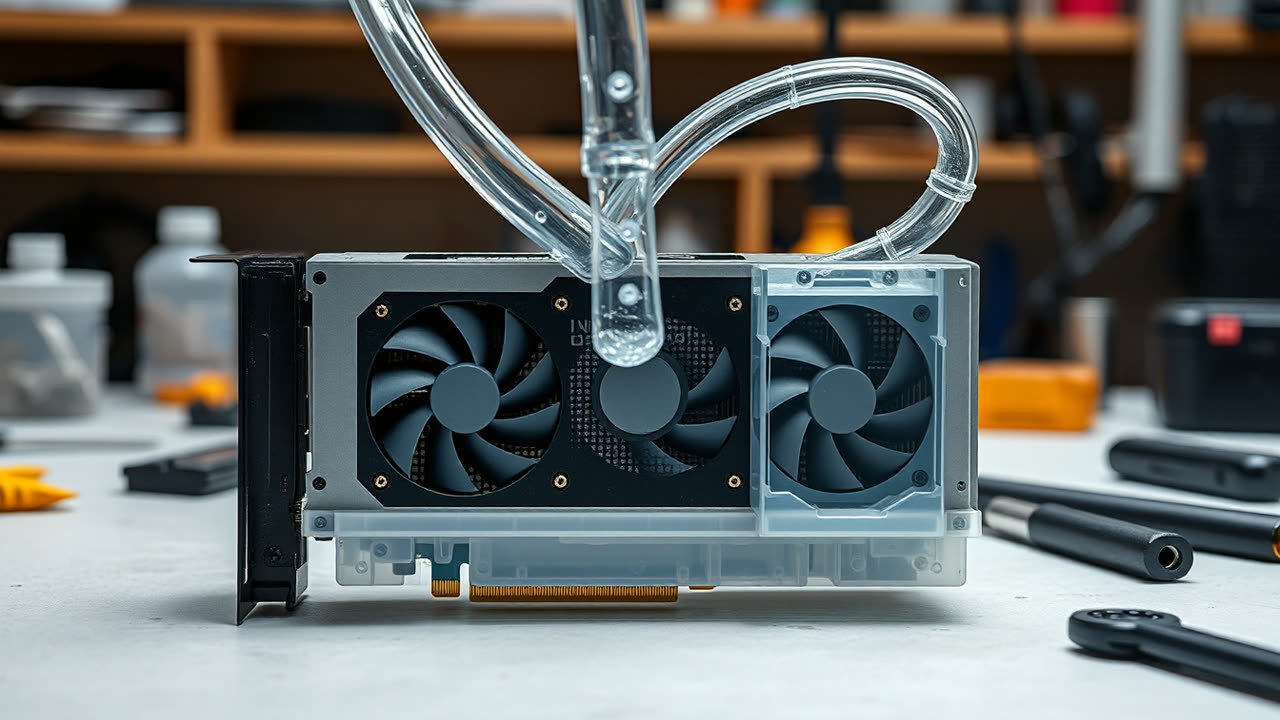
Achieving a staggering 28°C load temperature on an NVIDIA RTX 2060 Super, modder TrashBench has demonstrated the extreme efficacy of direct die liquid cooling for graphics processing units, despite navigating a series of challenging leaks inherent to the experimental process. This remarkable thermal performance, significantly lower than even high-end conventional liquid cooling solutions, was attained by directly pumping coolant over the bare GPU silicon through a custom 3D-printed block, bypassing the integrated heat spreader (IHS) entirely. The feat underscores a burgeoning frontier in enthusiast-driven thermal management, pushing the boundaries of what is conventionally thought possible for consumer-grade hardware.
This breakthrough matters profoundly for several reasons, impacting both end-users and the broader industry. For power users and overclocking enthusiasts, the potential for vastly improved thermal headroom translates directly into higher stable clock speeds and sustained performance, particularly crucial for demanding applications like gaming, AI inference, and content creation where thermal throttling is a constant adversary. The 28°C figure, for instance, dramatically undercuts typical custom loop temperatures for an RTX 2060 Super, which might range from 40-55°C under load, depending on the loop's complexity and ambient conditions. This massive delta suggests that direct die cooling could unlock previously unreachable performance plateaus for existing hardware, extending its competitive lifespan and enhancing user experience without necessitating an immediate upgrade.
Industrially, TrashBench's success highlights both a potential future direction for GPU cooling and the inherent challenges in its widespread adoption. Current high-performance GPUs, such as NVIDIA's RTX 40-series and AMD's RX 7000-series, generate immense heat, often pushing traditional air and AIO liquid coolers to their limits. While custom open-loop solutions offer superior performance, they still rely on an IHS, which acts as an additional thermal interface layer between the silicon and the cold plate, introducing thermal resistance. Direct die cooling eliminates this bottleneck, offering the most direct thermal transfer path possible. The engineering challenge, however, lies in creating reliable, mass-producible, and easily installable direct die solutions. TrashBench's experience with leaks underscores the precision required, as even minor imperfections can lead to catastrophic hardware failure. The use of a 3D-printed block, while demonstrating accessibility for modders, also highlights the material science and manufacturing hurdles for commercial applications, where long-term durability and consistent quality are paramount.
Historically, direct die cooling has been more prevalent in the CPU space, particularly with Intel's "delidding" phenomenon for generations like Haswell and Skylake, where users removed the IHS to apply liquid metal directly to the die for significant temperature drops. However, GPU dies are often larger, more complex, and frequently surrounded by sensitive memory modules (VRAM) that also require cooling, making direct die application significantly more intricate and risky. The RTX 2060 Super, while not the hottest or largest modern GPU, serves as an excellent proving ground for the concept due to its manageable power draw relative to flagship cards, yet still benefiting immensely from improved thermals. Compared to its air-cooled counterparts, which could see load temperatures upwards of 70-80°C, or even some AIOs hitting 50-60°C, the 28°C achieved by TrashBench is a monumental leap, demonstrating the untapped potential of direct contact cooling.
Looking ahead, this modding achievement could catalyze further innovation. While mainstream GPU manufacturers are unlikely to offer direct die cooling solutions out of the box due to warranty concerns, manufacturing complexities, and the inherent risks to less experienced users, aftermarket cooling specialists might explore this niche. Companies like EKWB or Alphacool could potentially develop specialized direct die blocks, perhaps with integrated protective frames for VRAM and other components, once reliable sealing mechanisms and installation procedures are perfected. The proliferation of advanced 3D printing technologies, capable of producing high-resolution, durable parts with improved material properties, could also democratize access to custom cooling solutions for enthusiasts. However, the cost and expertise required for such a setup will likely keep it a premium, enthusiast-only option for the foreseeable future. The ultimate vision, though, is a future where the thermal limits of silicon are pushed even further, potentially enabling more aggressive clock speeds and denser chip designs across the entire computing landscape, driven by the relentless pursuit of optimal heat dissipation exemplified by pioneers like TrashBench.