Modder Fixes RTX 5090 Overheating with Custom Power Distributor
A Reddit user engineered a custom power distributor to resolve persistent 12VHPWR overheating on his NVIDIA RTX 5090, achieving stable 40°C temperatures during a 550W stress test.
✨ This content was summarized and interpreted by AI; it may contain errors — please verify accuracy with the original sources. Learn more
Listen to this story
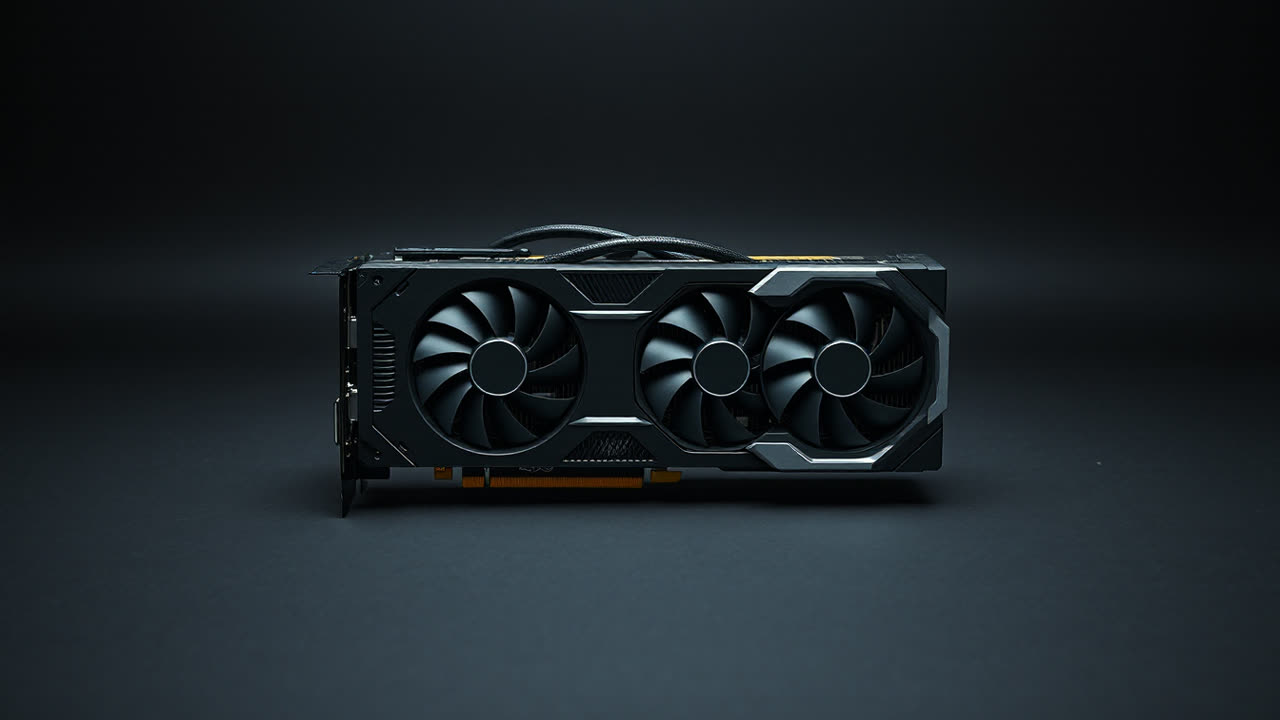
A Reddit user, u/DallasGrave, has unveiled a custom power distributor designed to rectify the persistent overheating issues plaguing the 12VHPWR connector on his NVIDIA GeForce RTX 5090 graphics card, reporting stable temperatures of just 40°C during a grueling 48-hour 550W stress test. This innovative solution, detailed with images of a module screwed directly onto the GPU's back, represents a significant community-driven intervention into a problem that has historically vexed the latest generation of high-performance graphics cards. The core issue stems from the 12VHPWR connector, a compact 16-pin design intended to deliver up to 600W of power, which has been prone to overheating and melting due to insufficient contact between the cable and the GPU socket, often exacerbated by improper cable bending or insertion.
This mod's emergence for the RTX 5090 is particularly critical, as it suggests the power delivery challenges associated with the 12VHPWR standard have persisted into NVIDIA's latest flagship GPU generation. For users, the implications are profound. Investing upwards of $1,500-$2,000 in a top-tier graphics card only to face potential component failure, fire hazards, and the voiding of warranties due to melting connectors is an unacceptable proposition. The fact that a modder felt compelled to engineer a hardware fix underscores a significant gap in manufacturer-provided reliability for a critical component, placing the onus on consumers to safeguard their expensive hardware. This community-led innovation, while laudable for its ingenuity, highlights a systemic vulnerability that erodes consumer confidence and introduces an unnecessary layer of risk and complexity for enthusiasts.
The industry ramifications are equally substantial, particularly for NVIDIA. The 12VHPWR connector was introduced with the RTX 40-series, specifically the RTX 4090, where numerous reports of melting connectors surfaced shortly after its release in late 2022. These incidents prompted investigations by both NVIDIA and PCI-SIG, the industry body responsible for the ATX 3.0 power standard that includes 12VHPWR. While subsequent revisions, like the 12V-2x6 connector, were meant to address these flaws by shortening the sense pins to ensure full insertion before power delivery, u/DallasGrave's fix for the RTX 5090 indicates these preventative measures may not be universally effective or fully implemented across all designs, or that power draw has simply outpaced the connector's inherent design limitations. The mod itself uses dual 8-pin PCIe connectors to distribute the 550W load, bypassing the problematic 12VHPWR interface entirely and demonstrating that a distributed power input remains a more robust solution for extreme power draw. This development forces NVIDIA to confront renewed scrutiny regarding its power delivery solutions and could pressure them to either re-evaluate the 12VHPWR/12V-2x6 implementation on future high-end cards or accelerate the transition to entirely new, more robust power standards.
Historically, graphics card power connectors have evolved to meet increasing power demands, from single 6-pin connectors to dual 8-pin setups, which were considered the gold standard for high-wattage GPUs before the 12VHPWR. The original 12VHPWR was hailed as a compact solution, eliminating the need for multiple cables and simplifying routing. However, its real-world performance has been marred by these reliability issues, creating a stark contrast with the proven stability of older, bulkier multi-pin configurations. While AMD's RDNA 3 cards, like the RX 7900 XTX, largely stuck with dual or triple 8-pin connectors, they avoided the widespread melting issues seen with NVIDIA's 12VHPWR implementation, albeit at lower peak power draws. This comparison underscores the critical importance of robust physical contact and ample surface area for high current loads, principles that u/DallasGrave's dual 8-pin mod effectively reintroduces.
Looking ahead, the longevity of the 12VHPWR and its successor, 12V-2x6, is now under question. If the RTX 5090 continues to exhibit these issues, it could force NVIDIA to adopt more conservative power delivery strategies or push PCI-SIG for a more radical redesign of the ATX 4.0 standard. We might see a return to multiple 12V-2x6 connectors on ultra-high-end cards, or even a completely new connector type that prioritizes safety and reliability over compactness. Furthermore, the burgeoning market for third-party power adapters and custom solutions, exemplified by u/DallasGrave's work, is likely to expand as users seek peace of mind. This situation also highlights the evolving role of the enthusiast community, not just as consumers, but as active participants in identifying and, at times, solving critical hardware flaws that manufacturers seemingly overlook or struggle to fully address. The expectation is that future GPU generations will learn from these painful lessons, prioritizing fail-safe power delivery mechanisms that can handle exponential power growth without compromising user safety or hardware integrity.