Modders Boost AMD Radeon Performance with Unofficial 'DLSS 5 Neural Rendering'
An unofficial community project has dramatically boosted AMD Radeon GPU performance by up to 74% in games like Cyberpunk 2077, leveraging a 'DLSS 5 Neural Rendering' solution previously exclusive to Nvidia.
✨ This content was summarized and interpreted by AI; it may contain errors — please verify accuracy with the original sources. Learn more
Listen to this story
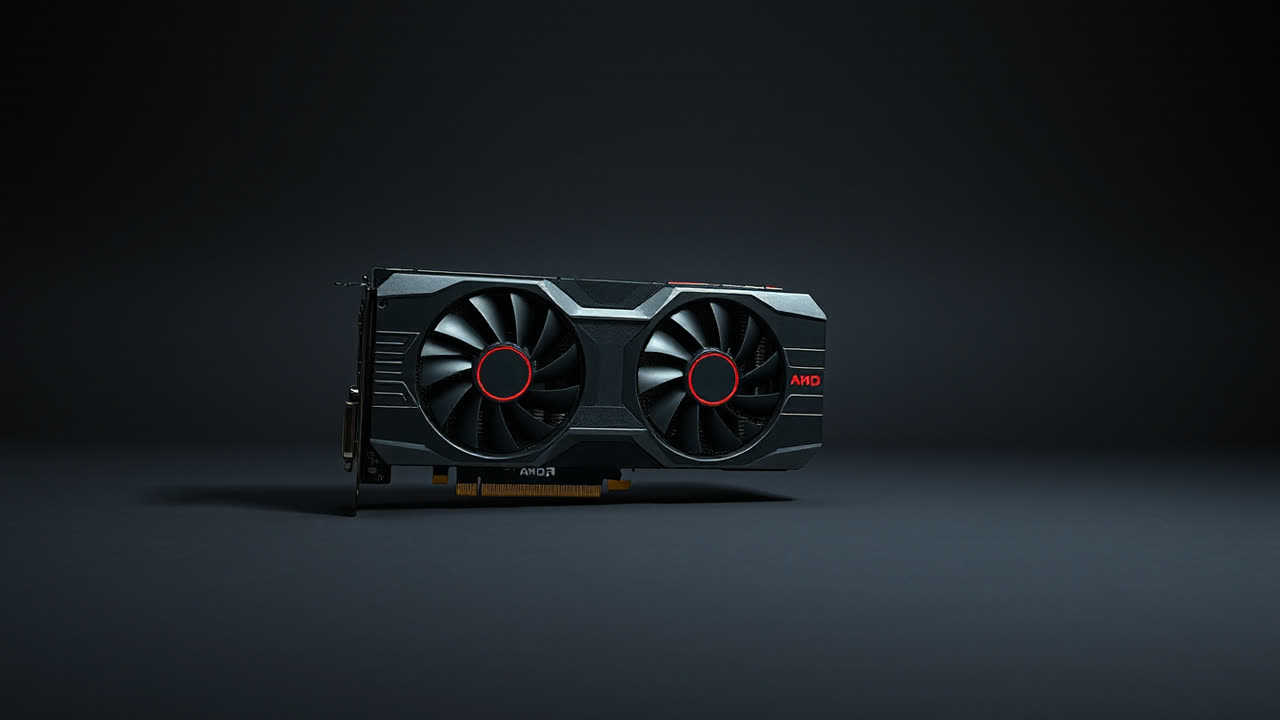
An unofficial project has dramatically boosted performance on AMD Radeon GPUs, leveraging what modders are calling "DLSS 5 Neural Rendering" to elevate frame rates in titles like *Cyberpunk 2077* from approximately 30 FPS to 50 FPS, marking a rapid 74% improvement in just 24 hours of optimization. This community-driven initiative, initially detailed by users on platforms like Reddit and GitHub, represents a significant, albeit unsanctioned, breakthrough, offering AMD users access to a neural rendering technology previously exclusive to Nvidia's RTX ecosystem. The project's latest build, which includes an automated launcher for easier installation, underscores the potent capabilities of advanced upscaling and frame generation when decoupled from specific hardware architectures, fundamentally challenging the notion of proprietary performance advantages.
This development is nothing short of a seismic event for the GPU market and its users. For AMD Radeon owners, it unlocks a substantial performance uplift in demanding titles that officially support Nvidia's Deep Learning Super Sampling (DLSS), effectively bridging a long-standing feature gap that often swayed purchasing decisions towards Nvidia. Users with older or mid-range AMD cards could experience a second wind, enabling smoother gameplay at higher resolutions or settings without needing a hardware upgrade. The immediate impact is a democratized access to cutting-edge rendering techniques, potentially extending the lifespan and perceived value of existing Radeon hardware. Industrially, this mod could force both Nvidia and AMD to re-evaluate their strategies around proprietary features. Nvidia has heavily invested in DLSS as a key differentiator for its RTX cards, particularly with frame generation in DLSS 3 and the enhanced image quality of DLSS 3.5's Ray Reconstruction. If modders can successfully port and optimize these features across rival hardware with such efficacy, the perceived "lock-in" effect for Nvidia's ecosystem diminishes, potentially impacting future sales and market share.
The background of this unofficial DLSS 5 project is rooted in the ongoing "upscaling wars" between GPU manufacturers. Nvidia's DLSS, AMD's FidelityFX Super Resolution (FSR), and Intel's Xe Super Sampling (XeSS) all aim to render games at a lower resolution and then intelligently upscale them to a higher target resolution, boosting frame rates without a noticeable loss in visual fidelity. DLSS, particularly its frame generation component (introduced with DLSS 3), has been lauded for its ability to create interpolated frames using AI, offering significant performance gains beyond traditional upscaling. However, DLSS has historically required Nvidia's Tensor Cores, a dedicated hardware component on RTX GPUs. AMD's FSR, by contrast, is open-source and hardware-agnostic, running on a wider range of GPUs, including older Nvidia cards and integrated graphics, but has sometimes been criticized for producing a softer image compared to DLSS, especially in earlier iterations. Intel's XeSS also offers broad hardware support, including for non-Intel GPUs, and utilizes AI-accelerated upscaling for competitive image quality. This mod's success in bringing a "neural rendering" solution, akin to DLSS's advanced capabilities, to AMD hardware without dedicated Tensor Cores suggests that the underlying AI models might be more adaptable than previously assumed, or that modders have found clever software-based approximations. The reported performance jump from this "DLSS 5" mod directly competes with, and in some cases, surpasses the gains offered by AMD's own FSR 3 with Frame Generation on Radeon cards in similar scenarios.
Looking ahead, this unofficial project presents a fascinating, multi-faceted outlook. Firstly, it places immense pressure on AMD to accelerate its own proprietary upscaling and frame generation technologies. While FSR 3 offers frame generation, its adoption and perceived quality compared to DLSS 3/3.5 still have room for improvement. The existence of a robust, community-driven DLSS port for Radeon GPUs could push AMD to either further open-source its technologies or develop even more compelling first-party solutions. Secondly, Nvidia's response will be critical. While the company has historically protected its proprietary technologies, the widespread adoption of such a mod could force a reconsideration of its ecosystem strategy. Nvidia could potentially issue software updates to block such unofficial implementations, though this would likely be met with significant user backlash. Alternatively, it might inspire Nvidia to explore broader hardware compatibility for future DLSS iterations, or focus on even more advanced, hardware-dependent features to maintain its edge. Finally, the modding community's success highlights the power of reverse engineering and collective intelligence in the tech world. This project could pave the way for similar cross-platform ports of other proprietary technologies, blurring the lines between hardware ecosystems and fostering a more open, competitive landscape for gaming performance technologies. The long-term implications could be a future where software optimizations and AI models become the primary battleground for GPU manufacturers, rather than exclusive hardware features, ultimately benefiting consumers through increased performance and choice regardless of their chosen hardware vendor.