MSI Validates Chinese CXMT DDR5 Memory at Record 8200 MT/s on AM5 Motherboards
MSI's new BIOS update unlocks unprecedented DDR5 speeds for Chinese-made CXMT memory on AMD platforms, signaling a significant leap for China's semiconductor industry.
✨ This content was summarized and interpreted by AI; it may contain errors — please verify accuracy with the original sources. Learn more
Listen to this story
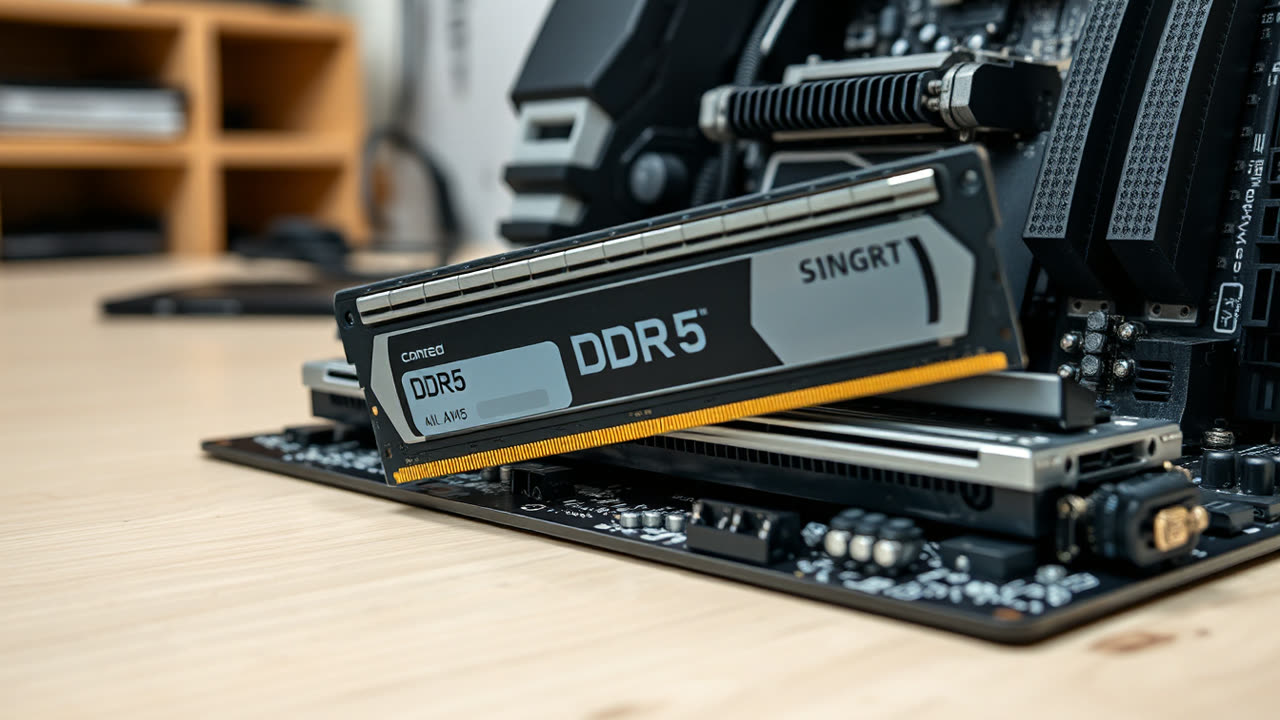
MSI has officially validated Chinese-made CXMT DDR5 memory to achieve unprecedented speeds of up to 8,200 MT/s on its AM5 motherboards, marking a significant milestone for China's burgeoning semiconductor industry. A new BIOS update unlocks these high frequencies for dual-DIMM configurations, with 24Gbit CXMT chips reaching DDR5-8200 and 16Gbit chips hitting DDR5-8000. Quad-DIMM models now support DDR5-7200. This dramatically surpasses the previous limit of approximately 6,800 MT/s on AMD platforms, demonstrating a considerable leap in performance for region-bound memory modules from brands like Lexar and KingBank.
This development signals CXMT's accelerating technological prowess, positioning it as a more formidable competitor to established giants like Samsung, SK Hynix, and Micron. While still trailing the bleeding edge in terms of die density, CXMT's ability to deliver DDR5 chips capable of 8000 Mbps speeds and 16Gb/24Gb capacities is a testament to China's aggressive investment in domestic DRAM manufacturing.
The implications extend beyond raw speed. Amid ongoing global memory shortages, exacerbated by the "big three" shifting focus to high-bandwidth memory (HBM) for AI, CXMT's expanded production capacity could offer crucial relief and more competitive pricing, particularly for consumer-grade DDR5. This move by MSI not only enhances performance options for consumers but also underscores the growing geopolitical fragmentation in tech supply chains, where regional resilience is becoming paramount. China's push for self-sufficiency in critical components like memory chips is reshaping the global landscape, potentially driving down costs and diversifying supply, even as it intensifies the broader tech rivalry.