Nancy Grace Roman Space Telescope Launches, Promises Revolution in Dark Universe and Exoplanet Research
NASA's next-generation observatory, the Nancy Grace Roman Space Telescope, successfully launched, poised to deliver its first high-resolution images in early 2027 and redefine our understanding of dark energy, dark matter, and exoplanets.
✨ This content was summarized and interpreted by AI; it may contain errors — please verify accuracy with the original sources. Learn more
Listen to this story
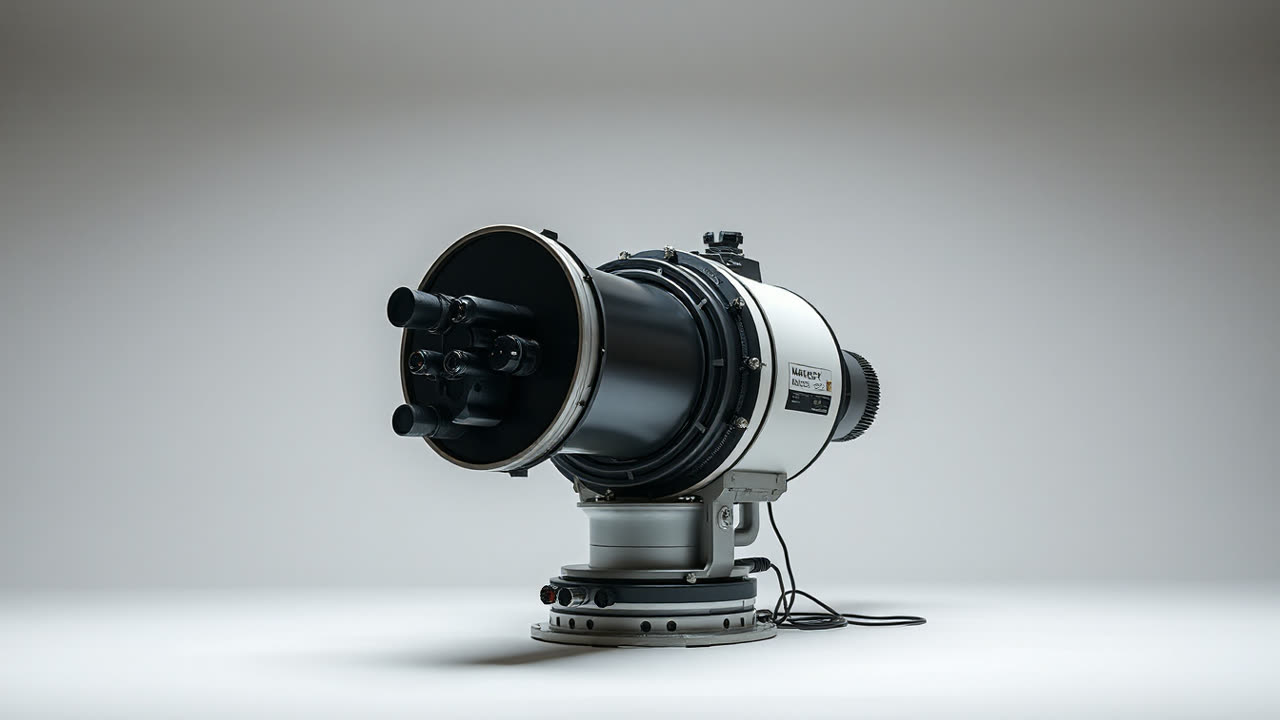
The Nancy Grace Roman Space Telescope, launched successfully in late 2026, represents a monumental leap in humanity's quest to unravel the universe's most profound mysteries, particularly the enigmatic "dark universe," with its first high-resolution images anticipated in early 2027. This next-generation observatory, named in honor of NASA's first chief astronomer, Dr. Nancy Grace Roman, is not merely another space telescope; it is poised to revolutionize our understanding of dark energy, dark matter, and the vast census of exoplanets with an unprecedented wide-field view in infrared. Its primary instrument, the Wide Field Instrument (WFI), boasts a 2.4-meter primary mirror, identical in size to the Hubble Space Telescope's, yet offers a field of view 100 times larger than Hubble's infrared instrument, the Wide Field Camera 3 (WFC3). This expansive vision allows Roman to survey vast swathes of the cosmos with remarkable efficiency, a capability critical for statistical studies of cosmic phenomena that were previously impractical or impossible.
The significance of Roman's mission, extending well beyond its initial imagery, lies in its direct assault on the twin enigmas of dark energy and dark matter, which together constitute approximately 95% of the universe's mass-energy content but remain undetectable by conventional means. Through meticulously planned surveys, Roman will employ multiple independent techniques, including weak gravitational lensing and baryon acoustic oscillations, to precisely measure the distribution of matter across cosmic time and track the expansion history of the universe. Weak lensing, the subtle distortion of distant galaxy shapes by intervening dark matter, will be mapped across billions of galaxies, providing an unparalleled 3D map of the universe's dark matter scaffold. Concurrently, the telescope's spectroscopic capabilities will enable it to measure the distances to millions of galaxies, allowing scientists to chart the growth of cosmic structure and the accelerating expansion driven by dark energy with unprecedented accuracy. This holistic approach promises to constrain theoretical models of dark energy, potentially distinguishing between a cosmological constant and more exotic, evolving fields, thereby reshaping fundamental physics and our understanding of the universe’s ultimate fate.
Beyond cosmology, Roman is set to dramatically accelerate exoplanet discovery and characterization, particularly through its microlensing survey. Gravitational microlensing, a phenomenon where a foreground star's gravity temporarily magnifies the light from a background star, allows for the detection of planets down to the mass of Mars, even those free-floating or far from their host stars, which are notoriously difficult to find with other methods. This capability is crucial for completing a demographic census of exoplanets, revealing the prevalence of different planetary types in the outer regions of planetary systems and beyond the "snow line," where gas giants are thought to form. Furthermore, Roman carries a highly advanced Coronagraph Instrument (CGI), a technological marvel designed to directly image exoplanets by blocking the overwhelming glare of their host stars. While primarily a technology demonstration, the CGI is expected to achieve contrast ratios of 100 million to 1, potentially enabling the direct observation and spectroscopic analysis of gas giant exoplanets, paving the way for future missions capable of finding Earth-like worlds.
The Roman Space Telescope stands in a unique complementary position relative to its illustrious predecessors and contemporaries. While the Hubble Space Telescope has provided iconic, deep-field images over a narrower field, and the James Webb Space Telescope (JWST) excels at high-resolution observations of faint, distant objects and detailed atmospheric characterization of known exoplanets in the mid-infrared, Roman’s strength lies in its expansive infrared survey capabilities. It bridges the gap between the detailed but localized views of Hubble and JWST and the need for statistical power across vast cosmic volumes. This synergy means Roman will identify targets for JWST's detailed follow-up, and JWST's deep dives will provide context for Roman's broad surveys. For example, Roman could discover thousands of new exoplanets through microlensing, some of which JWST could then characterize spectroscopically.
Looking ahead, the data deluge from Roman, beginning in early 2027, will undoubtedly fuel thousands of scientific papers and redefine numerous astronomical fields. The precise measurements of dark energy and dark matter will either confirm the standard cosmological model (Lambda-CDM) with unprecedented confidence or, more excitingly, reveal deviations that necessitate entirely new physics. The exoplanet census will provide critical insights into planet formation theories, potentially revealing new classes of worlds or confirming the ubiquity of certain planetary architectures. The technological successes of the Coronagraph Instrument will directly inform the design of future large-aperture telescopes, such as Habitable Worlds Observatory concepts, aiming to directly image Earth-like exoplanets and search for biosignatures. The Roman Space Telescope is not merely observing the universe; it is fundamentally altering our perspective on it, promising a golden age of discovery that will resonate for decades.