NASA Launches Emergency Mission to Save Swift Observatory
A $30 million emergency mission is underway to prevent NASA's Neil Gehrels Swift Observatory from an uncontrolled re-entry, highlighting solar activity's threat and the rise of commercial in-space servicing.
✨ This content was summarized and interpreted by AI; it may contain errors — please verify accuracy with the original sources. Learn more
Listen to this story
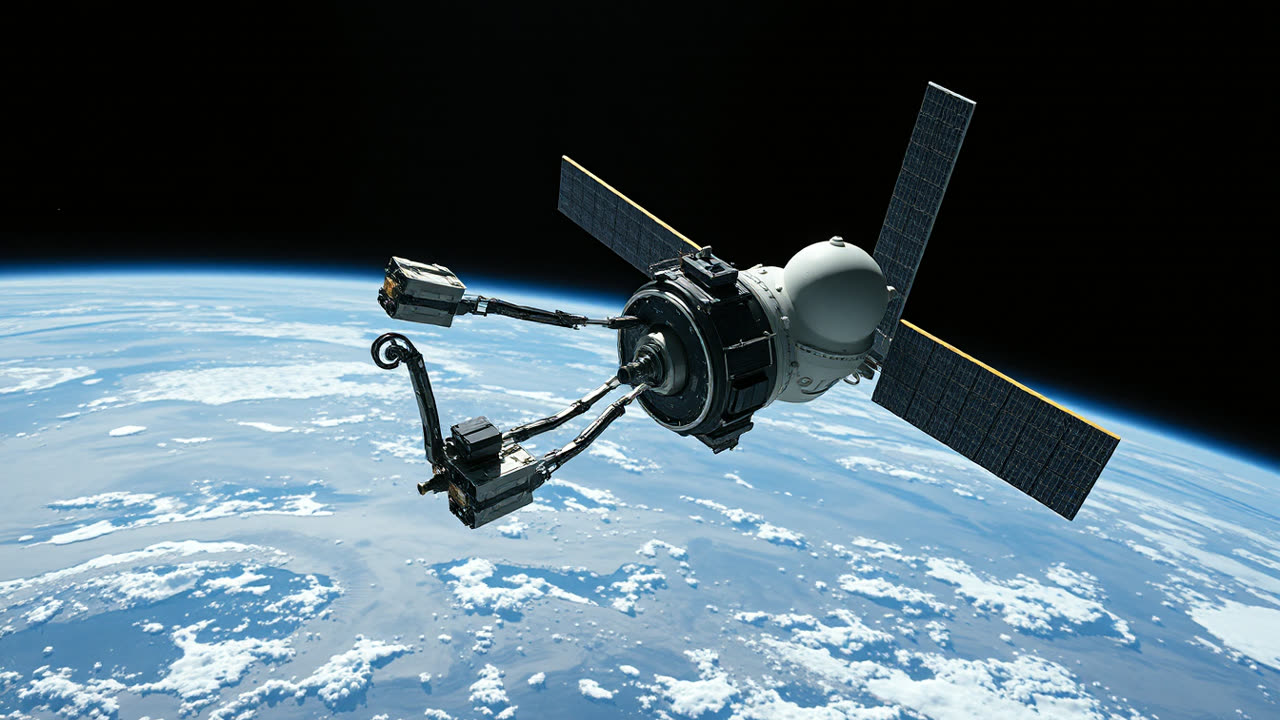
A daring $30 million emergency mission has launched to prevent NASA's Neil Gehrels Swift Observatory, a cornerstone of astrophysics for over two decades, from an imminent and destructive re-entry into Earth's atmosphere. Launched on July 3, 2026, from Kwajalein Atoll, the mission highlights the escalating threat of solar activity to crucial orbital assets and marks a significant shift towards commercial solutions for in-space servicing.
The Swift Observatory, operational since 2004, has been rapidly losing altitude due to an unexpectedly intense Solar Cycle 25. Increased solar radiation has heated and expanded Earth's upper atmosphere, dramatically increasing aerodynamic drag on the satellite. Without intervention, the valuable observatory, designed to detect gamma-ray bursts—the universe's most powerful explosions—and serve as a "first responder" for other astronomical events, was projected for an uncontrolled re-entry by late 2026. Its loss would severely impede time-domain astrophysics, a field it has significantly advanced through observations of black holes and supernovae.
In an expedited response, NASA awarded a $30 million contract to Katalyst Space Technologies in September 2025. Katalyst developed the "Link" robotic servicing spacecraft, a sofa-sized vehicle equipped with three robotic arms and xenon-fueled ion engines. The Link spacecraft, launched on a Northrop Grumman Pegasus XL rocket, will rendezvous with Swift in approximately one month. The challenge is immense: Swift was never designed for on-orbit servicing, meaning Link must autonomously grapple onto structural features not intended for capture. If successful, Link will slowly boost Swift's orbit from its current ~360 km to ~600 km over several months, potentially extending its scientific life by another decade.
This high-stakes mission represents a critical new chapter in space operations. It's the first time an American commercial robot has attempted to service an unprepared government satellite, demonstrating the agility and innovation of private industry in addressing pressing space challenges. The success of this endeavor could establish a vital precedent for extending the lifespan of other aging, yet scientifically invaluable, assets like the Hubble Space Telescope, which also faces orbital decay. As solar activity intensifies and low Earth orbit becomes increasingly congested, such rapid-response, commercial servicing capabilities will be indispensable for safeguarding our investments in space and ensuring continued scientific discovery.