Netflix Deepens AI Integration Across 300+ Titles, Reshaping Content Creation
The streaming giant is leveraging advanced algorithms across its entire production pipeline, from scripting to visual effects and localization, signaling a major shift in how content is made and distributed.
✨ This content was summarized and interpreted by AI; it may contain errors — please verify accuracy with the original sources. Learn more
Listen to this story
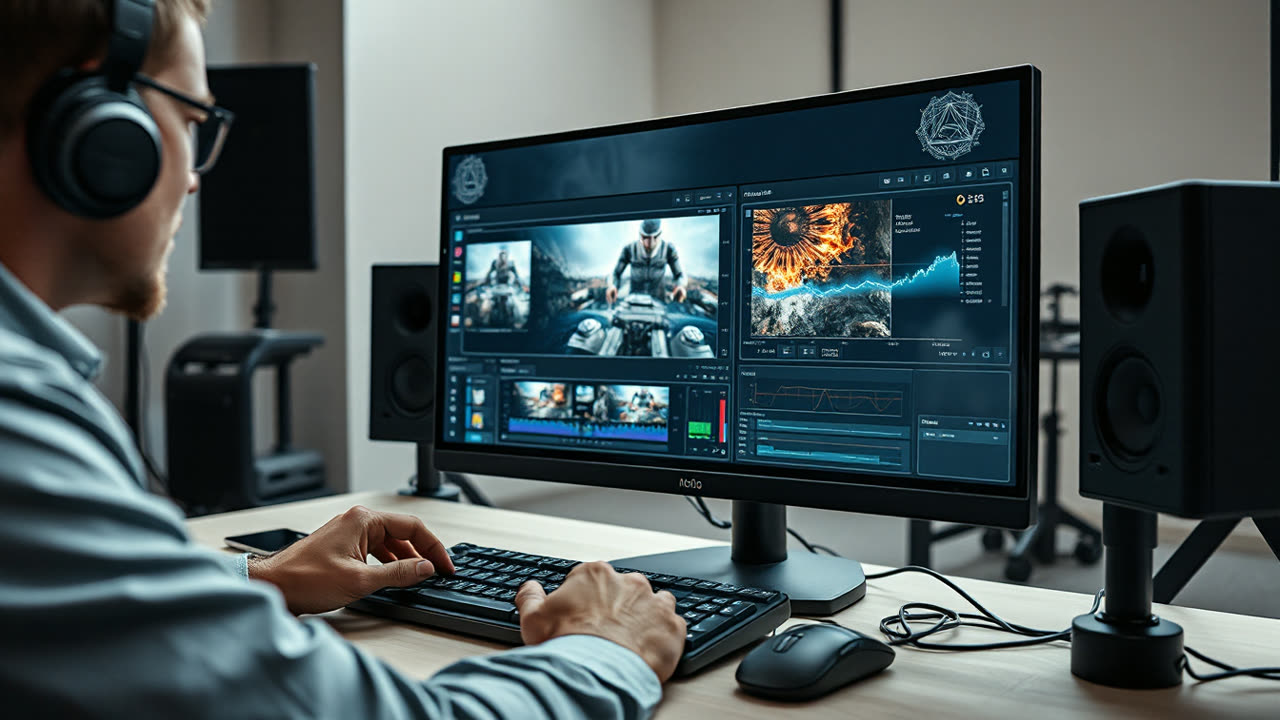
Netflix has already incorporated artificial intelligence into approximately 300 titles this year, a figure poised for significant expansion as the streaming giant increasingly leverages advanced algorithms across its production pipeline. This widespread integration, revealed in recent reports, extends far beyond mere recommendation engines, touching various stages from pre-production scripting and visual effects rendering to post-production localization and accessibility features. The immediate implication for Netflix is a potentially massive boost in efficiency and cost-effectiveness, enabling the company to produce more content faster and distribute it globally with unprecedented speed and precision.
The true significance of this AI adoption lies in its transformative potential for both content creators and consumers. For creators, AI tools are beginning to automate laborious tasks, freeing up human talent to focus on higher-order creative decisions. For instance, AI can analyze scripts to predict audience engagement, identify potential plot holes, or even suggest alternative dialogue, streamlining the writing process. In visual effects, generative AI is accelerating asset creation, background generation, and even complex character animation, drastically cutting down on the time and resources traditionally required for high-fidelity visuals. This could democratize high-end production, allowing smaller studios or independent creators to achieve cinematic quality previously reserved for blockbuster budgets. Furthermore, AI-powered tools are enhancing accessibility, automatically generating captions, translating dialogue into multiple languages with more nuanced cultural context, and even creating audio descriptions for visually impaired audiences, broadening the reach of content to underserved demographics.
However, the rapid embrace of AI also presents a complex set of challenges and ethical considerations for the industry. Concerns about job displacement are prevalent, particularly among roles susceptible to automation, such as junior animators, translators, and certain post-production specialists. The debate around intellectual property and fair compensation for original works used to train AI models is intensifying, as evidenced by ongoing discussions and strikes in Hollywood. There are also growing anxieties about the potential for AI to homogenize creative output, leading to formulaic content optimized purely for engagement metrics rather than genuine artistic innovation. The industry must navigate these waters carefully, establishing new frameworks for collaboration between human and artificial intelligence that prioritize ethical development and equitable distribution of value.
Netflix's move isn't happening in a vacuum; major rivals are also exploring or already implementing AI, albeit with varying degrees of transparency. Amazon Prime Video, for example, has utilized AI for content recommendations and operational efficiencies within its vast e-commerce and cloud infrastructure. Disney+, with its extensive library and theme park synergy, is reportedly investigating AI for personalized experiences and interactive storytelling. Apple TV+, known for its premium, curated content, may leverage AI more subtly for quality control and enhanced user interfaces. Compared to the prior generation of media production, which relied heavily on manual processes and human-intensive labor across all stages, the current shift represents a fundamental paradigm change. Historically, AI's role in media was largely confined to data analysis for marketing and personalization. Now, it's becoming an active participant in the creative and production workflow itself.
Looking ahead, the next phase of AI integration in entertainment will likely see even deeper embedding into content creation. Expect to see AI tools that can generate entire scenes from text prompts, compose original musical scores tailored to specific emotional arcs, or even create personalized interactive narratives where the story adapts in real-time to viewer choices. Netflix's ambition isn't just about efficiency; it's about pushing the boundaries of what's creatively possible and delivering hyper-personalized experiences that could redefine viewer engagement. The company's vast dataset of user preferences and viewing habits provides an unparalleled training ground for sophisticated AI models, potentially allowing it to anticipate and even shape future content trends. However, success will hinge on striking a delicate balance: leveraging AI's power to innovate without sacrificing the human touch, originality, and the diverse perspectives that truly resonate with global audiences. The streaming wars are increasingly becoming an AI arms race, and Netflix's early, aggressive deployment positions it as a frontrunner in shaping the future of digital entertainment.