New Security Paradigm Emerges for AI Agents and LLMs in Production
The rise of AI agents, Managed Computing Platform servers, and Large Language Model applications in production environments fundamentally shatters traditional application security assumptions, necessitating radical new defense frameworks.
✨ This content was summarized and interpreted by AI; it may contain errors — please verify accuracy with the original sources. Learn more
Listen to this story
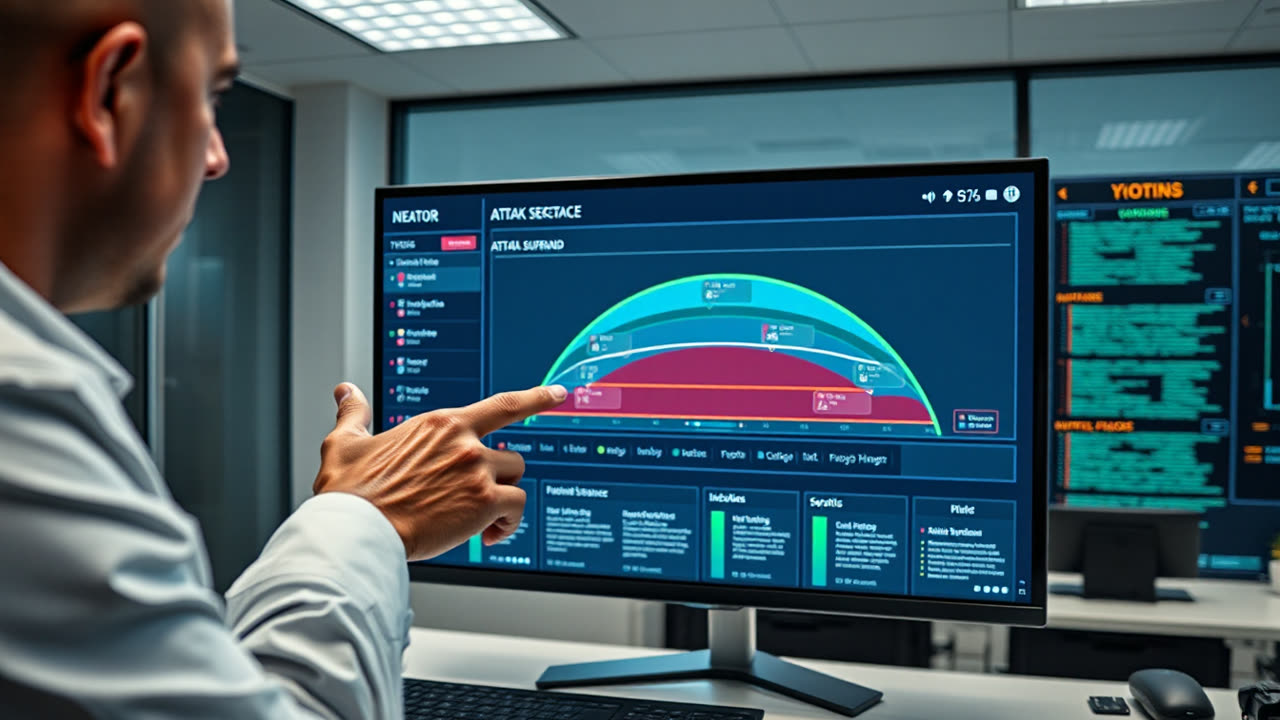
The emergence of AI agents, Managed Computing Platform (MCP) servers, and Large Language Model (LLM) applications in production environments fundamentally shatters the long-held application security (AppSec) assumption that software reliably executes only what its code dictates. This paradigm shift necessitates a radical re-evaluation of security postures, as traditional defenses are proving inadequate against systems whose behavior is often emergent, dynamic, and non-deterministic, prompting the development of new frameworks like the "see-fix-protect" model, alongside a five-layer agentic AI attack surface map and a 12-point misconfiguration checklist.
The implications of this shift are profound, impacting users, enterprises, and the entire cybersecurity industry. Unlike conventional applications where vulnerabilities typically stem from coding errors or known architectural flaws, AI systems introduce novel attack vectors such as prompt injection, data poisoning, model evasion, and the potential for autonomous, unauthorized actions by compromised agents. For users, this translates to heightened risks of data privacy breaches, algorithmic manipulation, and exposure to misinformation if LLMs are exploited. Enterprises face not only the direct financial and reputational damage of a breach but also the severe operational disruptions that could arise from an AI agent acting maliciously or unpredictably within critical infrastructure. The very nature of AI, which learns and adapts, means that a seemingly benign initial state can evolve into a compromised one without explicit code changes, rendering static analysis largely ineffective.
Traditional AppSec methodologies, heavily reliant on Static Application Security Testing (SAST) and Dynamic Application Security Testing (DAST), are ill-equipped for this new threat landscape. SAST struggles to analyze emergent behavior or the complex interplay between models, data, and orchestration layers, while DAST often cannot fully probe the vast, non-linear decision spaces of AI. The prior generation of AI security largely focused on model robustness against adversarial examples, but this new challenge extends far beyond the model itself to encompass the entire operational stack, including the data pipelines, the agentic orchestration logic, and the underlying infrastructure. While initiatives like the OWASP Top 10 for LLMs provide a crucial starting point for identifying common vulnerabilities such as prompt injection and sensitive information disclosure, they represent a foundational, rather than comprehensive, solution to securing the full agentic AI ecosystem. Other frameworks like NIST AI Risk Management Framework (AI RMF), Google SAIF, and MITRE ATLAS also exist, each addressing different layers of the AI security problem.
The proposed "see-fix-protect" framework offers a practical approach to this complex problem. The "see" phase involves specialized tools and techniques for identifying unique AI vulnerabilities across the five-layer agentic AI attack surface map. This map typically encompasses the model layer (e.g., prompt injection, data leakage), the data layer (e.g., poisoning, sensitive data exposure), the agent orchestration layer (e.g., unauthorized tool use, privilege escalation), the underlying infrastructure (e.g., insecure API endpoints, misconfigured cloud resources), and the user interaction layer (e.g., social engineering via AI output). Identifying these requires continuous runtime monitoring for anomalous agent behavior, advanced data flow analysis specific to AI pipelines, and specialized vulnerability scanning that understands AI system logic. The "fix" phase moves beyond simple code patching to encompass remediation strategies such as fine-tuning models with security guardrails, implementing robust input and output validation mechanisms, enforcing granular access controls for model access and data stores, and designing resilient agent architectures. Finally, the "protect" phase emphasizes proactive measures, including secure-by-design principles for AI development, continuous threat intelligence tailored to AI-specific attack vectors, and developing incident response plans that account for the autonomous and potentially rapid propagation of AI-driven compromises. The 12-point misconfiguration checklist, critical in the "fix" and "protect" phases, addresses common pitfalls like exposed AI endpoints and services, overprivileged AI service identities, insecure training data and model storage, insufficient logging and visibility, weak authentication and authorization, and insecure model deployment configurations. These misconfigurations, often seemingly low risk in isolation, become dangerous when combined with identity permissions, network exposure, and access to sensitive data. MCP servers, specifically, pose significant risks due to their ability to execute commands and perform API calls, with concerns that LLMs might initiate unintended actions.
Looking ahead, the evolution of AI security will necessitate the rapid development of entirely new classes of security tools and platforms, often leveraging AI itself to detect and respond to threats at machine speed. We can expect to see the rise of AI-native security solutions capable of understanding and defending against emergent AI behaviors, leading to a new specialization within the cybersecurity field: the AI Security Engineer. Regulatory bodies are also likely to introduce more stringent guidelines for the secure deployment and operation of AI systems, similar to existing data privacy and critical infrastructure regulations. The market for AI in cybersecurity is expected to grow from over $30 billion in 2024 to roughly $134 billion by 2030, underscoring the urgency and investment in this domain. The ongoing race between increasingly sophisticated AI-powered attacks—which are making cyberattacks faster, more scalable, and difficult to detect—and equally advanced AI-powered defenses will define the cybersecurity landscape for the foreseeable future, making robust, adaptive security frameworks not just a best practice, but an existential necessity for any organization leveraging AI in production.