Nexterity's Robotic Pipefitting Tool Revolutionizes Industrial Safety and Efficiency
Nexterity's compact robotic tool, designed to fit in a standard Pelican case, automates hazardous pipe flange bolting, significantly enhancing safety and efficiency in heavy industry.
✨ This content was summarized and interpreted by AI; it may contain errors — please verify accuracy with the original sources. Learn more
Listen to this story
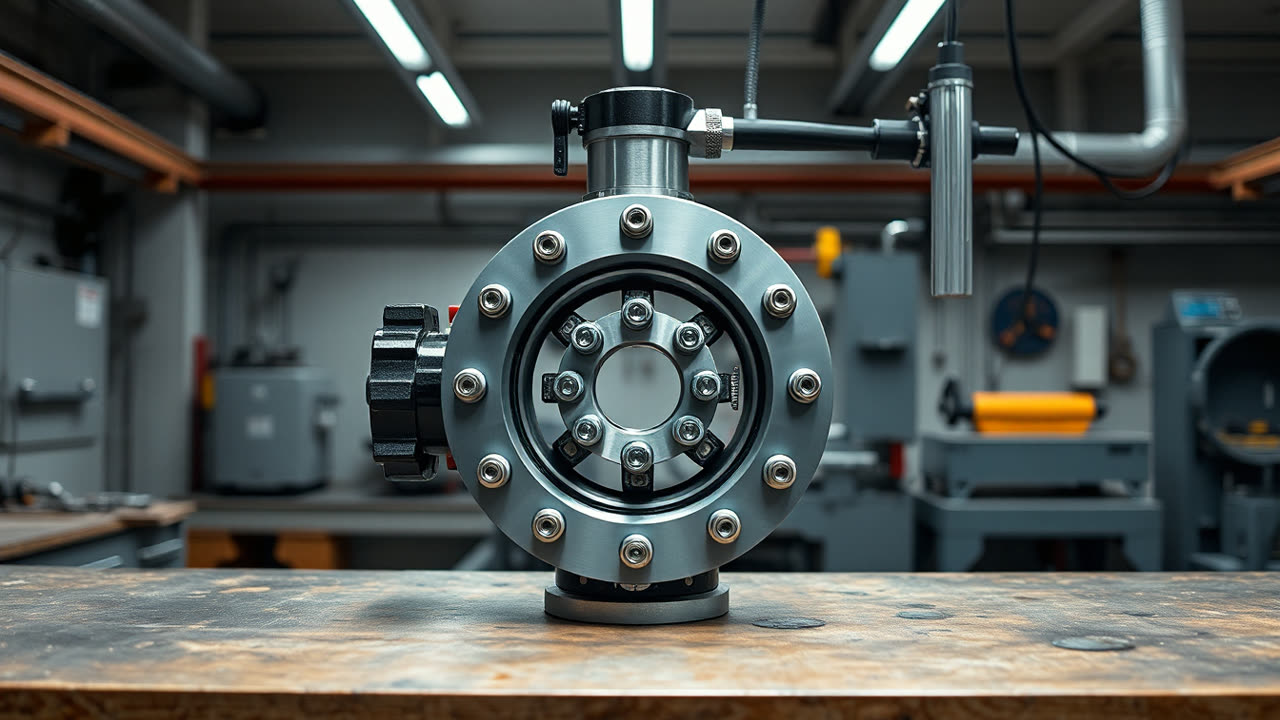
The launch of Nexterity's robotic pipefitting tool marks a significant advancement in industrial automation, directly addressing some of the most hazardous and labor-intensive aspects of pipeline construction and maintenance. This compact robot, designed to fit within a standard Pelican case, can simultaneously tighten or loosen four bolts on pipe flanges, offering an unprecedented level of on-site efficiency and safety. The startup, which has secured $650,000 in funding to date, including a $550,000 early-stage venture capital round in October 2024, is poised to revolutionize a critical, yet often overlooked, segment of heavy industry.
The impact of this innovation on both users and the broader industry cannot be overstated. Manual pipefitting is inherently dangerous, exposing workers to a litany of risks. Pipefitters frequently contend with musculoskeletal injuries from handling heavy loads, twisting in confined spaces, and repetitive motions that strain backs, shoulders, and knees. Equipment hazards are also prevalent, with saws and torches leading to cuts, burns, nerve damage, and even amputations, while sparks can cause severe eye injuries. Furthermore, working with high-pressure connections and hazardous materials like refrigerants, oxidizers, and flammable products poses risks of chemical exposure, fires, and catastrophic failures if not handled with extreme precision. Nexterity's hands-free tool directly mitigates these dangers by allowing human operators to control the bolting process remotely, maintaining a safe distance from the pipe joint and its potential hazards.
Beyond safety, the robot promises substantial gains in efficiency and quality. Nexterity claims its device can achieve an up to 8x speed advantage over current manual methods for bolting and unbolting, significantly accelerating project timelines. Crucially, the robot delivers consistent torque settings within +/- 10 ft-lbs of a target, drastically reducing the human error often associated with manual tightening and ensuring the integrity of critical connections. This precision is vital in industries like energy, manufacturing, and chemical processing, where even minor imperfections can lead to stress concentrations or leaks, compromising operational stability and safety.
The development arrives at a critical juncture for the construction and industrial sectors, which face persistent skilled labor shortages. The U.S. Bureau of Labor Statistics projects approximately 649,300 annual openings in construction and extraction occupations from 2024 to 2034, a volume of work that outstrips the available skilled workforce. Robotics, like Nexterity's solution, are no longer experimental but are becoming a standard part of how projects are staffed and delivered, helping contractors manage these shortages without compromising quality. By automating repetitive, strenuous, and dangerous tasks, robots free human workers to focus on more complex, value-added activities, potentially improving job satisfaction and worker retention.
While automation in construction is not new—with bricklaying robots, autonomous excavators, and robotic welding systems already making inroads—Nexterity carves out a niche by focusing on the specific, yet universally critical, task of flange bolting. Existing solutions often address broader fabrication processes, such as automated cutting, forming, and assembly in controlled environments, or robotic pipe bending and internal pipe inspection via crawlers. Nexterity's innovation, however, targets the actual on-site assembly and maintenance of pipelines, where portability and direct interaction with existing infrastructure are paramount. Its ability to handle a wide range of piping sizes and standardized fastener configurations further enhances its versatility in real-world applications.
Looking ahead, the trajectory for industrial robotics in construction is one of rapid expansion. The market for construction robots is projected to grow at a compound annual growth rate (CAGR) of 15.50% between 2023 and 2028, with automation in the broader construction sector expected to surge by 85% in the next decade. For Nexterity, this growth translates into significant opportunities across pipeline maintenance, capital projects, facility retrofits, and new construction. The key will be seamless integration into existing workflows and demonstrating a clear return on investment to overcome the initial costs of robotic systems. As the industry continues to grapple with labor challenges and an unyielding demand for greater safety and efficiency, Nexterity's portable, precise bolting robot represents a tangible step towards a more automated, safer, and ultimately more productive future for critical infrastructure development. The broader implications suggest a future where human ingenuity, augmented by advanced robotics, tackles the most complex and dangerous aspects of industrial work, leaving the repetitive and risky tasks to intelligent machines.