Nintendo GameCube's Region Lock: A Hidden Pitfall for Retro Gamers
The Nintendo GameCube, a beloved console from the early 2000s, harbors a critical regional limitation often overlooked by eager buyers in the burgeoning retro gaming market: its stringent region locking means a console purchased in one territory may be unable to play games from another, a crucial detail that can lead to significant disappointment and wasted investment for collectors and casual players alike.
✨ This content was summarized and interpreted by AI; it may contain errors — please verify accuracy with the original sources. Learn more
Listen to this story
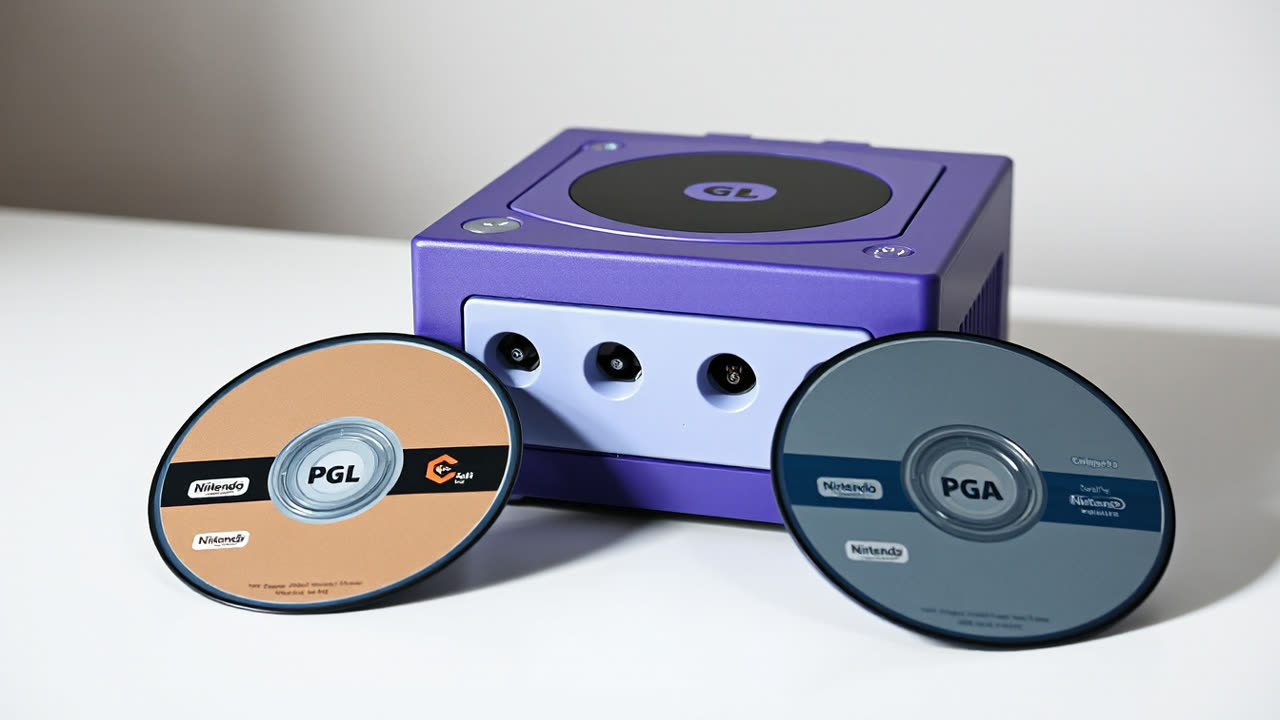
The Nintendo GameCube, a beloved console from the early 2000s, harbors a critical regional limitation often overlooked by eager buyers in the burgeoning retro gaming market: its stringent region locking means a console purchased in one territory may be unable to play games from another, a crucial detail that can lead to significant disappointment and wasted investment for collectors and casual players alike. This hardware-level restriction, a common practice during the sixth console generation, dictates that a North American (NTSC-U) GameCube will only run NTSC-U games, a European (PAL) console only PAL games, and a Japanese (NTSC-J) console only NTSC-J titles, effectively fragmenting the global game library for any single unit. Identifying the console's region is paramount; buyers should look for specific markings on the console's label, often located on the bottom, which clearly indicate its intended market, such as "DOL-001(USA)" for North America or "DOL-001(EUR)" for Europe. Similarly, game discs are marked with their respective region codes, and attempting to insert a disc from an incompatible region will typically result in an error message, preventing the game from loading entirely.
This regional lockout fundamentally impacts the user experience, particularly for those discovering the GameCube's extensive and critically acclaimed library decades after its initial release. A player might acquire a sought-after title like *Paper Mario: The Thousand-Year Door* from an overseas seller, only to find it unplayable on their locally purchased console, necessitating further investment in either a region-appropriate console or a modification solution. The issue is compounded by the fact that certain games were exclusive to specific regions or received localized versions with distinct features, language options, or even censorship, making a complete, unhindered collection a complex and costly endeavor without addressing the region lock. For instance, some Japanese exclusive titles, like *Doshin the Giant*, remain highly desirable but inaccessible to standard NTSC-U or PAL console owners. This creates a barrier to experiencing the full breadth of the GameCube's cultural and historical significance, forcing enthusiasts to navigate a labyrinth of regional variations.
From an industry perspective, the GameCube's region locking reflects a bygone era of hardware manufacturing and content distribution, where territorial control was a primary concern for publishers and platform holders. Nintendo, alongside rivals like Sony with its PlayStation 2 and Microsoft with its original Xbox, largely employed region locking during this period, aiming to control pricing, release schedules, and prevent parallel imports that could undercut local markets. This contrasts sharply with the contemporary gaming landscape, epitomized by the Nintendo Switch, which is famously region-free, allowing players to purchase and play games from any eShop globally, a move largely driven by digital distribution and a more interconnected global market. While region locking served its original commercial purpose, its legacy on older consoles now primarily complicates the burgeoning retro gaming market, driving up the value of region-specific hardware and creating a niche for modification services.
The GameCube's region locking has, perhaps paradoxically, fueled a vibrant aftermarket of modding solutions. Hard-modding options, such as installing a XenoGC chip or a PicoBoot modchip, allow consoles to bypass region checks and play games from any region, often alongside the ability to play backup copies or load games from an SD card via an Optical Drive Emulator (ODE). These modifications, while requiring technical skill or professional installation, are increasingly popular as original disc drives degrade and physical media becomes scarcer or more expensive. Soft-modding methods, often involving specific game exploits to load homebrew software, also exist, offering a less intrusive pathway to region freedom and expanded functionality. The availability and growing sophistication of these solutions indicate a market demand for unrestricted access to the GameCube library, extending the console's lifespan and utility far beyond its original design parameters.
Looking ahead, the GameCube's region lock will continue to be a defining characteristic of its hardware, influencing the collector's market and driving innovation in retro gaming preservation. As the console approaches its quarter-century mark, the physical media it relies on becomes more fragile, and the original disc drives more prone to failure. This ongoing scarcity and degradation will likely further accelerate the adoption of ODEs and modchips, making region-free, digital-based play an increasingly standard experience for dedicated GameCube enthusiasts. The financial incentives for modding will also likely grow, as the cost of acquiring multiple region-specific consoles or rare region-locked titles could easily surpass the investment in a single modded console. Ultimately, while Nintendo has moved past this restrictive practice, the GameCube stands as a testament to a different era, where the community's ingenuity now largely dictates how its enduring legacy of games can be fully enjoyed by a new generation of players.