Nintendo Switch 2 Launch Set for October 2026 with Zelda Anniversary Edition
Nintendo's highly anticipated Switch 2 console is slated for an October 29, 2026 release, accompanied by a special 40th-anniversary Legend of Zelda edition.
✨ This content was summarized and interpreted by AI; it may contain errors — please verify accuracy with the original sources. Learn more
Listen to this story
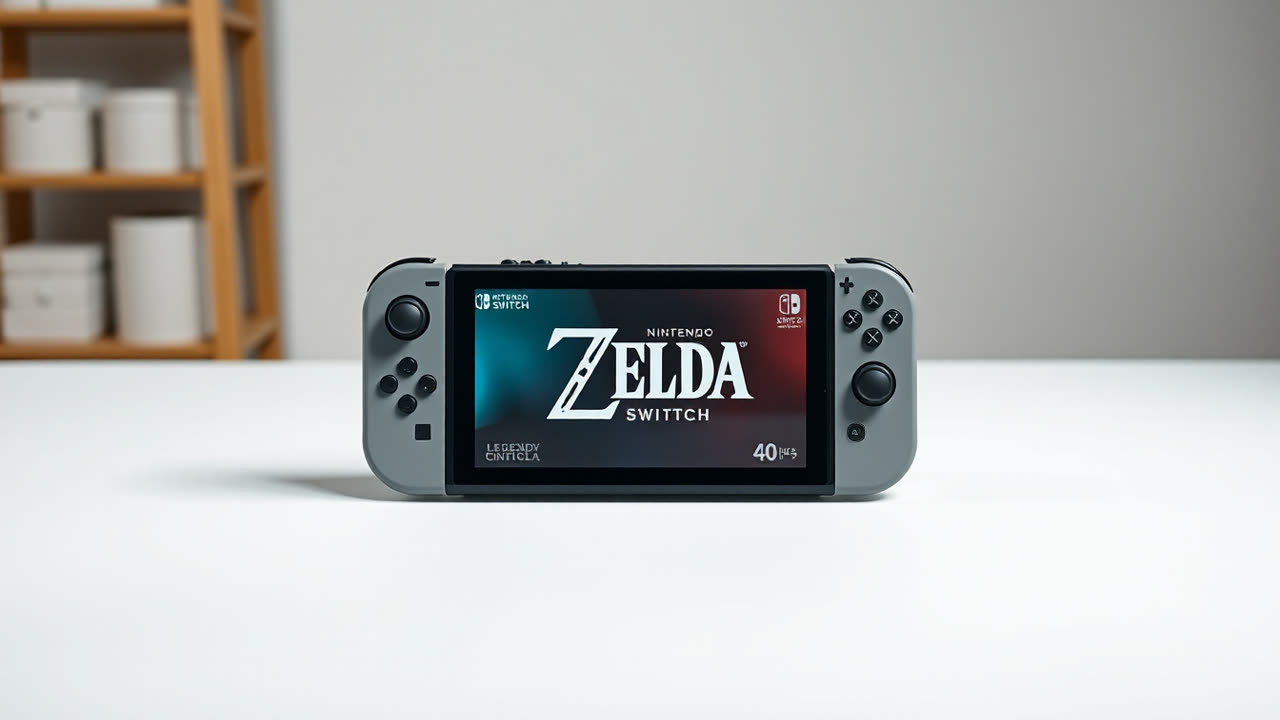
Nintendo's long-anticipated next-generation console, widely dubbed the Switch 2, is set to launch on October 29, 2026, coinciding with a special 40th-anniversary Legend of Zelda edition that notably omits a bundled copy of *Ocarina of Time*. This strategic timing, aligning with the actual 40th anniversary of the seminal *Legend of Zelda* series which debuted in 1986, positions the new hardware at the nexus of Nintendo's rich legacy and its future trajectory in a fiercely competitive gaming landscape. The absence of a classic like *Ocarina of Time* in a premium anniversary bundle, while perhaps a minor detail for some, signals Nintendo's confidence in the new hardware and its launch titles, rather than relying on nostalgia as a primary sales driver for the hardware itself.
The release of the Switch 2 carries immense weight for Nintendo, users, and the broader industry. For players, it promises a significant leap in performance, addressing the graphical and processing limitations that have increasingly hampered the original Switch as new, more demanding titles emerge. Reports and industry analyst predictions suggest the Switch 2 will feature more powerful silicon, potentially leveraging custom Nvidia technology, to enable higher resolutions, improved frame rates, and ray tracing capabilities, bringing Nintendo's handheld-hybrid closer to the graphical fidelity of its console rivals. This upgrade is crucial for modern multiplatform titles, potentially reducing the number of significant third-party games that either skip the Switch entirely or arrive with substantial visual compromises. For Nintendo, the Switch 2 represents a critical evolution, aimed at maintaining its unique market position while fending off growing competition from more powerful handheld PCs like Valve's Steam Deck, ASUS ROG Ally, and Lenovo Legion Go, which have carved out a niche for high-fidelity portable gaming.
Compared to its predecessor, the original Nintendo Switch, launched in 2017, the Switch 2 is expected to offer a substantial generational improvement. While the original Switch redefined portable gaming with its hybrid design, its Nvidia Tegra X1 chip is now nearly a decade old, struggling with modern game engines. The Switch 2 is rumored to feature a larger, potentially OLED screen, enhanced battery life, and improved Joy-Con controllers, addressing some of the original model's ergonomic and technical shortcomings. Its direct rivals, the PlayStation 5 and Xbox Series X, offer significantly more raw power, but Nintendo has historically excelled by focusing on unique gameplay experiences and portability rather than raw horsepower. The Switch 2 aims to bridge some of this performance gap without abandoning its core hybrid identity, likely targeting 1080p handheld and 4K docked output, a considerable upgrade from the original's 720p handheld and 1080p docked capabilities. Pricing is anticipated to be around $399-$449, reflecting the upgraded technology while attempting to remain competitive within the console market.
The decision to launch a Zelda 40th anniversary edition without a bundled *Ocarina of Time* underscores Nintendo's confidence in its immediate software pipeline for the new console. Instead of bundling an N64 classic, Nintendo is likely banking on a strong launch lineup of new or enhanced titles that showcase the Switch 2's capabilities, potentially including a new Zelda title or a graphically overhauled existing one. This strategy avoids diluting the perceived value of the new hardware by tying it to a game that is already widely available through Nintendo Switch Online or virtual console services on previous platforms. It also leaves room for future re-releases or remasters of classic Zelda titles as separate purchases, maximizing revenue from its beloved IP.
Looking ahead, the Switch 2's launch will undoubtedly reshape the handheld and hybrid gaming landscape. Nintendo's success will hinge on a robust software lineup, including both new first-party blockbusters and strong third-party support, to fully leverage the new hardware's potential. The console's pricing and the continued appeal of its hybrid design will be crucial factors in its adoption. Furthermore, the longevity of the Joy-Con design, and whether it introduces new input methods or addresses drift issues, will influence user satisfaction. Nintendo's commitment to backward compatibility, rumored to be a key feature, will also be vital for retaining its vast existing player base and their digital libraries. The industry will closely watch how the Switch 2 balances performance with battery life and portability, as it sets the benchmark for the next generation of hybrid gaming and potentially influences future designs from both traditional console makers and PC handheld manufacturers. The October 29 release marks not just a new console, but a new chapter for Nintendo, aiming to redefine what a portable gaming experience can be in the late 2020s.