Nintendo Switch 2 Poised to Challenge Steam Deck in Portable Gaming Market
Nintendo's anticipated new console aims for market dominance with an accessible price point and exclusive titles, setting up a direct confrontation with Valve's powerful Steam Deck.
✨ This content was summarized and interpreted by AI; it may contain errors — please verify accuracy with the original sources. Learn more
Listen to this story
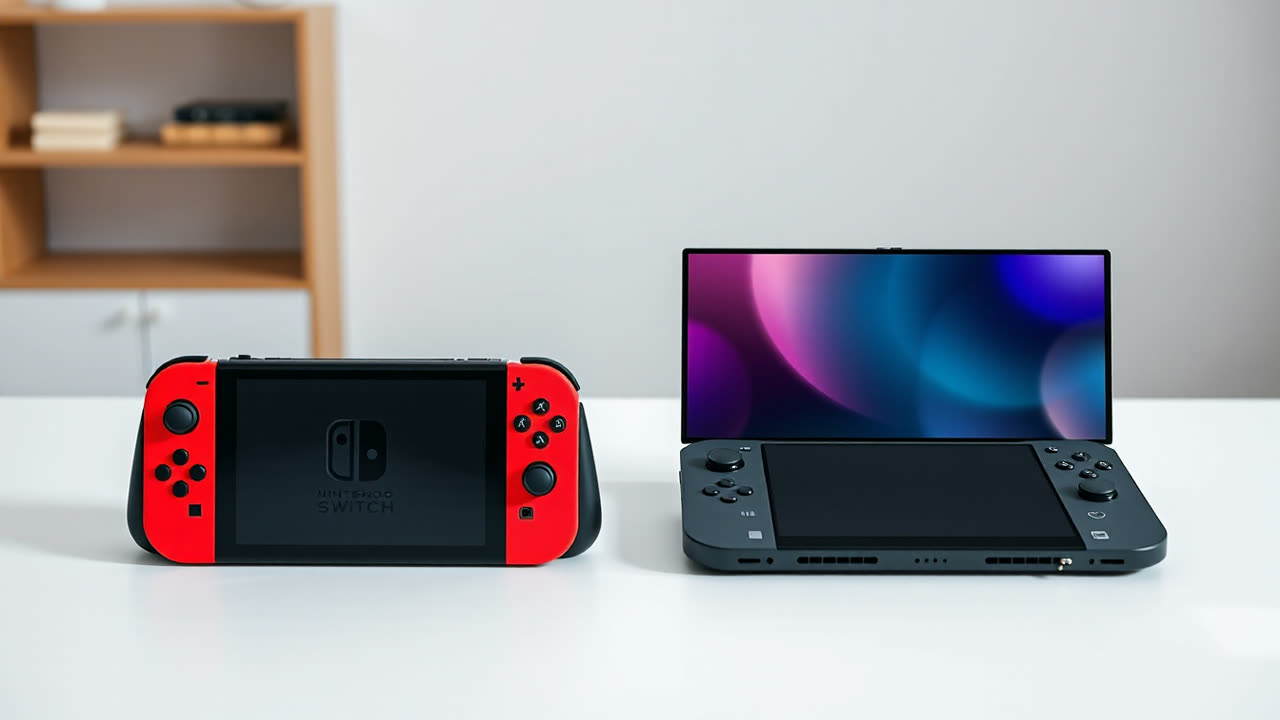
The landscape of portable gaming is bracing for a seismic shift as the anticipated Nintendo Switch 2 (or its successor) prepares to challenge Valve's established Steam Deck, with early indications suggesting Nintendo's new hardware could launch with a more accessible price point, despite Valve's console retaining a significant edge in raw computational muscle. This dynamic sets up a fascinating battle for market dominance, where affordability and Nintendo's vast exclusive library will contend with the Steam Deck's open PC ecosystem and raw performance capabilities.
Valve's Steam Deck, particularly the latest OLED model released in November 2023, boasts a powerful AMD APU featuring a Zen 2 CPU and an RDNA 2 GPU, delivering up to 1.6 teraflops of FP32 performance. This architecture enables it to natively run a vast library of PC games from Steam and other launchers, often at resolutions up to 800p on its vibrant 7.4-inch OLED display. In contrast, while official specifications for the Nintendo Switch 2 remain under wraps as of September 2026, persistent industry rumors and developer kit leaks point towards an NVIDIA Tegra T239 chip, a custom SoC based on the Ampere architecture with ARM cores. This rumored configuration is expected to offer significantly enhanced performance over the original Switch's Tegra X1, potentially targeting 1080p resolution in docked mode and 720p or 1080p with upscaling technologies like DLSS in handheld mode. However, even with these advancements, the Switch 2's rumored GPU performance, estimated to be in the range of 2-4 teraflops (with DLSS capabilities), is still likely to trail the Steam Deck's raw rasterization power in many scenarios, especially given the Steam Deck's more mature and direct access to PC game optimizations.
The implications for users are profound, extending beyond mere frame rates and resolutions. For the Steam Deck, its inherent PC architecture means unparalleled access to a monumental library of games, including newer AAA titles, often at settings and fidelities that push the boundaries of handheld gaming. Users benefit from Steam's robust ecosystem, modding capabilities, and the flexibility to install other operating systems, effectively making it a portable gaming PC. This open-ended nature appeals to enthusiasts who prioritize versatility and cutting-edge graphics, willing to pay the Steam Deck OLED's starting price of $549. Conversely, the Nintendo Switch 2, despite potentially being less powerful on paper, will leverage Nintendo's unparalleled expertise in hardware-software optimization and, crucially, its exclusive first-party titles. Games like *The Legend of Zelda*, *Mario*, and *Pokémon* are system sellers, and Nintendo has a proven track record of creating compelling experiences that transcend raw graphical fidelity. The rumored lower price point, potentially around $399, makes the Switch 2 a more accessible entry point for a broader audience, including families and casual gamers who prioritize ease of use and exclusive content over bleeding-edge performance.
From an industry perspective, the arrival of the Switch 2 forces developers to consider a wider spectrum of hardware targets. Studios targeting the Steam Deck must optimize PC titles for its Linux-based SteamOS and specific AMD hardware, often requiring a different approach than traditional desktop PC development. For the Switch 2, developers will likely benefit from Nintendo's established developer tools and the potential for a more unified hardware target, albeit with the challenge of maximizing performance within a more constrained (compared to high-end PCs) mobile chip. The existence of both devices validates the burgeoning handheld gaming market, pushing innovation in portable chip design, battery efficiency, and display technology. Valve's success with the Steam Deck has already spurred competitors like ASUS with the ROG Ally and Lenovo with the Legion Go, creating a new "handheld PC" category that offers Windows-based alternatives with varying power profiles and price points. The Switch 2's entry will further solidify this market segment, potentially driving both Valve and its PC handheld rivals to innovate faster, perhaps even exploring next-generation APUs or more aggressive pricing strategies.
Looking ahead, the handheld gaming sector will likely bifurcate further. The Steam Deck and its PC handheld brethren will continue to cater to the enthusiast market, prioritizing raw power, open ecosystems, and the latest AAA titles, constantly pushing the boundaries of what's possible in a portable form factor. We can anticipate iterative improvements in APU efficiency, display technology, and perhaps even modular designs that allow for component upgrades. For Nintendo, the Switch 2 represents a strategic evolution, aiming to capture the mass market with a compelling balance of performance, affordability, and its iconic intellectual property. Its success hinges not just on teraflops, but on how effectively it integrates new technologies like DLSS with its unique gameplay experiences and robust online services. The long-term outlook suggests a healthy competition that benefits consumers, offering distinct choices between the raw, expansive power of a portable PC and the meticulously curated, accessible experience of a dedicated console.