Nissan Unveils Affordable Pixo EV, Disrupting European City Car Segment
Nissan officially unveils its new all-electric Pixo city car, poised to disrupt the European A-segment with a sub-$25,000 price and a 259 km WLTP range, marking a strategic pivot towards accessible urban utility.
✨ This content was summarized and interpreted by AI; it may contain errors — please verify accuracy with the original sources. Learn more
Listen to this story
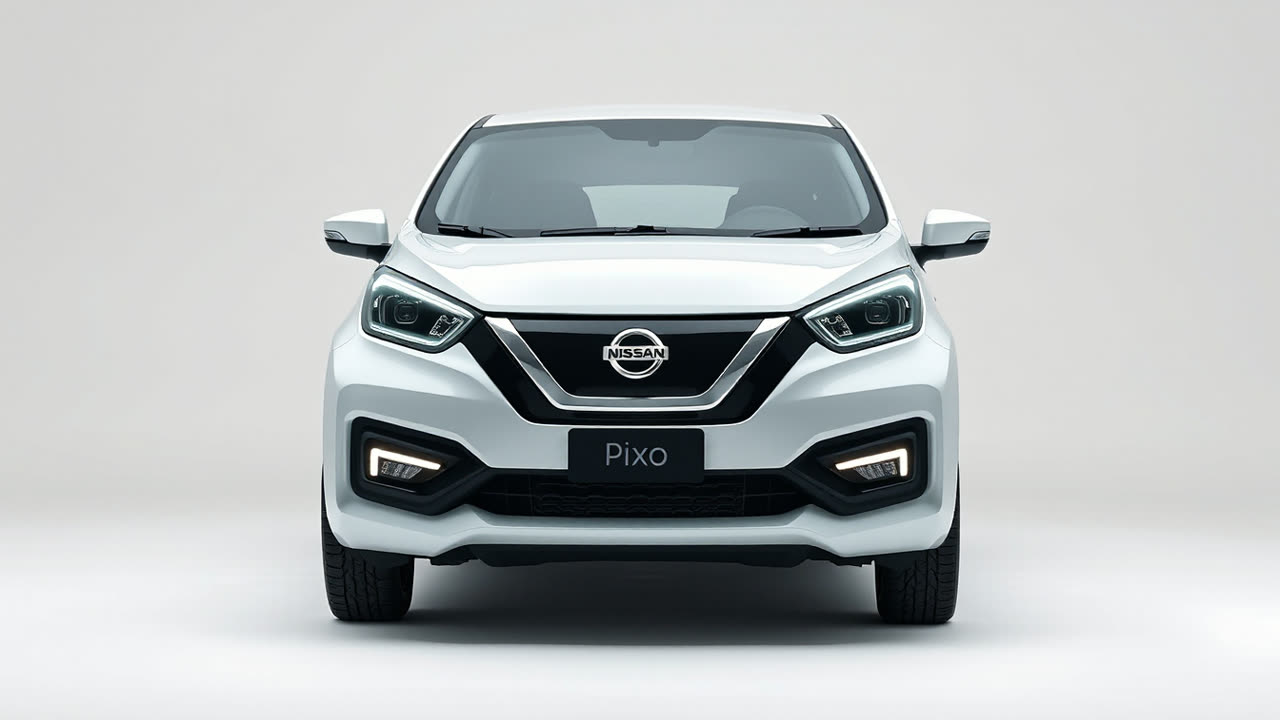
Nissan has officially unveiled its new Pixo, an all-electric city car poised to disrupt the European A-segment with a starting price expected to be under $25,000 (around £17,000 to £20,000 or €19,000 to €24,000) and a WLTP range of 259 kilometers (161 miles). This reintroduction of the Pixo nameplate, previously associated with a rebadged Suzuki petrol car, marks a significant strategic pivot for Nissan, emphasizing accessibility and urban utility in its expanding electric vehicle lineup. Customer deliveries for the four-seat EV are slated to commence in early 2027, with detailed pricing and market specifications to be announced in December 2026.
The new Pixo is a direct result of Nissan's strategic partnership with Renault, sharing its underlying platform, a 27.5 kWh Lithium Iron Phosphate (LFP) battery, and an 82 hp (60 kW) front-wheel-drive electric motor with the Renault Twingo E-Tech and the Dacia Spring. While mechanically similar to its Alliance siblings, Nissan has differentiated the Pixo with "pixel-inspired styling," a distinct front and rear design, and a unique interior, aiming to give it a "smart, fun, and highly capable" personality. This includes design cues like squared-off headlights with diagonal LED graphics and subtle "Easter eggs" such as the number 23, which signifies "Ni-San" in Japanese. The vehicle measures 3,796 mm long, 1,790 mm wide, and 1,512 mm tall, making it 11 cm shorter than the Nissan Micra and ideal for navigating congested urban environments with a tight 9.9-meter turning circle. Practicality is a key focus, offering 356 liters of boot space (including 50 liters for charging cables) that expands to 1,221 liters with the rear seats folded, and independent sliding rear seats for flexible passenger and cargo configurations.
The significance of the Pixo's launch extends beyond its individual specifications. It represents a crucial move by Nissan to address the burgeoning demand for affordable electric vehicles, a segment increasingly vital for broader EV adoption in Europe. With many analysts predicting that affordable EVs, potentially priced around €10,000-€15,000, are the key to Europe meeting its ambitious 60% EV market share mandate by 2030, the Pixo's sub-$25,000 target positions it as a significant contender. This strategy contrasts with the earlier focus of many automakers on larger, more expensive premium EVs, which led to a cooling of EV sales growth in some markets and the discontinuation of some ambitious EV plans. Nissan's commitment to making EVs more accessible and affordable is a core tenet of its "The Arc" business plan, which aims to reduce the cost of its next-generation EVs by 30% compared to current models like the Ariya, and achieve cost parity with internal combustion engine (ICE) vehicles by 2030. The Pixo's use of LFP battery chemistry, a first for Nissan in Europe, is instrumental in achieving these cost reductions and enhancing longevity.
The Pixo's modest 259 km WLTP range, while sufficient for urban and suburban commuting (estimated real-world range of 180-220 km), underscores its purpose as a city car rather than a long-distance cruiser. This "right-sized" battery approach is a growing trend, as most daily driving falls within moderate distances, making extreme range unnecessary for the majority of drivers and contributing to lower costs and improved efficiency. Standard 50 kW DC rapid charging allows for a 15-80% charge in approximately 28 minutes, while 11 kW AC charging, including bi-directional capability, offers convenient home and workplace charging and potential vehicle-to-grid (V2G) functionality. The inclusion of Google Gemini AI and connected navigation functions through Google built-in, along with advanced driver-assistance systems like automated emergency braking and lane-keeping, further enhances its appeal as a modern urban companion.
In the competitive landscape, the Pixo directly challenges rivals such as the Renault Twingo, Hyundai Inster, Honda Super-N, and the Dacia Spring, all vying for dominance in the compact EV segment. While sharing much of its underpinnings with the Twingo and Spring, Nissan aims to differentiate the Pixo through its distinctive design and standard features, such as the inclusion of 50 kW DC charging and 11 kW bi-directional AC charging on all grades, a specification choice Nissan made independently of Renault. This strategic decision could give the Pixo an edge in value, especially if it qualifies for government incentives like the UK's Electric Car Grant, potentially reducing its price further.
Looking ahead, the Pixo's success will be a critical test of Nissan's "Vision" strategy, which emphasizes strategic partnerships, accelerated development, and a clear product portfolio focused on meeting diverse customer needs. Its launch in early 2027, following the updated Nissan Leaf and the new Micra EV (also based on a Renault platform), signals Nissan's aggressive push to expand its European EV lineup, with a target of 40% electrified vehicle sales globally by 2026 and 60% by 2030. The shift towards smaller, more affordable EVs like the Pixo suggests a growing maturity in the EV market, moving beyond early adopters to target a broader, more budget-conscious demographic. This could significantly accelerate the overall transition to electric mobility, particularly in dense urban environments where compact, efficient, and affordable vehicles are most needed. The industry will be closely watching whether Nissan's blend of shared technology, distinctive design, and aggressive pricing can truly make the Pixo a mass-market EV success.