Nous Research's Hermes Desktop Introduces One-Click Local LLM Setup
Nous Research's Hermes Desktop now offers a one-click setup for large language models, automatically configuring optimal builds for individual GPUs and democratizing high-performance AI inference.
✨ This content was summarized and interpreted by AI; it may contain errors — please verify accuracy with the original sources. Learn more
Listen to this story
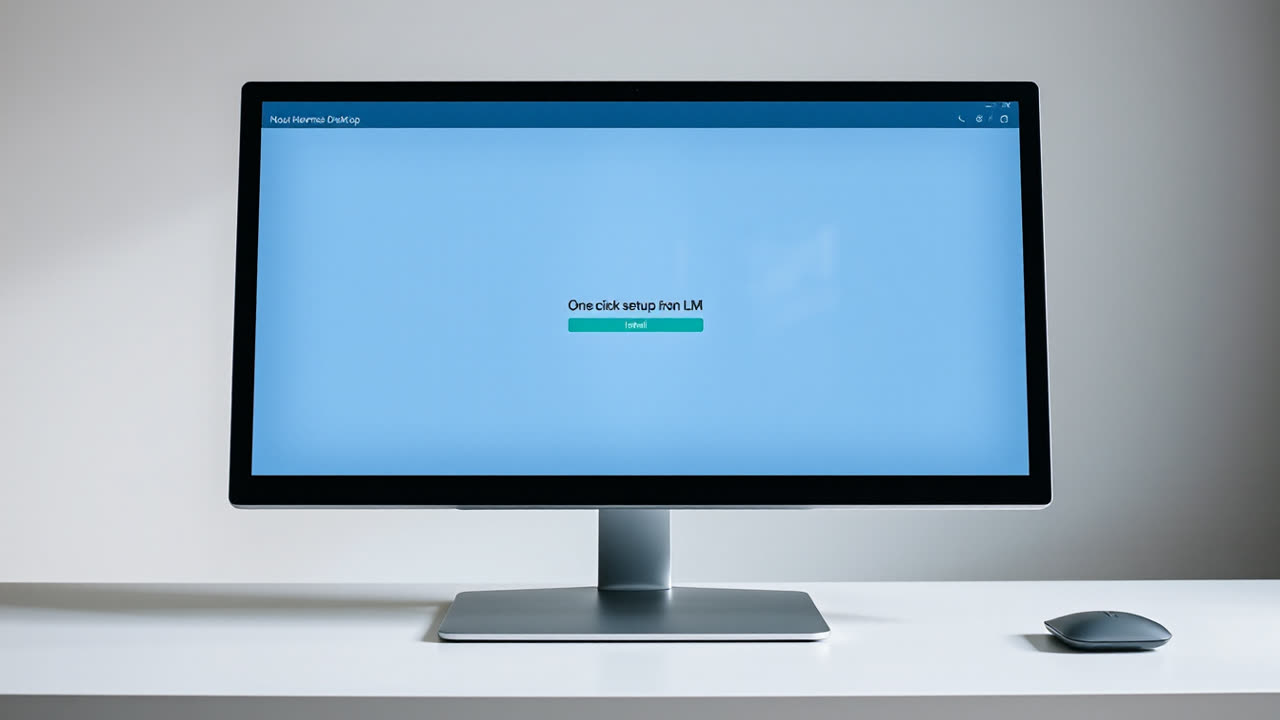
Nous Research has dramatically streamlined the local deployment of large language models (LLMs) with a new one-click setup feature in its Hermes Desktop application, fundamentally altering the accessibility barrier for high-performance AI inference on consumer hardware. This innovation allows Hermes Desktop to automatically detect a user's GPU specifications, cross-reference them against a curated model catalog, and then intelligently select, download, and configure the optimal LLM build, including the intricate `llama.cpp` parameters, all without manual intervention. This capability represents a significant leap from the often-complex, multi-step processes previously required, which frequently involved command-line interfaces, manual dependency management, and intricate configuration files, effectively collapsing hours of technical troubleshooting into mere seconds.
The immediate impact on individual users is profound, democratizing access to powerful AI models that were once the exclusive domain of developers or those with specialized technical expertise. Prior to this, even with tools like LM Studio or Ollama offering simplified interfaces, users still contended with selecting the correct model quantization, ensuring compatibility with their specific GPU architecture (e.g., NVIDIA CUDA, AMD ROCm), and manually adjusting parameters for optimal performance. Nous Research's solution removes these cognitive load points entirely, opening the door for a broader demographic of creators, researchers, and hobbyists to experiment with and integrate local LLMs into their workflows, from advanced content generation to personalized AI assistants. This ease of use could accelerate the development of privacy-centric AI applications, as users can run models locally without relying on cloud services, ensuring data remains on their device.
From an industry perspective, this development signals a pivotal shift towards "local-first" AI experiences, challenging the prevailing cloud-centric paradigm. While cloud LLMs offer scalability and access to the largest models, local inference provides unparalleled privacy, lower latency for specific applications, and freedom from recurring subscription costs. Nous Research's move intensifies competition within the local LLM ecosystem, pushing rivals to further simplify their own deployment mechanisms. Existing solutions like LM Studio have offered graphical interfaces for model downloading and execution, and Ollama has provided a robust API for running models, but neither has fully integrated the automatic hardware-to-model fit-checking and `llama.cpp` configuration that Hermes Desktop now boasts. This automated optimization is crucial because even a seemingly minor mismatch in quantization or an unoptimized `llama.cpp` flag can drastically reduce inference speed or lead to outright crashes, a common frustration for newcomers.
The underlying `llama.cpp` project itself, which Hermes Desktop leverages, has been instrumental in making LLMs run efficiently on consumer CPUs and GPUs, supporting various quantization formats (e.g., GGUF) that significantly reduce model size and VRAM requirements. However, configuring `llama.cpp` for peak performance often requires a nuanced understanding of a user's hardware and the specific model's architecture. Nous Research's automated system intelligently navigates these complexities, ensuring that users automatically receive the highest-quality model build that their GPU can realistically handle, preventing issues like out-of-memory errors or suboptimal performance from incorrect settings. This intelligent selection process, which considers factors like available VRAM and GPU compute capabilities, distinguishes it from simpler download-and-run applications.
Looking ahead, this trend towards hyper-simplified local AI deployment is likely to accelerate, fostering innovation in edge computing and offline AI capabilities. We can anticipate other developers integrating similar "smart" model selection and configuration features into their platforms, potentially leading to a standardized, universally accessible method for running AI locally. Furthermore, as models become more efficient and hardware continues to advance, the gap between cloud-based and local LLM performance for many common tasks will continue to narrow, making local AI a viable and often preferable alternative. This could also spur advancements in hardware-software co-design, with GPU manufacturers potentially optimizing their drivers and architectures specifically for simplified LLM deployment frameworks. The long-term implication is a future where personalized, private, and powerful AI agents run seamlessly on everyday devices, fundamentally changing how individuals interact with artificial intelligence and further decentralizing AI's immense capabilities.