Nous Research Ships Bot Mode for Hermes Agent, Ushering in a New Era of Personalized, Multi-Agent AI
Nous Research's new Bot Mode for Hermes Agent transforms single AI sessions into a dynamic roster of specialized, persistent bots, fundamentally reshaping personal AI workflows and fostering collaborative intelligence.
✨ This content was summarized and interpreted by AI; it may contain errors — please verify accuracy with the original sources. Learn more
Listen to this story
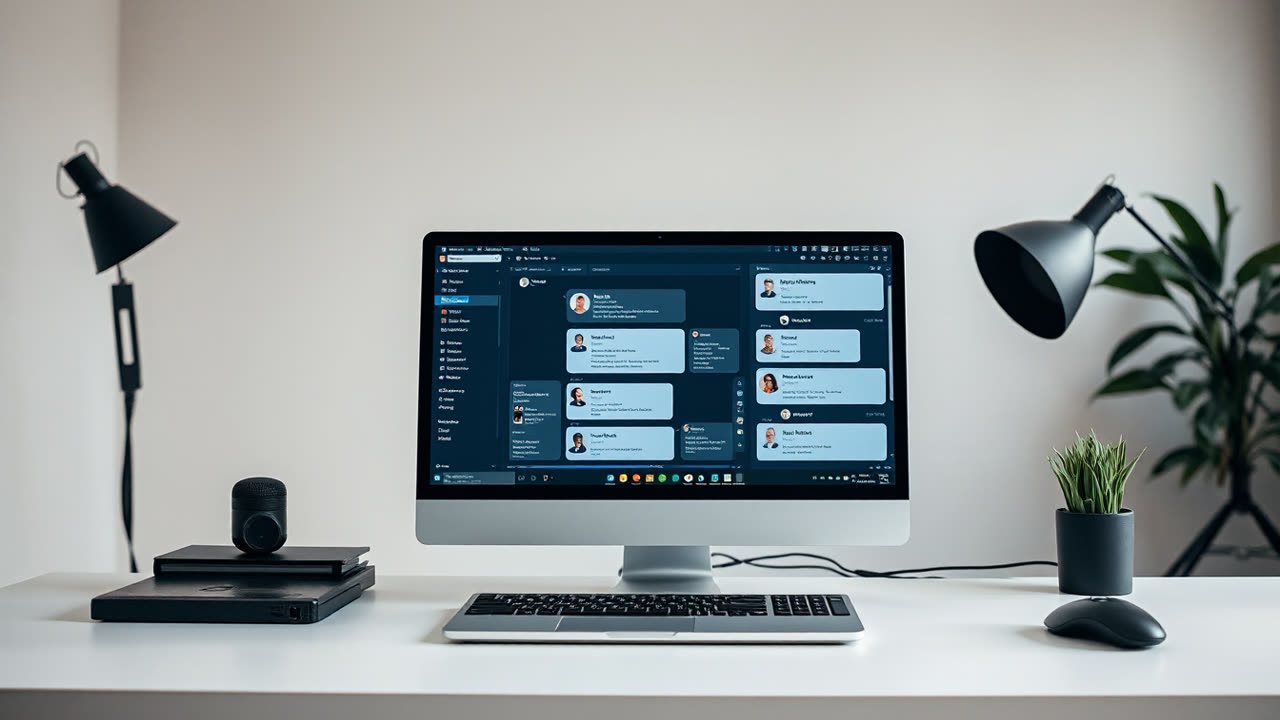
Nous Research has fundamentally reshaped the landscape of personal AI agents with the recent shipment of Bot Mode for its MIT-licensed Hermes Agent, transitioning from a singular agent session to a dynamic roster of named, specialized bots. This significant update, now bundled and default-on in Hermes Desktop v0.20.3, transforms each bot into a self-contained Hermes profile, complete with its own dedicated chat history, memory, skills, and even a pinned large language model (LLM). Initially launched as a one-day public beta plugin, Bot Mode enables these autonomous entities to communicate directly via a persistent Agent Inbox, using `@mention` for seamless handoffs of tasks. Each bot's isolated configuration, memory, and credentials reside in its own profile directory, ensuring context never leaks between specialized agents.
This architectural shift carries profound implications for both users and the burgeoning AI industry. For individual users and small development teams, Bot Mode democratizes advanced AI workflows by allowing the creation of highly specialized assistants that persist across sessions. Imagine a "researcher" bot, optimized with a powerful reasoning model like Claude, collaborating with a "writer" bot leveraging a more cost-effective model for content generation, all within a single environment. This eliminates the tedious process of re-configuring a general-purpose agent for disparate tasks, fostering efficiency and consistency. The introduction of group chats, supporting 2-6 bots, further amplifies collaborative potential, enabling multi-agent deliberation on complex problems, with hard caps (10 messages per send, 3 rounds) in place to prevent infinite loops. Furthermore, the ability to assign recurring "Routines" via Hermes' existing cron system means bots can automate daily summaries or nightly reports, offloading repetitive cognitive labor. Critically, Hermes Agent's open-source nature and support for any OpenAI-compatible endpoint, alongside native adapters for major LLM providers like Anthropic and Google, ensures users are never locked into a single vendor and only pay for their own LLM API calls.
In the broader industry, Nous Research, founded in 2022 and formalized in 2023 by Jeffrey Quesnelle, Karan Malhotra, "Teknium," and Shivani Mitra in New York City, is positioning itself as a leader in the open-source AI movement. The company's mission to advance human rights and freedoms through open-source AI development stands in stark contrast to the closed, proprietary models prevalent among tech giants. Nous Research has already attracted significant investment, including a $50 million Series A round in April 2025, and was reportedly in talks for new funding at a $1.5 billion valuation in July 2026, underscoring investor confidence in its decentralized vision.
The shift to a multi-agent paradigm addresses a critical challenge in AI: the limitations of single-agent systems for complex, multi-faceted tasks. While single agents excel at direct, simple operations, multi-agent systems are projected to drive a 45% growth rate in the AI agent market by automating intricate processes and improving decision-making, potentially reducing operational costs by up to 30% and increasing productivity by 35%. However, research has also highlighted pitfalls such as "coordination tax" and "error amplification" where additional agents can, counter-intuitively, degrade performance in open-ended tasks. Nous Research's Bot Mode, with its structured communication via `@mention` and explicit group chat limits, appears designed to mitigate these known issues, fostering efficient collaboration rather than chaos. Hermes Agent's unique "closed learning loop" that persists knowledge and builds skills across sessions, coupled with its unified messaging gateway across over 15 platforms, further differentiates it from many rivals.
Looking ahead, Nous Research's innovative use of the Solana network for decentralized, community-driven AI model training, rewarding contributors with tokens for their idle computing power, hints at a future where AI development is less reliant on massive, centralized data centers. This approach, alongside technologies like the Psyche Network for decentralized training and DataForge for synthetic data generation, suggests a long-term commitment to democratizing advanced AI capabilities. The "workstation tool" nature of Bot Mode, while immediately beneficial for individual developers and smaller teams, also points to potential future developments in enterprise-grade features like admin consoles or central audit logs, which regulated industries would require for broader adoption. The ability for Hermes bots to span local machines and remote servers already lays the groundwork for highly distributed and scalable personal AI infrastructures. As AI agents become increasingly sophisticated and pervasive, Nous Research's Bot Mode for Hermes Agent stands as a crucial step towards a more personalized, collaborative, and openly accessible AI ecosystem, empowering users to orchestrate their digital intelligence with unprecedented flexibility and control.