NVIDIA DLSS 5 on RTX 5090: Breakthrough Performance Meets Power Connector Bottleneck
Early community tests of NVIDIA's upcoming DLSS 5 on the flagship RTX 5090 reveal unprecedented performance gains, but also expose a critical power bottleneck with the 12V-2x6 connector.
✨ This content was summarized and interpreted by AI; it may contain errors — please verify accuracy with the original sources. Learn more
Listen to this story
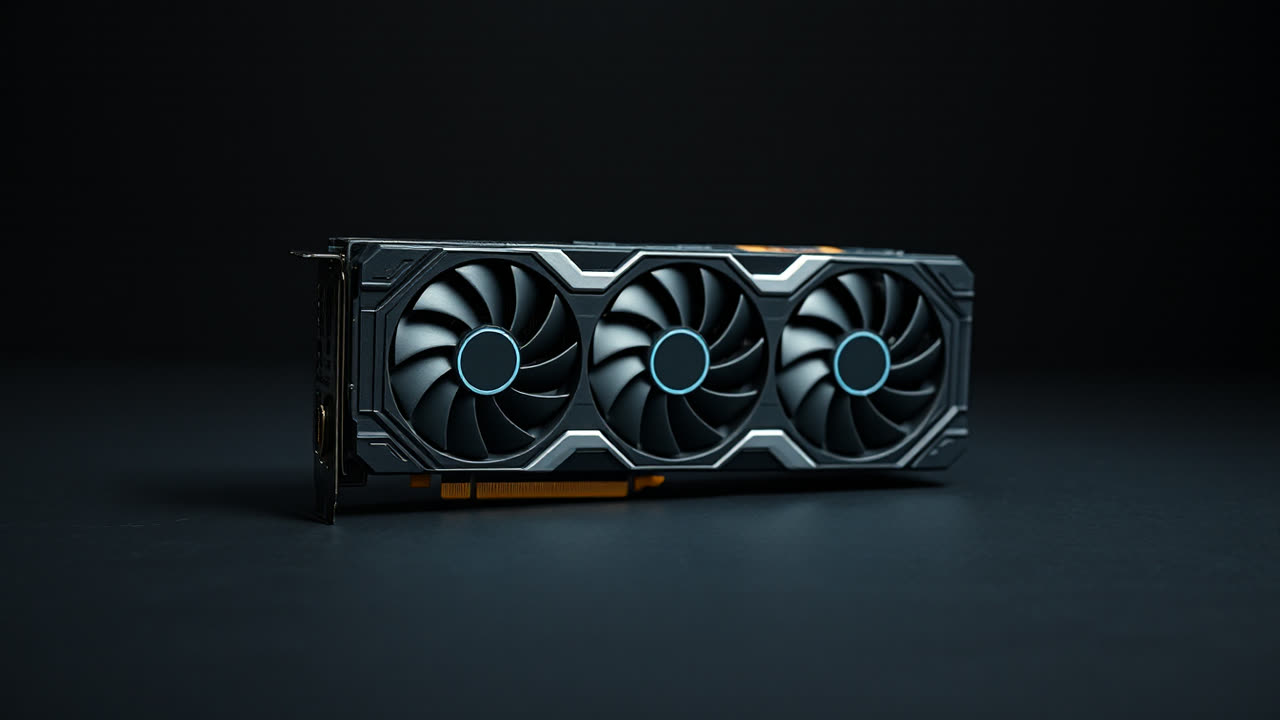
The early performance insights into DLSS 5 on NVIDIA's flagship RTX 5090, derived from community modifications, indicate a significant leap in rendering fidelity and frame rates, yet simultaneously expose the potential bottleneck posed by the 12V-2x6 power connector. NVIDIA's upcoming DLSS 5, poised for official release later this week, promises enhanced upscaling algorithms, potentially leveraging advanced AI models and improved temporal stability over its predecessors. Initial reports from community-driven tests on the RTX 5090 suggest that while DLSS 5 can deliver substantial performance gains, particularly in graphically intensive titles, the card's power demands when fully unleashed could push the 12V-2x6 connector to its specified limits, or even beyond, risking system instability or thermal issues. This revelation underscores a critical challenge for the next generation of ultra-high-end GPUs, where raw processing power continues to outpace the evolution of standardized power delivery solutions.
The implications for both users and the industry are profound. For gamers and professional content creators investing in an RTX 5090, the promise of unparalleled performance with DLSS 5 might be partially constrained by the very power infrastructure designed to support it. Users may face scenarios where the card's full potential, especially when overclocked or running demanding applications, is throttled by power limits, leading to inconsistent performance or even unexpected system shutdowns. This could necessitate more robust power supply units (PSUs) than currently estimated, or even specialized cabling solutions, adding unforeseen costs and complexity to high-end PC builds. From an industry perspective, this situation puts pressure on NVIDIA to optimize power efficiency in future GPU architectures, and on PSU manufacturers to rapidly innovate beyond existing standards. The 12V-2x6 connector, a successor to the controversial 12VHPWR, was introduced to address some of its predecessor's reliability concerns, aiming for a more secure connection and higher power delivery. However, if the RTX 5090, even with efficiency gains, can still push its 600W theoretical limit under peak loads with DLSS 5, it highlights a persistent arms race between GPU power and connector capability.
DLSS 5 represents a significant evolution from previous iterations, likely building upon the AI-powered frame generation of DLSS 3 and the ray reconstruction of DLSS 3.5. While specific technical details of DLSS 5 remain under wraps until its official launch, industry analysts anticipate improvements in image quality, artifact reduction, and broader game integration, potentially offering more refined upscaling across a wider range of resolutions and framerates. This would further solidify NVIDIA's leadership in AI-driven graphics enhancement, setting a higher bar for rivals. Competitors like AMD's FidelityFX Super Resolution (FSR) and Intel's Xe Super Sampling (XeSS) continue to develop their own upscaling technologies, with FSR 3 introducing its own frame generation capabilities, but often lag behind DLSS in terms of image quality and temporal stability, particularly in early iterations. The RTX 5090 itself is expected to leverage NVIDIA's next-generation "Blackwell" architecture, promising substantial gains in raw rasterization performance, ray tracing capabilities, and AI acceleration over the previous Ada Lovelace generation (e.g., RTX 4090). Early performance indications, even with the power concerns, suggest the RTX 5090 with DLSS 5 could deliver a generational leap that redefines high-fidelity gaming at 4K and beyond.
Looking ahead, the tension between ever-increasing GPU power and power delivery standards is set to intensify. NVIDIA may need to implement more aggressive power management firmware on the RTX 5090 to ensure stability within the 12V-2x6's limits, potentially impacting peak performance. This could also accelerate the development of even more robust power connectors or entirely new power delivery methodologies, possibly moving towards direct motherboard integration or more modular solutions. The industry may also see a greater emphasis on power efficiency in chip design, with future architectures prioritizing performance-per-watt to mitigate these issues. Furthermore, the reliance on community mods to explore early DLSS 5 performance underscores the eagerness of the enthusiast community to push technological boundaries, often preceding official benchmarks. As game engines become more complex and demand higher fidelity, the synergy between advanced upscaling technologies like DLSS 5 and powerful hardware like the RTX 5090 will be crucial. However, the foundational infrastructure, particularly power delivery, must evolve in lockstep to avoid becoming the ultimate limiting factor in the pursuit of next-generation graphical experiences.