NVIDIA's 75W Single-Slot RTX 3060: Half the Performance, 'Frightening Thermals'
A specialized 75W NVIDIA RTX 3060, drawing all power from the PCIe slot, reportedly delivers half the performance of its standard counterpart while struggling with severe thermal issues, highlighting extreme design compromises.
✨ This content was summarized and interpreted by AI; it may contain errors — please verify accuracy with the original sources. Learn more
Listen to this story
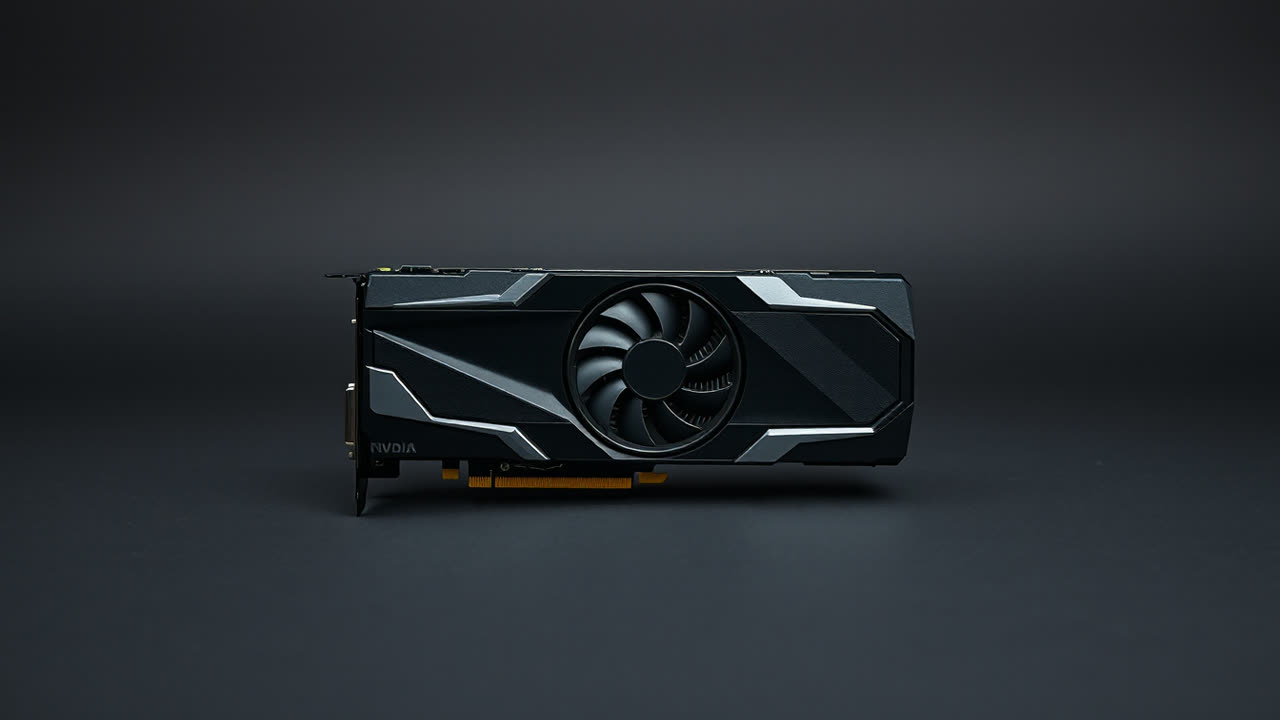
The emergence of a single-slot, low-profile, 75W NVIDIA RTX 3060, drawing all its power solely from the PCIe slot, presents a stark illustration of design compromises pushed to their limits, yielding a graphics card that reportedly halves the performance of a standard 12GB RTX 3060 while grappling with "frightening thermals." This specific variant, which appears to be an OEM or specialized model rather than a mainstream retail offering, encapsulates a perplexing trade-off, where extreme form factor and power efficiency goals seemingly override fundamental performance and thermal management principles for a consumer-grade GPU.
The core news revolves around the severe performance degradation observed in this unique RTX 3060 iteration. While a standard RTX 3060 typically draws around 170W via an 8-pin power connector, this 75W model operates entirely within the power envelope provided by the PCIe x16 slot, which is capped at 75W. This drastic reduction in power delivery necessitates significant downclocking of the GPU core and memory, directly translating to a substantial decrease in processing capabilities. Benchmarks reportedly show this 75W RTX 3060 performing closer to an RTX 3050 or even older GTX 1650 Super in some titles, rather than its full-power sibling. The thermal challenges are equally alarming; cramming a GPU of this caliber into a single-slot, low-profile form factor without external power often results in inadequate cooling, leading to high operating temperatures and further performance throttling to prevent damage. This creates a vicious cycle where the limited power budget and poor thermals conspire to cripple the card's potential.
The existence of such a product, despite its evident performance shortcomings, highlights a niche but persistent demand for graphics solutions in extremely compact or power-constrained systems. This typically includes small form factor (SFF) PCs, embedded systems, or certain industrial applications where physical space and power supply limitations are paramount. However, for a card marketed as an "RTX 3060," even if implicitly, the user experience is likely to be one of profound disappointment. Users seeking an RTX 3060 are generally looking for a card capable of solid 1080p or entry-level 1440p gaming with modern titles, a benchmark this 75W variant demonstrably fails to meet. The "why it matters" here is multifaceted: for users, it represents a cautionary tale against assuming a GPU's model number guarantees a certain performance tier, especially with highly specialized variants. For the industry, it underscores the ongoing struggle to balance miniaturization and power efficiency with acceptable performance and thermal management, particularly when retrofitting higher-tier GPUs into lower power envelopes.
Historically, low-profile and single-slot GPUs have existed across various generations, often targeting workstation or HTPC (Home Theater PC) markets where quiet operation and compact size are prioritized over raw gaming power. NVIDIA itself offers professional low-profile cards like the RTX A2000, which also operates within a 70W power envelope and sports a dual-slot, low-profile design, delivering respectable performance for its class in professional applications. The RTX A2000, while not a direct gaming card, showcases what NVIDIA can achieve in a power-constrained, compact form factor, often outperforming the crippled 75W RTX 3060 in benchmarks where the latter is severely throttled. Comparing this specialized RTX 3060 to its full-fat counterpart reveals the stark reality: a standard 12GB RTX 3060 offers significantly higher clock speeds, more CUDA cores enabled by its larger power budget, and robust cooling solutions, resulting in typically double or more the frame rates in demanding games. Even the lower-tier RTX 3050, when operating at its standard power, can offer a more consistent and often superior gaming experience than this constrained RTX 3060 variant, highlighting the extent of its performance compromise.
Looking ahead, the market for compact and power-efficient GPUs is unlikely to wane. As SFF PCs gain traction and embedded systems become more powerful, there will always be a demand for graphics cards that fit stringent physical and power requirements. However, this specific RTX 3060 model serves as a critical lesson in product segmentation and realistic expectations. Future designs for low-power, compact GPUs will need to either embrace the limitations by targeting lower performance tiers more appropriately (e.g., a truly optimized RTX 3050 or 4050 low-profile) or innovate significantly in cooling and power delivery to unlock more performance from higher-tier silicon within tight constraints. We might see more widespread adoption of highly efficient architectures, potentially leveraging next-generation process nodes, to squeeze more performance per watt into compact designs. Furthermore, the rise of external GPU enclosures (eGPUs) and cloud gaming services could also influence the demand for internal low-profile solutions, as users might opt for powerful external solutions or streaming for demanding tasks, reserving internal slots for basic display output or professional applications with specific form factor needs. Ultimately, for a low-profile card to truly succeed without "frightening thermals" and "severely crippled performance," it must be designed from the ground up to respect its power and thermal envelopes, rather than simply being a de-tuned version of a much more powerful card.