NVIDIA's DLSS 5: The 'GPT Moment for Graphics' or an 'AI Slop Filter'?
NVIDIA's DLSS 5, with its new '3D-Guided Neural Rendering,' promises unprecedented visual realism but faces fierce backlash from gamers and developers who decry it as an 'AI filter' that overwrites artistic intent.
✨ This content was summarized and interpreted by AI; it may contain errors — please verify accuracy with the original sources. Learn more
Listen to this story
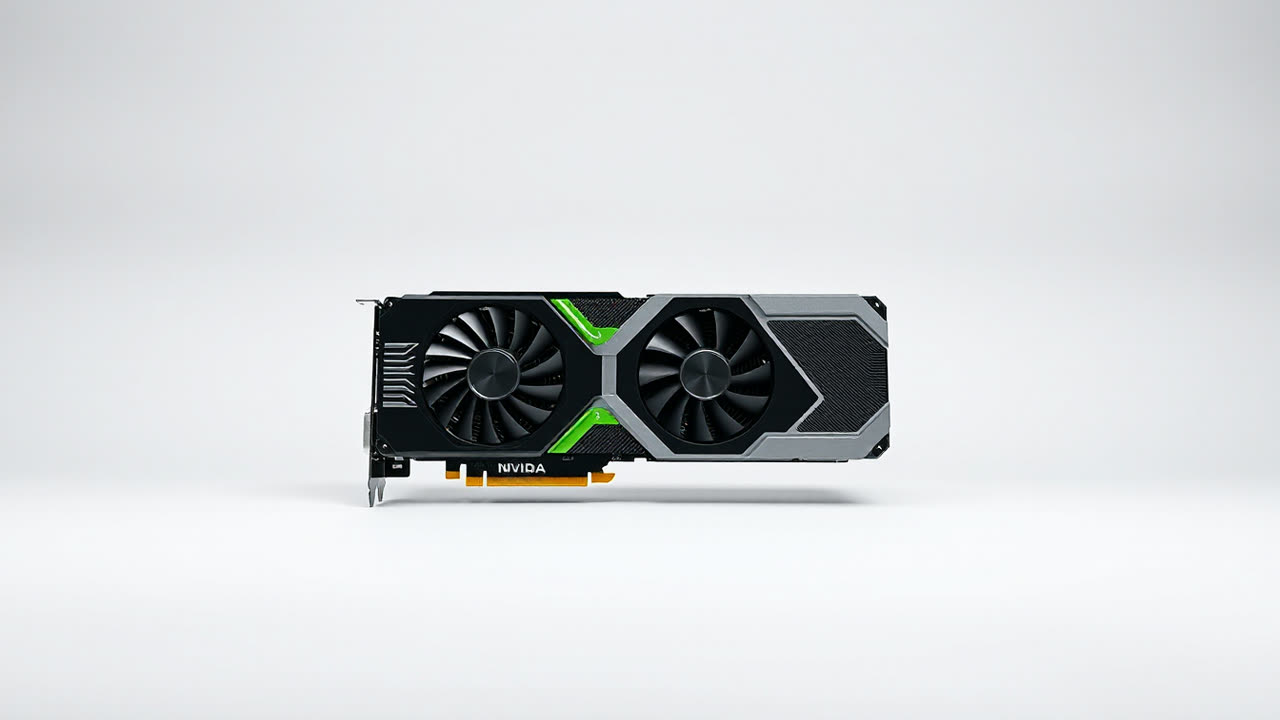
NVIDIA's DLSS 5, unveiled at GTC 2026 on March 16, 2026, and officially released on September 3, 2026, beginning with *NBA 2K27*, represents a profound shift in real-time graphics technology, sparking intense debate across the gaming and development communities. While NVIDIA CEO Jensen Huang heralded it as "the GPT moment for graphics" and the "biggest graphics breakthrough since real-time ray tracing in 2018," critics swiftly labeled it an "AI slop filter," accusing it of overwriting artistic intent and homogenizing game visuals.
Unlike previous iterations of Deep Learning Super Sampling (DLSS), which primarily focused on performance enhancement through intelligent upscaling, frame generation, and ray reconstruction—such as DLSS 4.5 drawing 23 out of every 24 pixels on screen—DLSS 5 introduces "3D-Guided Neural Rendering." This new approach uses an AI model to take the original frame's color and motion vectors, then actively *creates* and "infuses" additional photorealistic lighting, materials, and textures directly onto the native frame. NVIDIA claims this results in a "dramatic leap in visual realism," capable of understanding scene semantics and implementing complex graphical features like subsurface scattering on skin and light-material interactions on hair, aiming to bridge the visual gap between real-time games and Hollywood-grade visual effects. Developers are purportedly given granular controls over intensity, color grading, and masking to preserve artistic expression.
The controversy ignited almost immediately, fueled by early demonstrations and a leaked DLSS 5 build from *NBA 2K27* in late August 2026 that modders forced into other games. Gamers and developers alike reacted strongly to what they perceived as an "AI filter" that fundamentally altered a game's aesthetic. For instance, comparisons from *Resident Evil Requiem* showed a character, Grace Ashcroft, with "yassified" features, including plumped lips and added dark roots to her hair, sparking jokes about an "AI beauty filter." Critics highlighted instances of "hallucinations," where background elements would pop in and out, and a general loss of distinct art direction, leading to a homogenous "AI-enhanced" look across titles. Game artists, including Karla Ortiz and animator Mike York, voiced concerns that the technology was "disrespectful to the intentional art direction of devs," arguing that studios desiring hyperrealism would build it natively. Reports from developers at Capcom and Ubisoft suggested many teams were "surprised" by DLSS 5's announcement, casting doubt on NVIDIA's claims of seamless developer integration and control, especially given Capcom's previously "anti-AI" stance.
This new generative approach fundamentally diverges from competitor solutions like AMD's FidelityFX Super Resolution (FSR) and Intel's Xe Super Sampling (XeSS). FSR, currently in version 4, prioritizes broad hardware compatibility, working across a wide range of GPUs, including AMD, NVIDIA, and Intel cards. While offering significant performance boosts, FSR's image quality can sometimes exhibit more ghosting or pixelation, particularly in older versions. Intel's XeSS, which balances performance and flexibility, shows strong results on Intel Arc hardware but can suffer from shimmering in vegetation. Both FSR and XeSS, like earlier DLSS versions, aim to reconstruct or upscale existing frames, maintaining the original artistic output. DLSS 5, conversely, is not merely reconstructing; it is *generating* new visual data, making it a more aggressive, and thus controversial, intervention in the rendering pipeline.
The immediate impact on users is significant, as DLSS 5 is currently exclusive to NVIDIA's latest RTX 50-series GPUs (Blackwell architecture), leveraging their 5th Generation Tensor Cores. This high hardware requirement, coupled with its resource-intensive nature—early tests on modded games showed performance hits of up to 50% on an RTX 5090, adding approximately 8ms for 4K rendering—means that only a fraction of the PC gaming community can access it officially. While NVIDIA has indicated future support for RTX 40-series cards, this initial exclusivity creates a tiered visual experience, potentially forcing expensive upgrades for those seeking the latest graphical enhancements.
Looking ahead, the trajectory of DLSS 5 remains uncertain but pivotal. NVIDIA's continued emphasis on developer controls and the ability to fine-tune the effect suggests a path towards more nuanced implementations that could mitigate the "slop filter" criticisms. Initial hands-on tests with developer-tuned versions of DLSS 5 in *NBA 2K27* have already shown improvements over the controversial leaked builds, with some reviewers noting less "yassifying" and more subtle enhancements. The success of DLSS 5 will hinge on developer adoption and their willingness to meticulously integrate and customize the technology to align with their artistic visions, rather than simply enabling a default "AI filter." If implemented thoughtfully across the confirmed roster of upcoming titles like *Starfield* and *Assassin's Creed Shadows*, DLSS 5 could indeed deliver on its promise of pushing photorealism further. However, the fundamental debate over artistic integrity versus AI-generated enhancement will likely continue to shape player perception and industry discourse as generative AI increasingly permeates creative fields. The challenge for NVIDIA is to demonstrate that DLSS 5 is a tool for artistic empowerment, not artistic override, convincing both developers and players that its "GPT moment" for graphics is a genuine leap forward, not a step towards visual homogeneity.