Nvidia's RTX 50 Super GPUs Face Delay Due to Soaring GDDR7 Memory Costs
Nvidia's production-ready RTX 50 Super GPUs are reportedly in limbo as the exorbitant cost of 3GB GDDR7 memory modules, potentially tripling the price of 2GB chips, threatens to derail their market debut and value proposition.
✨ This content was summarized and interpreted by AI; it may contain errors — please verify accuracy with the original sources. Learn more
Listen to this story
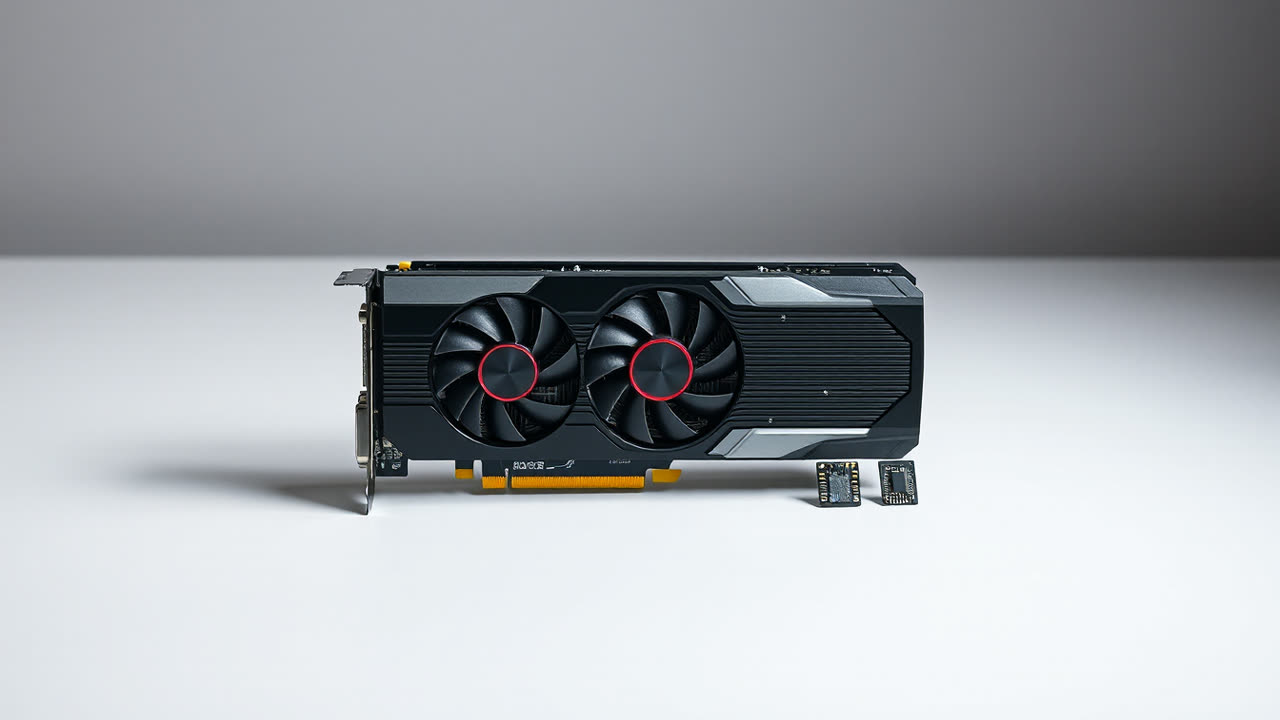
Nvidia's highly anticipated RTX 50 Super GPUs are reportedly production-ready, yet their market debut remains in limbo, primarily due to the prohibitive cost of 3GB GDDR7 memory modules, which are rumored to be two to three times more expensive than the 2GB chips slated for the vanilla RTX 50 series. This unprecedented memory pricing threatens to push the retail price of these mid-cycle refresh cards significantly beyond Nvidia's strategic targets, jeopardizing their value proposition and potentially disrupting the carefully calibrated GPU market.
The core of the issue lies in the nascent GDDR7 technology, which promises substantial performance uplifts over its GDDR6 and GDDR6X predecessors. Samsung, for instance, announced its 16Gb (2GB) GDDR7 memory chips in July 2023, boasting speeds up to 32 Gbps per pin and 1.5 TB/s bandwidth with a 384-bit bus, alongside a 20% improvement in power efficiency compared to GDDR6X. Micron followed suit, announcing its GDDR7 solutions with speeds exceeding 32 Gbps in November 2023, with samples available to partners. SK Hynix also showcased its GDDR7 memory in October 2023, targeting mass production in 2024. However, the transition to these higher-density 3GB modules, crucial for the "Super" variants that typically offer enhanced VRAM and performance, appears to be encountering significant cost hurdles. The reported cost disparity – a 3GB GDDR7 module costing triple the price of a 2GB module – would dramatically inflate the Bill of Materials (BOM) for Nvidia's partners, forcing a difficult choice between razor-thin margins and unpalatably high MSRPs.
This pricing dilemma carries profound implications for both consumers and the broader GPU industry. For users, the allure of the "Super" refresh, traditionally offering a performance boost and often a VRAM increase at a competitive price point, could be severely diminished. If the RTX 50 Super cards launch with a disproportionately higher price tag, the performance-per-dollar metric, a critical factor for many buyers, would suffer. This could push consumers towards the vanilla RTX 50 series, older generation cards, or even rival AMD offerings, particularly if AMD’s RDNA 4 architecture opts for a more cost-effective memory solution like high-bandwidth GDDR6 or GDDR6X for its mid-range and upper-midrange cards, or even less dense GDDR7 modules if their cost scales more favorably. Furthermore, a significant price hike could exacerbate the ongoing trend of increasing GPU prices, making cutting-edge gaming hardware less accessible to mainstream consumers and further cementing the enthusiast market as the primary target for top-tier GPUs.
From an industry perspective, this situation highlights the immense power wielded by memory manufacturers in the current tech landscape. The high cost of early GDDR7 production, coupled with what might be limited supply of the higher-density 3GB modules, gives Samsung, Micron, and SK Hynix considerable leverage. This could force Nvidia to reconsider its entire product stack strategy for the "Super" refresh. Potential scenarios include: launching the cards at a premium price and risking consumer backlash; delaying the launch indefinitely while waiting for GDDR7 costs to normalize; or even re-evaluating memory configurations, perhaps by using fewer 3GB modules or even sticking to 2GB modules on some "Super" SKUs, which would ironically negate the expected VRAM uplift that often defines a "Super" variant. Such a move would be a significant departure from previous "Super" generations, such as the RTX 40 Super series, which saw cards like the RTX 4070 Super, 4070 Ti Super, and 4080 Super deliver notable performance and VRAM improvements over their vanilla counterparts at competitive price points upon their January 2024 launch.
Looking ahead, the GDDR7 pricing issue could significantly impact the pace of next-generation memory adoption across the industry. While GDDR7's technical advantages are undeniable, its current cost structure may slow its widespread integration into all but the most premium graphics cards. This could provide an unexpected window for AMD to capitalize on potentially more cost-effective GDDR6X implementations or strategically price its RDNA 4 lineup to undercut Nvidia's GDDR7-constrained offerings. The long-term outlook suggests that while GDDR7 will eventually become more affordable as production scales and yields improve, the initial premium could force GPU manufacturers to be highly selective about which SKUs receive the new memory technology. Nvidia, known for its strategic market positioning and robust profit margins, will undoubtedly seek a resolution that balances technological leadership with market competitiveness. However, the current GDDR7 pricing presents a formidable challenge, potentially reshaping the launch trajectory and ultimate market reception of the highly anticipated RTX 50 Super series.