Nvidia's RTX Spark Benchmarks Reveal Formidable ARM-Based Windows Laptop Entry
Nvidia's new RTX Spark SoC, with 20-core and 18-core variants, has posted impressive Geekbench 7 scores, significantly outperforming many x86 mobile chips and signaling a major disruption in the Windows on ARM laptop market.
✨ This content was summarized and interpreted by AI; it may contain errors — please verify accuracy with the original sources. Learn more
Listen to this story
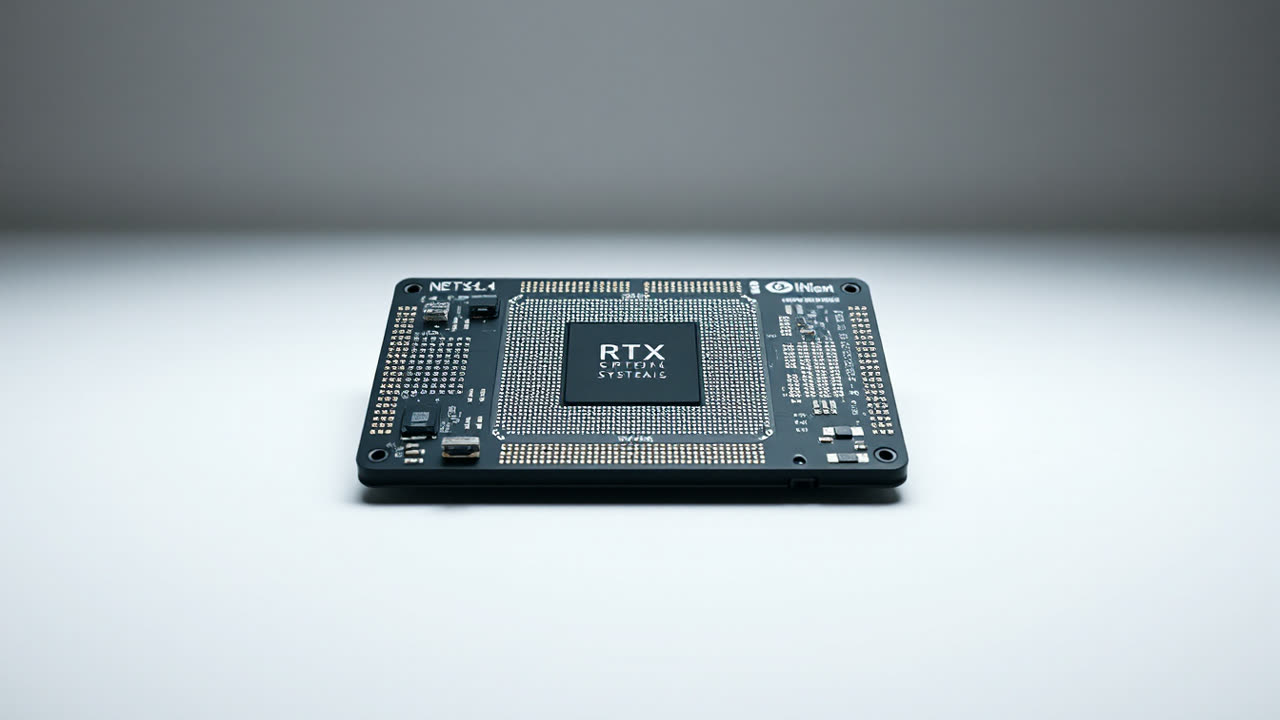
Nvidia's highly anticipated RTX Spark system-on-chip (SoC) has made a significant splash on Geekbench 7, with two distinct variants — a full 20-core model and a slightly cut-down 18-core version — revealing a formidable entry into the ARM-based Windows laptop market. The 20-core SKU achieved a multi-core score of 23,126 and a single-core score of 2,570, while its 18-core sibling posted 21,776 in multi-core and 2,541 in single-core tests. These results, obtained from engineering samples running Windows 11 on ARM with 64GB of unified memory under a "Balanced" power profile, underscore Nvidia's serious intent to disrupt the mobile computing landscape.
The core of this revelation lies in how the RTX Spark stacks up against its competitors. The 20-core RTX Spark notably outperforms several leading x86 mobile chips in multi-core benchmarks, exhibiting approximately 12% faster performance than AMD's 16-core Ryzen AI Max+ 395, which averages 20,609 points. It also surged ahead of Intel's 16-core Core Ultra X9 388H by nearly 20% in multi-core tests, where the Intel chip scored 19,304 points. While Intel's Core Ultra X9 388H still maintains a roughly 7% lead in single-core performance over the 20-core RTX Spark, Nvidia's offering is about 4.2% faster than the Intel Core Ultra 9 275HX in single-core workloads. This multi-core prowess positions RTX Spark as a compelling alternative for demanding, parallelized tasks on Windows laptops.
However, the picture is more nuanced when compared to Apple Silicon. The 20-core RTX Spark trails Apple's 14-core M4 Max by approximately 11% in multi-core performance, with the M4 Max scoring 25,957 points. The gap widens significantly in single-core performance, where the RTX Spark is about 24.5% slower than the M4 Max, which achieved 3,404 points. Against the newer 18-core Apple M5 Max, the RTX Spark N1X lags by roughly 32% in single-core and 35% in multi-core scores, averaging 3,766 and 35,527 points respectively. Furthermore, Qualcomm's Snapdragon X2 Elite Extreme appears to hold the lead among ARM-based Windows chips, with 3,051 single-core and 25,075 multi-core scores, surpassing both RTX Spark variants.
This performance profile reveals Nvidia's strategic play: leveraging its GPU dominance to carve out a niche in the burgeoning AI PC market. Each RTX Spark variant integrates a powerful Blackwell GPU—the 20-core model featuring 6,144 CUDA cores and the 18-core variant with 5,120 CUDA cores. These GPU configurations are comparable to desktop-class graphics cards such as the RTX 5070 or RTX 3080, promising unprecedented acceleration for AI, CUDA-intensive applications, and content creation directly on mobile platforms. This integrated graphics capability, far exceeding anything currently available in x86 mobile chips, is the RTX Spark's undeniable differentiator and its true "why it matters" moment.
Nvidia's foray into consumer ARM CPUs is not entirely new, building upon its historical Tegra series, which powered everything from early smartphones and tablets to the Nintendo Switch and later evolved into automotive and AI-focused platforms like Jetson and Drive. The RTX Spark, codenamed N1X, represents a renewed and highly ambitious effort, developed in collaboration with MediaTek and utilizing Arm Cortex-X925 CPU cores. Earlier engineering samples showed less impressive results, making these latest Geekbench scores a significant leap forward and a testament to ongoing optimization.
The impact on users and the industry could be profound. For users, RTX Spark-powered laptops, expected to arrive from major OEMs like Microsoft, Dell, HP, ASUS, Lenovo, and MSI, promise a new class of "AI PC" with robust on-device AI processing capabilities. The NPU within RTX Spark is reportedly capable of exceeding the 45+ TOPS required for Microsoft's Copilot+ certification, positioning these devices at the forefront of AI-accelerated computing. This could empower creators, developers, and researchers with desktop-grade GPU compute in a portable form factor, accelerating workflows previously confined to workstations or cloud instances. The expanding Windows on ARM ecosystem, now with Nvidia as a significant player alongside Qualcomm, offers consumers more choice and fosters innovation through heightened competition.
Looking ahead, the initial wave of RTX Spark laptops is anticipated to launch as early as Q1 2026, coinciding with Windows 11 26H1, a version specifically optimized for new silicon platforms. While the strong multi-core and GPU performance are clear advantages, crucial factors like x86 application emulation performance, overall power efficiency (particularly idle power consumption where Apple Silicon currently holds a significant lead), and final pricing will determine its market acceptance. Nvidia is reportedly planning a next-generation N2 series for Q3 2027, indicating a long-term commitment to this market. If Nvidia can effectively address software compatibility and deliver competitive battery life, the RTX Spark, with its unparalleled integrated GPU and AI capabilities, stands to redefine the high-performance laptop segment, offering a compelling alternative for users prioritizing compute-intensive and AI-driven workloads.