NVIDIA Unveils Cosmos 3 Edge: Multimodal AI for On-Device Inference
NVIDIA's new Cosmos 3 Edge model brings sophisticated multimodal AI reasoning and generative capabilities directly to local hardware, fundamentally redefining edge computing.
✨ This content was summarized and interpreted by AI; it may contain errors — please verify accuracy with the original sources. Learn more
Listen to this story
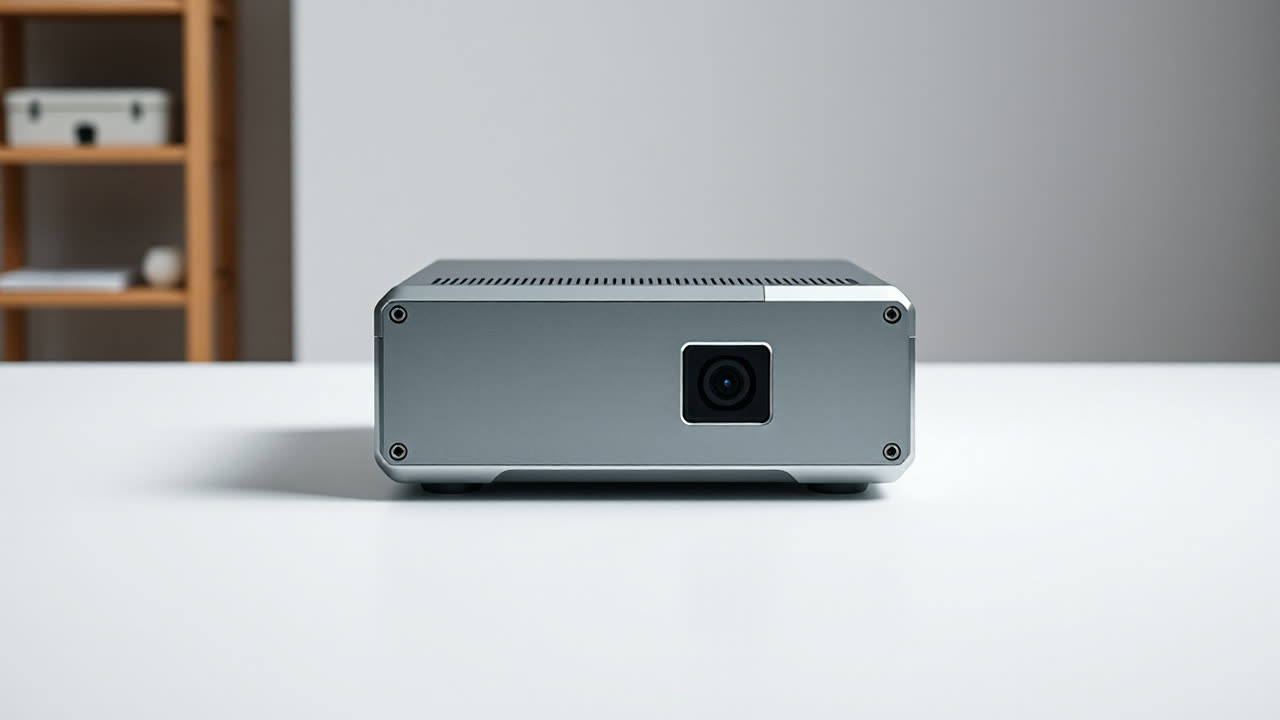
NVIDIA has unveiled Cosmos 3 Edge, a significant leap in multimodal AI designed specifically for on-device inference, promising to redefine the capabilities of edge computing by bringing sophisticated reasoning and generative AI directly to local hardware. This new iteration of the Cosmos family, optimized for efficiency and real-time performance, represents a critical step towards autonomous edge intelligence, enabling richer, more responsive interactions across diverse environments without constant cloud reliance. The model's ability to process and understand multiple data types—text, image, audio, and video—simultaneously on resource-constrained devices fundamentally shifts the paradigm for applications in manufacturing, retail, healthcare, and smart infrastructure, where low latency, data privacy, and offline functionality are paramount.
The introduction of Cosmos 3 Edge matters profoundly because it directly addresses the inherent limitations of cloud-dependent AI, particularly in scenarios demanding instantaneous responses or operating in connectivity-challenged locations. By executing complex multimodal inference locally, the model dramatically reduces latency, making real-time decision-making possible for use cases like autonomous robots on factory floors, personalized customer experiences in smart retail, and immediate diagnostic assistance in remote medical settings. Furthermore, processing data on-device significantly enhances data privacy and security, as sensitive information does not need to be transmitted to and stored in the cloud, a crucial advantage for industries handling proprietary or regulated data. This on-device processing also offers substantial cost savings by minimizing bandwidth usage and cloud compute expenses, making advanced AI more accessible and economically viable for widespread deployment. The model's efficiency, likely leveraging NVIDIA's TensorRT optimization and specialized hardware like Jetson platforms, allows for powerful AI applications even on devices with limited power budgets, expanding the frontier of what edge devices can autonomously achieve.
Historically, multimodal AI, especially large language models (LLMs) with vision capabilities, has been almost exclusively the domain of powerful cloud data centers due to their immense computational requirements. Previous generations of edge AI models were often specialized for single modalities or less complex tasks. Cosmos 3 Edge, however, stands out by bringing advanced multimodal understanding and generation capabilities—akin to those found in larger cloud-based models—to the edge in a streamlined package. While specific comparative benchmarks against direct rivals are still emerging, NVIDIA's long-standing expertise in optimizing AI for its hardware platforms, from GPUs to dedicated edge AI accelerators like the Jetson series, positions Cosmos 3 Edge as a formidable contender. Competitors like Qualcomm with its Snapdragon platforms and Intel with its OpenVINO toolkit also offer edge AI solutions, but Cosmos 3 Edge's emphasis on sophisticated *multimodal* reasoning and generation in a unified framework, optimized for NVIDIA's ecosystem, provides a distinct advantage in applications requiring a holistic understanding of environmental context. This integrated approach, combining diverse data streams to derive deeper insights, differentiates it from solutions that might handle modalities separately or offer less advanced reasoning capabilities on-device.
Looking ahead, the emergence of Cosmos 3 Edge heralds a new era of truly intelligent edge devices, fostering an ecosystem where devices are not merely sensors but active, autonomous decision-makers. We can anticipate a rapid acceleration in the development of "smart" applications that leverage its multimodal capabilities, from proactive maintenance systems that visually inspect equipment and audibly detect anomalies to interactive public displays that understand both gestures and voice commands. The industry will likely see increased investment in specialized edge hardware designed to maximize the performance of models like Cosmos 3 Edge, potentially leading to more powerful and energy-efficient AI accelerators. Furthermore, the push towards on-device intelligence will inevitably spur innovation in federated learning and privacy-preserving AI techniques, allowing models to learn and adapt from edge data without compromising user privacy. The long-term impact will be a more distributed, resilient, and responsive AI landscape, where the line between cloud and edge intelligence continues to blur, ultimately empowering a new generation of intelligent systems that operate with unprecedented autonomy and contextual awareness.