NYC Bans AI Tools for K-8 Students in Landmark Policy
New York City's public schools are implementing a one-year moratorium on artificial intelligence tools for all K-8 pupils, effective for the 2026-2027 academic year, to allow educators and policymakers to understand AI's impacts on younger learners.
✨ This content was summarized and interpreted by AI; it may contain errors — please verify accuracy with the original sources. Learn more
Listen to this story
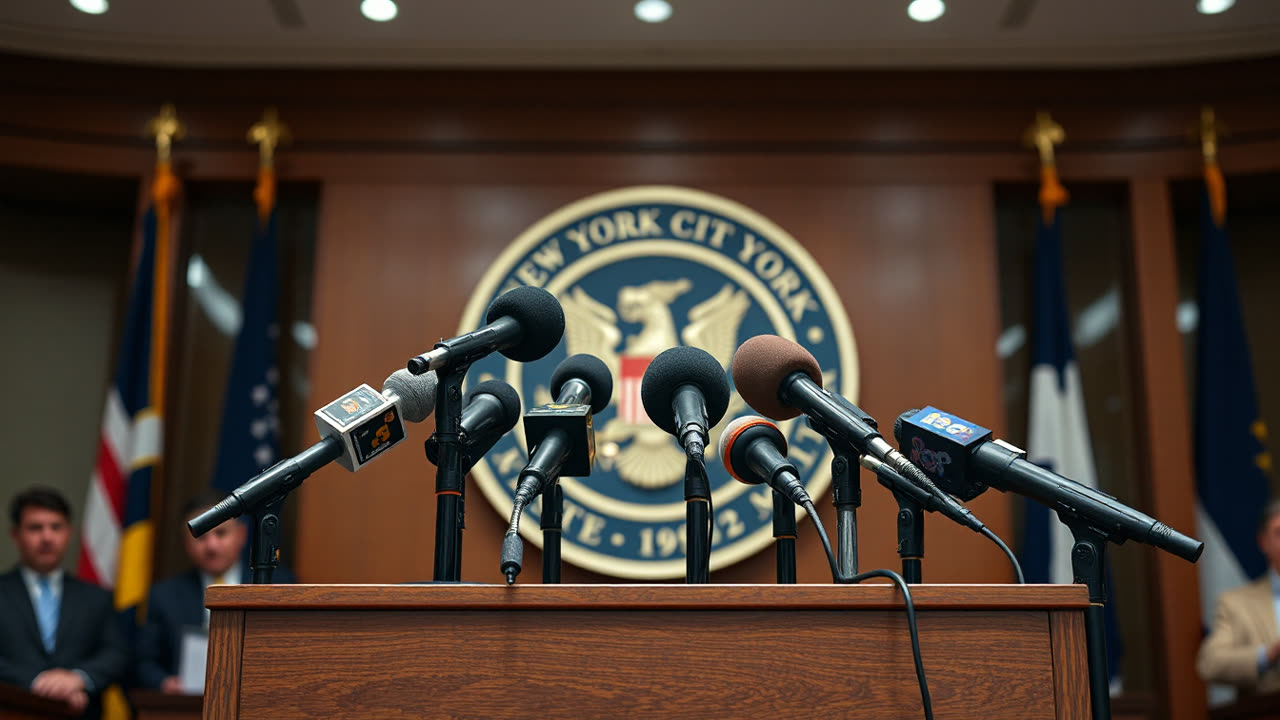
New York City's public schools, serving approximately 600,000 students, are implementing a one-year moratorium on artificial intelligence tools for all pupils until they reach high school, effective for the 2026-2027 academic year. Announced by Mayor Eric Adams, the policy aims to provide a crucial pause for educators and policymakers to understand the evolving landscape of AI and its potential impacts on younger learners before widespread adoption. This unprecedented city-wide ban, impacting K-8 classrooms across the nation's largest school district, underscores a growing global apprehension about integrating sophisticated AI into foundational education without clear pedagogical guidelines or ethical frameworks.
The decision by Mayor Adams and the New York City Department of Education (NYCDOE) stems from a complex interplay of concerns, primarily focusing on developmental psychology, digital equity, and the preservation of critical thinking skills. Proponents of the ban argue that relying on generative AI, such as large language models, too early in a child's educational journey could stunt the development of essential cognitive abilities like problem-solving, independent research, and original thought. Young children, still forming their understanding of complex concepts and information synthesis, might become overly dependent on AI for answers, potentially undermining their capacity for genuine intellectual struggle and discovery. Critics also highlight the "black box" nature of many AI algorithms, raising questions about data privacy, algorithmic bias, and the potential for misinformation, all of which are particularly salient for impressionable young minds. The NYCDOE's move is a clear signal that the immediate benefits of AI in early education are not yet deemed to outweigh these significant risks.
This moratorium stands in stark contrast to the initial, often uncritical, embrace of technology in schools during previous decades, where devices like tablets and laptops were rapidly integrated with less foresight into their long-term effects. The current stance reflects a more cautious, post-pandemic perspective, where the rapid proliferation of AI tools caught many educational institutions off guard. While some progressive districts, such as those in Finland and Singapore, have begun piloting AI literacy programs in primary schools, focusing on understanding how AI works rather than just using it, NYC's outright ban for younger grades offers a different model of prudence. In the United States, other major districts like Los Angeles and Chicago have largely adopted a more permissive, yet monitored, approach, allowing teachers to integrate AI tools under specific guidelines for older students, but few have implemented such a broad K-8 prohibition. This makes New York City a significant outlier, setting a precedent that could influence other large urban centers grappling with similar concerns.
The impact on the ed-tech industry, particularly companies developing AI-powered learning platforms for younger demographics, is substantial. This one-year pause in the largest U.S. school district represents a significant market contraction and a challenge to their integration strategies. Companies will likely need to shift focus towards proving the pedagogical efficacy and ethical soundness of their tools, potentially investing more in transparent AI development and robust data privacy features to regain trust. For students and teachers, the ban necessitates a renewed emphasis on traditional learning methods and human-led instruction, potentially fostering deeper teacher-student engagement and peer collaboration. It also creates an urgent imperative for the NYCDOE to develop comprehensive AI literacy curricula and teacher training programs during this moratorium, ensuring that when AI eventually re-enters the K-8 classroom, it does so thoughtfully and effectively.
Looking ahead, this moratorium is not an abandonment of AI but rather a strategic retreat to regroup and plan. Over the next year, the NYCDOE will likely convene expert panels, conduct pilot programs in controlled environments, and develop robust ethical guidelines and best practices for AI integration. The outcome could be a phased reintroduction of AI tools, perhaps starting with AI-powered personalized learning systems that adapt to individual student needs, or tools focused on administrative tasks that free up teacher time, rather than direct content generation. There is also an opportunity to develop "AI literacy" curricula that teach students *about* AI – its capabilities, limitations, and ethical implications – long before they are encouraged to rely on it for their schoolwork. Ultimately, New York City's bold step signals a maturation in the discourse surrounding technology in education, moving beyond reactive adoption to a proactive, ethics-first approach that prioritizes the holistic development of its youngest citizens.