NYC Council Demands Two-Year Moratorium on AI in Schools
Over half of New York City council members call for a halt to AI integration in classrooms, citing data privacy and flawed guidance concerns.
✨ This content was summarized and interpreted by AI; it may contain errors — please verify accuracy with the original sources. Learn more
Listen to this story
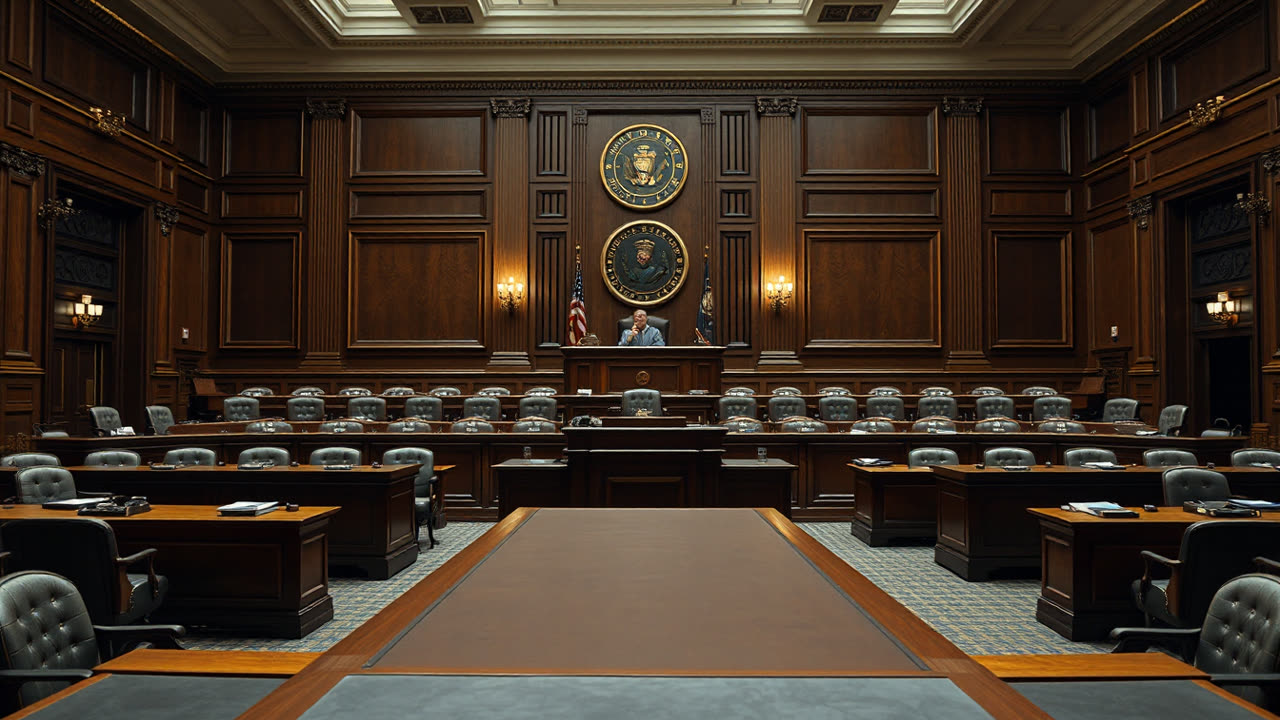
New York City's ambitious plans to integrate artificial intelligence into its classrooms have hit a significant roadblock, with over half of the city council members demanding a two-year moratorium on AI use in schools. This recent pushback, citing "flawed" guidance and inadequate student data privacy protections, underscores the complex challenges following earlier efforts to proactively shape AI's educational future.
The current debate stems from a foundational gathering where New York City educators and industry leaders convened at Google's offices, hosted by Google, the New York Jobs CEO Council, and Urban Assembly. This summit brought together 150 leaders with the explicit goal of collaboratively shaping the future of AI in classrooms. While the New York City Public Schools (NYCPS) subsequently released preliminary AI guidance in March 2026, outlining a "Traffic Light Framework" that green-lighted AI for tasks like lesson planning but red-lighted it for grading, the comprehensive "AI Playbook" initially slated for June 2026 has been delayed due to extensive public feedback and concerns.
Despite the policy hurdles, practical applications are advancing. The Urban Assembly, a co-host of the initial summit, launched its "AI Innovation Fellowship" in January 2026, a 10-week professional development program empowering educators to leverage AI for classroom challenges. Their pilot of "CounselorGPT," an AI-enabled advising tool, has already demonstrated remarkable success, increasing student engagement with postsecondary advising to 20 minutes per week, a stark contrast to the national average of 41 minutes per year. These initiatives highlight AI's potential to augment human expertise, not replace it.
However, the loud calls for a moratorium reflect genuine anxieties about cognitive offloading, algorithmic bias, factual inaccuracies (hallucinations), and, critically, student data privacy. NYCPS has mandated that all AI tools undergo an Enterprise Request Management Application (ERMA) review to ensure data privacy and security, and prohibits using student data to train commercial AI models. The ongoing public discourse and the delay in final guidance signify a critical period. For AI to truly revolutionize education responsibly, transparent policies, robust ethical frameworks, and continuous dialogue among all stakeholders are paramount to ensure that technology serves to amplify learning and protect students, rather than inadvertently creating new divides or risks.