Onyx Boox Launches Picco, Its Most Compact 4-inch E-reader, Challenging Large Screen Trend
Onyx Boox has launched the Picco, its most compact e-reader to date, featuring a 4-inch E Ink display that immediately challenges the prevailing trend of larger screens and multi-function tablets by re-emphasizing portability and dedicated reading.
✨ This content was summarized and interpreted by AI; it may contain errors — please verify accuracy with the original sources. Learn more
Listen to this story
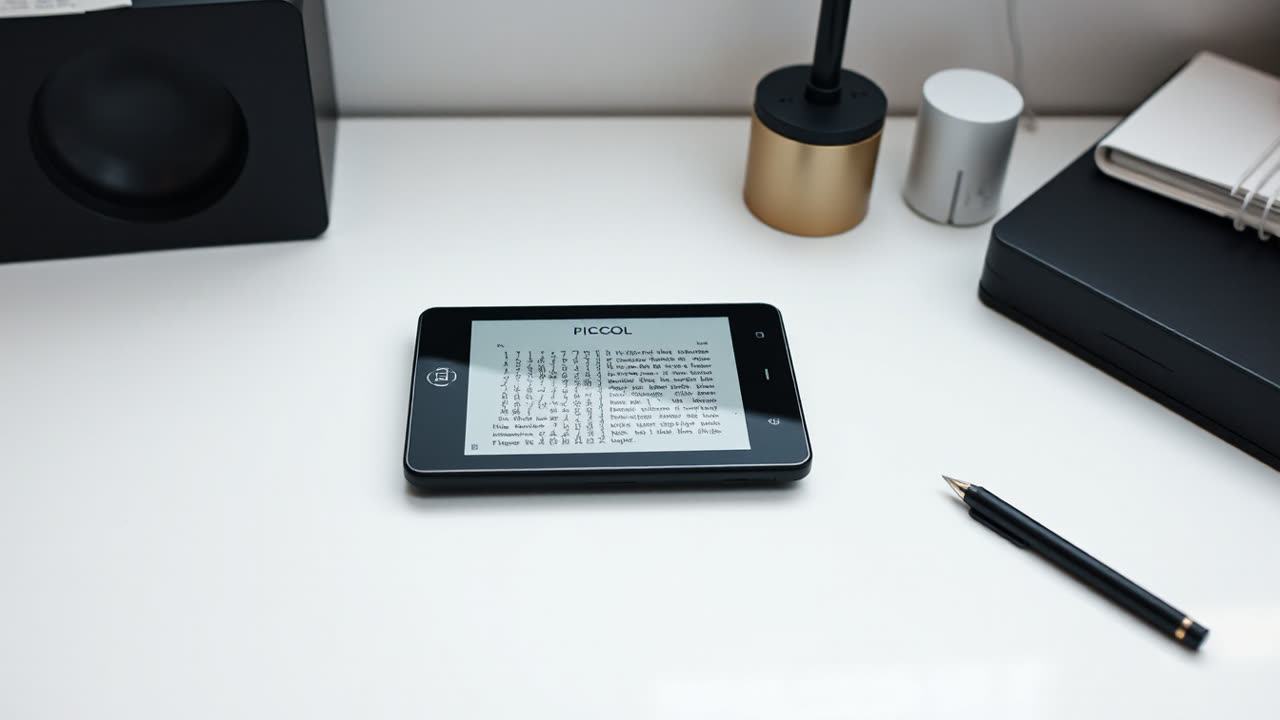
Onyx Boox has launched the Picco, its most compact e-reader to date, featuring a 4-inch E Ink display that immediately challenges the prevailing trend of larger screens and multi-function tablets by re-emphasizing portability and dedicated reading. This palm-sized device, weighing a mere 115 grams, is designed for ultimate one-handed usability and discreet pocketability, positioning itself as a minimalist's ideal companion in an increasingly distraction-heavy digital landscape. Priced at an aggressive $149, the Picco aims to capture a niche market of users seeking a focused reading experience without the bulk or cost associated with larger e-readers or smartphones.
The significance of the Picco extends beyond its physical dimensions; it represents a strategic pivot for Boox, a company known for its diverse range of E Ink devices, including larger note-taking tablets and color e-readers. By distilling the e-reader experience to its essentials, Boox is not merely offering a smaller device but is making a statement about the value of simplicity and singular purpose. The Picco's robust support for various ebook formats, including EPUB, MOBI, PDF, and CBR, combined with its Android 13 operating system, grants users unparalleled flexibility in content consumption, sidestepping the proprietary ecosystems often found in rival devices. This open approach, coupled with 32GB of internal storage and 3GB of RAM, ensures smooth performance and ample space for thousands of books, a critical differentiator for a device focused solely on reading.
From a user perspective, the Picco's impact is profound for several demographics. For commuters, its diminutive size means effortless integration into daily travel, allowing for quick reads on public transport without cumbersome handling. For minimalists and those seeking digital detox, the Picco offers an escape from the notification overload of smartphones, providing a dedicated portal to literature. Its "digital utility tools"—which include basic note-taking, calendar, and perhaps a simple browser—are carefully curated to enhance the reading experience without introducing unnecessary distractions. This thoughtful balance addresses a growing demand for devices that empower focused work and leisure, rather than fragmenting attention. The device's 1500 mAh battery promises weeks of usage on a single charge, further solidifying its utility as a reliable, always-ready reading tool.
Historically, the e-reader market has seen a gradual increase in screen sizes, with 6-inch and 7-inch models becoming the de facto standard, and larger 8-inch to 10-inch devices catering to academic and professional users. The Picco harks back to earlier, smaller form factors like the original Kindle or Sony Reader, but with modern advancements in E Ink technology, processing power, and software flexibility. Its closest contemporary rivals in the sub-5-inch category are scarce, making it a unique proposition. Devices like the Kobo Clara Colour (6-inch) or Amazon Kindle Paperwhite (6.8-inch) offer color or higher resolution but at a significantly larger footprint and often higher price points, targeting a different user need. Even Boox's own Leaf series, at 7 inches, is a considerably larger device by comparison. The Picco effectively creates a new micro-segment within the e-reader market, one that prioritizes extreme portability over expansive screen real estate.
Looking ahead, the Boox Picco could catalyze a re-evaluation of optimal screen sizes in the portable electronics space. If successful, it might encourage other manufacturers to explore smaller E Ink devices, potentially leading to a new wave of ultra-portable, single-purpose gadgets designed to combat digital fatigue. Boox itself could build upon the Picco's success by introducing incremental improvements, such as higher resolution displays (the current 300 PPI is excellent for its size), advanced haptic feedback, or even a slightly larger 4.7-inch version that retains pocketability while offering a bit more screen. The competitive $149 price point is crucial, making it an impulse purchase for many, and maintaining this accessibility while iterating on features will be key to its long-term viability. The Picco is not just an e-reader; it is a declaration that in an age of digital abundance, less can indeed be more, offering a focused sanctuary for readers yearning for simplicity and unparalleled portability.