Open-Source 'Phantom Drive' USB Conceals Data with Unprecedented Stealth
A new open-source USB stick, dubbed 'Phantom Drive,' ingeniously hides an encrypted data partition behind a decoy 8GB drive, unlocking its contents only when a specific password is created in a text file, ensuring the key never touches physical storage.
✨ This content was summarized and interpreted by AI; it may contain errors — please verify accuracy with the original sources. Learn more
Listen to this story
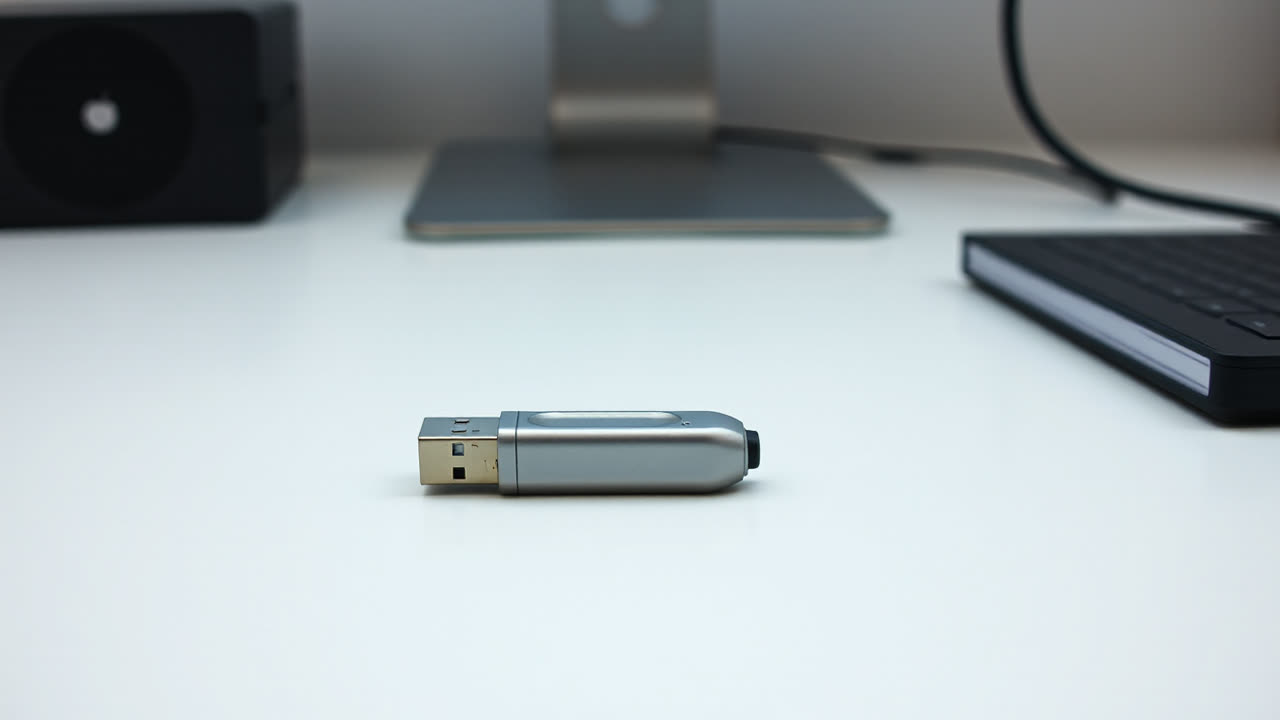
The open-source "Phantom Drive" USB stick, a groundbreaking innovation in covert data storage, conceals an encrypted partition behind a conventional 8GB decoy drive, appearing as a standard flash drive until a specific text file containing a password unlocks its hidden contents. This ingenious design, detailed by its creator, utilizes custom firmware that intercepts the password during the text file creation process, ensuring the sensitive key is never physically written to storage, a critical distinction for plausible deniability.
This development holds significant implications for personal privacy, corporate espionage, and state-level intelligence, offering a robust, low-cost solution for securing sensitive information in plain sight. For individual users, it provides an unprecedented layer of protection against casual inspection or opportunistic theft, making it ideal for storing cryptocurrency wallet keys, personal documents, or sensitive work files without drawing suspicion. The "decoy" aspect is particularly potent; an 8GB drive is common enough not to raise immediate red flags, and its ostensible emptiness or mundane content further reinforces its innocent appearance. The impact on industries dealing with intellectual property or sensitive client data is equally profound. Companies can equip employees with such drives for secure, portable access to critical information, minimizing the risk associated with unencrypted portable media. The open-source nature of the project also fosters transparency and community scrutiny, theoretically enhancing its security through collaborative peer review, though it also means the underlying mechanisms are publicly known.
Historically, securing data on portable drives has involved software-based encryption like VeraCrypt or BitLocker To Go, which, while effective, often leave forensic traces or require specific software installations to access, potentially alerting an adversary to the presence of hidden data. For instance, VeraCrypt offers hidden volumes with plausible deniability, where a decoy volume can be revealed if the outer volume is decrypted under duress. However, the Phantom Drive's unique method of password interception via custom firmware, which prevents the password from ever touching the NAND flash, represents a significant advancement. Traditional methods encrypt the entire drive or create a container file, and while effective, the presence of these encrypted structures can still indicate that *something* is being hidden. The Phantom Drive, by contrast, presents as an unremarkable, partially used 8GB drive, a crucial difference for plausible deniability. This hardware-firmware integration moves beyond purely software-based solutions, making it harder for standard forensic tools to detect the hidden partition without knowledge of the specific unlocking mechanism. Early iterations of stealth drives often relied on proprietary software or less sophisticated partitioning tricks that could be more easily uncovered by determined analysis.
The "Phantom Drive" project, spearheaded by a developer known as "Stacksmashing," is built on readily available hardware, specifically a conventional USB flash drive with a compatible microcontroller, often a common model like the Phison 2251-09. This choice makes the solution accessible and replicable, reducing barriers to entry for those seeking enhanced data security. The firmware, written in C, is then flashed onto the USB controller, replacing the manufacturer's original software. The project's GitHub repository provides all necessary files and instructions, emphasizing its commitment to open standards and community contribution. The development cost is minimal, essentially the price of a standard USB drive and the time invested in flashing the firmware, making it a highly cost-effective security measure compared to specialized hardware security modules.
Looking ahead, the "Phantom Drive" paradigm could inspire a new wave of hardware-firmware integrated security solutions. We may see similar principles applied to other storage devices, such as SD cards or even solid-state drives, offering more sophisticated methods of concealing data. The open-source community will likely contribute further enhancements, potentially adding features like multiple hidden partitions, timed self-destruction mechanisms, or even biometric unlocking methods integrated into the firmware. However, the rise of such stealth devices also presents challenges for law enforcement and digital forensics. As these methods become more prevalent and sophisticated, forensic analysts will need to develop new techniques and tools to identify and access hidden data, potentially leading to an arms race between security and surveillance. Furthermore, while the open-source nature promotes transparency, it also means that malicious actors can leverage the same technology, raising concerns about its potential misuse for illicit activities. The long-term success and adoption of the "Phantom Drive" and its successors will depend on a delicate balance between robust security, user accessibility, and the evolving landscape of digital forensics and legal frameworks.