OpenAI Launches ChatGPT for Teens with Enhanced Safety Features
OpenAI has introduced ChatGPT for Teens, a specialized AI chatbot for 13-17 year olds, featuring robust built-in protections and parental controls to ensure responsible and age-appropriate AI use.
✨ This content was summarized and interpreted by AI; it may contain errors — please verify accuracy with the original sources. Learn more
Listen to this story
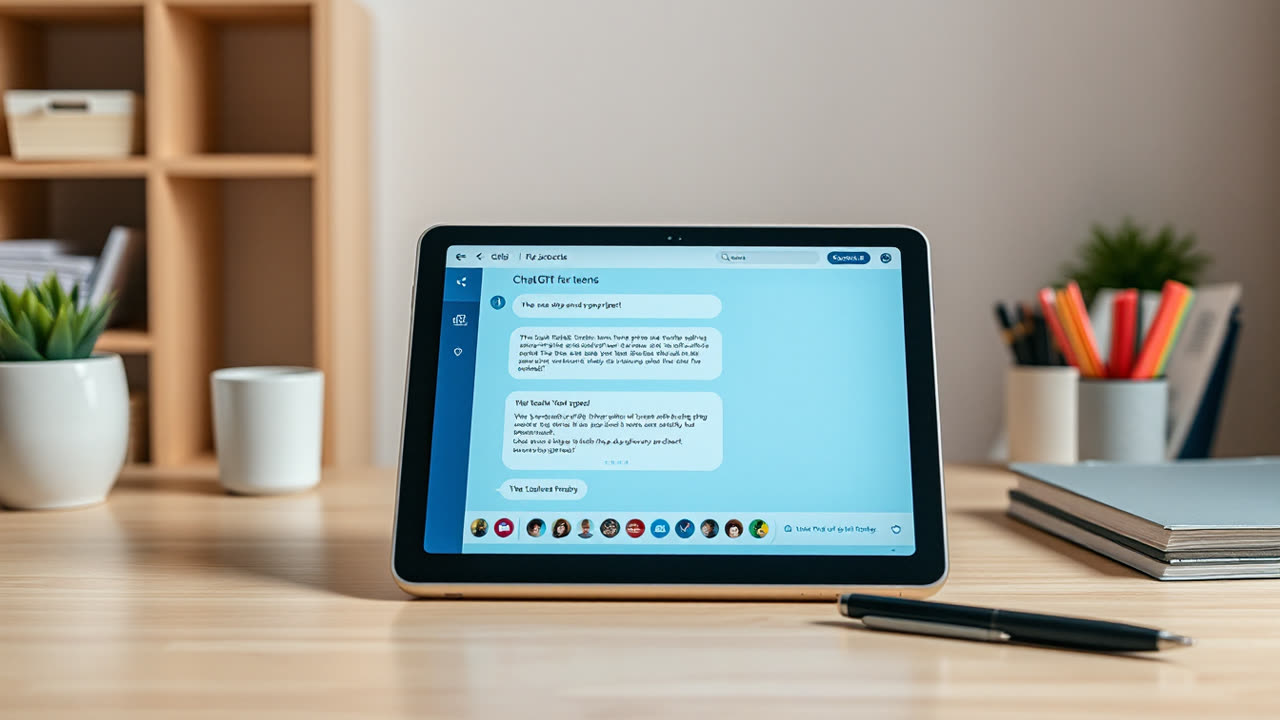
OpenAI launched ChatGPT for Teens on Tuesday, August 18, 2026, a version of its popular generative AI chatbot specifically tailored for users aged 13 to 17, addressing a critical need for age-appropriate AI engagement in education and daily life. This initiative comes as teens are increasingly using AI tools for schoolwork, personal inquiries, and even companionship, making them the first generation to grow up with artificial intelligence. The new offering integrates stronger built-in protections, healthy-use features, and additional controls for parents, aiming to guide teenagers toward responsible AI use in a developmentally appropriate environment.
The introduction of ChatGPT for Teens marks a significant strategic move by OpenAI, signaling a shift towards age-calibrated products to balance AI access with safety. Previously, general ChatGPT required users to be at least 13, with parental consent for those aged 13-17, but lacked specific teen-focused safeguards. The new version includes enhanced content restrictions to filter out material related to suicide, self-harm, romantic or sexual chats, and extreme beauty ideals. It also provides study support designed to foster learning rather than simply generating answers. OpenAI has also implemented an age-prediction system that can apply these teen restrictions even to accounts that might have claimed to be adults, ensuring broader protection. This proactive approach by a leading AI developer sets a precedent for the industry, which has faced increasing scrutiny over the safety and ethical implications of AI for minors.
This move is crucial because the widespread use of AI chatbots by teenagers has raised alarms among parents, educators, and child development experts, with concerns ranging from facilitating cheating to exposure to inappropriate content and the potential for unhealthy relationships with AI. Research from a watchdog group last year, for example, found that general ChatGPT could provide harmful information to 13-year-olds. While AI offers immense benefits like personalized learning, instant feedback, and automation of routine tasks, it also poses risks such as algorithmic bias, misinformation, and a potential decline in critical thinking if over-relied upon. Studies have shown an inverse correlation between confidence in AI and critical thinking, highlighting the need for tools that encourage active engagement rather than passive acceptance.
OpenAI's solution for teens incorporates "healthy-use nudges" and robust parental controls. These controls allow parents to manage settings like quiet hours, turn off voice mode, disable memory features, remove image generation capabilities, and opt out of their teen's conversations being used for model training. Parents are notified if their teen unlinks their account. However, a notable limitation is that parents cannot monitor private conversations, a common characteristic across most major general-purpose AI platforms like Google Gemini, Microsoft Copilot, and Snapchat My AI. This distinction is critical when compared to platforms like HeyOtto, which is purpose-built for younger users (8-18) and allows parents to see full conversation transcripts.
In comparison to rivals, Google's Gemini in Workspace for Education offers generative AI capabilities to users 18 and older, with some features for all ages available as a core service in Workspace for Education, where administrators manage access and data is not used for model training. Google is also rolling out "study notebooks" in the Gemini app, designed as an adaptive learning platform with personalized lessons for students. Microsoft Copilot, from late July 2025, has been accessible to learners aged 13 and older through institutional education accounts, also with enterprise-grade data protection. These offerings generally emphasize administrative control and data privacy, with Google explicitly stating that children's Gemini usage data will not be used for AI model training. OpenAI's explicit focus on a dedicated "for Teens" version with tailored content restrictions and parental linking, rather than solely relying on institutional accounts, carves out a distinct approach to consumer-facing youth AI.
Looking ahead, the success of ChatGPT for Teens will largely depend on the effectiveness of its safeguards and how well it fosters genuine learning and critical thinking rather than rote output generation. The ongoing challenge for AI developers will be to continuously refine content filtering and healthy-use features, given that determined users can often find ways to bypass restrictions. The broader industry is likely to follow suit, developing more age-segmented AI products and integrating AI literacy into K-12 education, as seen with OpenAI's partnership with CodeAI. The future of AI in education hinges on a balanced approach that encourages active engagement, critical thinking, and responsible use, rather than relying solely on AI to provide answers. This necessitates not only robust technological safeguards but also comprehensive educational initiatives that equip teens, parents, and educators with the skills to navigate the complexities and ethical considerations of an AI-integrated world.