OpenAI Launches Dedicated Physical Keypad for AI Agent Control
OpenAI has launched "Louper," a dedicated physical keypad for controlling its AI agents, marking a tangible shift in human-AI interaction and a significant foray into specialized hardware.
✨ This content was summarized and interpreted by AI; it may contain errors — please verify accuracy with the original sources. Learn more
Listen to this story
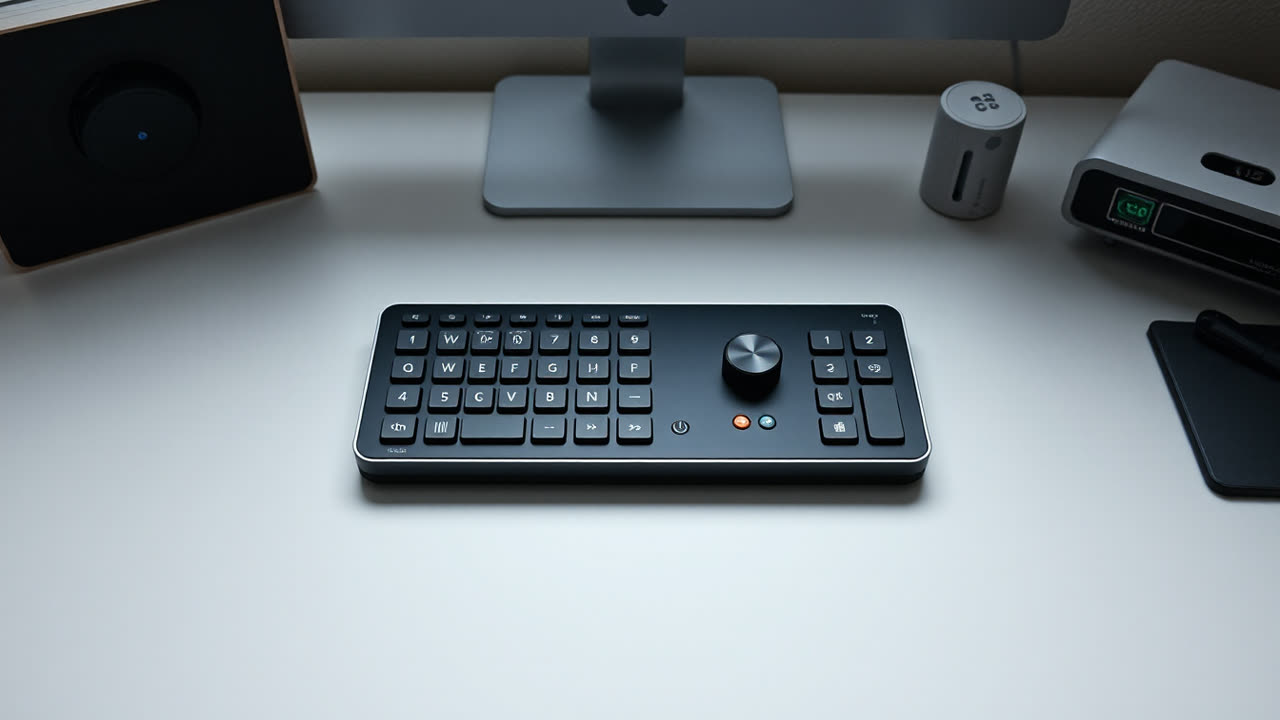
OpenAI has launched a dedicated physical keypad for controlling its AI agents, a tangible shift in human-AI interaction developed in collaboration with bespoke keyboard manufacturer Work Louder, available for order today. This peripheral, marking a significant foray into specialized hardware, aims to streamline the command and control of increasingly autonomous AI entities, moving beyond traditional text or voice prompts to a more tactile and immediate interface. The device, known as the "Louper," is priced at $189 and features a customizable layout with programmable keys and a rotary encoder, designed to offer intuitive, single-press access to complex agent functions. Its introduction signals OpenAI's intent to embed AI more deeply and physically into user workflows, recognizing that the growing sophistication of agents necessitates a more direct and efficient means of interaction than conventional input methods can provide.
The launch of the Louper keypad matters profoundly for both users and the broader AI industry by addressing a critical emerging bottleneck: the cognitive load and friction associated with managing sophisticated AI agents through generic software interfaces. For users, particularly professionals in creative, coding, or data analysis fields, the keypad promises to transform agent interaction from a multi-step, menu-driven process into a fluid, almost subconscious extension of their intent. Imagine a single key press initiating a complex data analysis routine, another summarizing a document, or a dial adjusting an agent's "creativity" parameter in real-time. This level of physical control could dramatically reduce context switching and mental overhead, accelerating workflows and making AI agents feel less like external tools and more like integrated co-pilots. The customizable nature of the Louper, allowing users to map specific agent commands or sequences to physical buttons, caters directly to diverse professional needs, offering a personalized conduit to AI capabilities.
From an industry perspective, OpenAI's move into dedicated hardware, even through a collaboration, is a powerful validation of the growing need for specialized AI input devices. It signals a maturation in the human-AI interface paradigm, suggesting that the era of universal keyboards and mice for all computing tasks may be giving way to a more specialized ecosystem for AI. This development could spur a new wave of innovation in AI-centric peripherals, encouraging other tech giants and startups to explore novel ways of bridging the gap between human intent and artificial intelligence. The partnership with Work Louder, a company known for its high-quality, customizable mechanical keyboards, underscores a commitment to tactile feedback and ergonomic design, elements often overlooked in purely software-based AI interactions. This emphasis on physical interaction elevates the user experience, potentially fostering greater trust and adoption of AI agents by making their control feel more robust and predictable.
Historically, human-computer interaction has evolved from punch cards and command-line interfaces to graphical user interfaces (GUIs), touchscreens, and voice commands. While voice interfaces like Amazon Alexa and Google Assistant have offered hands-free interaction, they often lack the precision and visual feedback required for complex tasks. Traditional keyboards and mice remain the backbone of productivity, but their generic nature means interacting with AI agents typically involves typing prompts, navigating menus, or issuing voice commands within a software application. The Louper keypad offers a hybrid approach, combining the tactile certainty of physical buttons with the direct command of AI, reminiscent of specialized control surfaces used in audio production or video editing. Rival AI offerings, while rapidly advancing in agent capabilities, have largely focused on refining their underlying models and API access, leaving the interface largely to third-party developers or generic OS elements. While companies like Humane and Rabbit have introduced standalone AI-powered devices, these represent a complete shift in form factor. The Louper, by contrast, integrates with existing desktop setups, enhancing current workflows rather than replacing them.
Looking ahead, OpenAI's Louper is likely just the vanguard of a broader trend toward dedicated AI hardware. We can anticipate more sophisticated keypads, dials, and even haptic feedback devices designed explicitly for interacting with AI agents. Future iterations might incorporate dynamic displays on keys, context-aware command suggestions, or even biometric inputs to personalize agent responses. The success of the Louper will also provide valuable data on how users prefer to physically interact with AI, informing the design of future agent capabilities and their integration into our physical environments. As AI agents become more prevalent and capable of performing increasingly complex tasks, the demand for intuitive, efficient, and physically engaging control mechanisms will only intensify. This initial foray by OpenAI and Work Louder represents a crucial step in making AI agents not just intelligent, but also intimately controllable, paving the way for a future where human and artificial intelligence collaborate with unprecedented fluidity.