OpenAI Pursues Samsung Partnership for Next-Gen AI Chips, Diversifying Supply Chain
OpenAI is reportedly in advanced discussions with Samsung to manufacture its next-generation artificial intelligence processors, signaling a profound shift towards double-sourcing critical silicon.
✨ This content was summarized and interpreted by AI; it may contain errors — please verify accuracy with the original sources. Learn more
Listen to this story
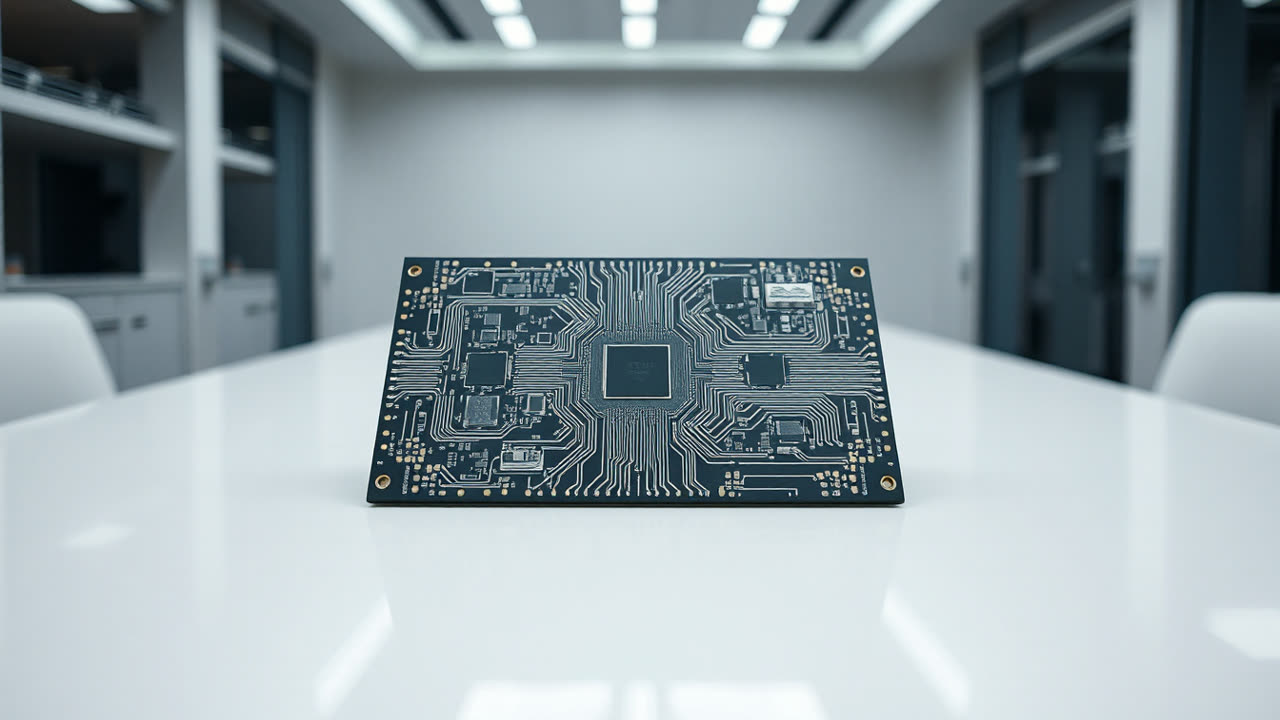
OpenAI is reportedly in advanced discussions with Samsung to manufacture its next-generation artificial intelligence processors, a strategic move signaling a profound shift towards double-sourcing critical silicon and potentially reshaping the global AI hardware landscape. This potential partnership, alongside its existing reliance on TSMC, underscores an unprecedented demand for AI compute and OpenAI's aggressive push to secure a robust, diversified supply chain for its ambitious AI development roadmap. The discussions reportedly involved OpenAI CEO Sam Altman meeting with high-ranking Samsung executives, including its device solutions chief Kyung Kye-hyun, in early 2024, focusing on advanced chip production capabilities. This initiative is part of a broader strategy by Altman to raise trillions of dollars for a global network of AI chip fabrication plants, aiming to alleviate future supply constraints and reduce dependency on a single manufacturer or region.
This pivot to double-sourcing with Samsung Foundry, a direct rival to TSMC, is not merely a diversification play; it reflects a critical industry-wide recognition that the sheer volume of AI accelerators required for future models far exceeds current dedicated capacity. Securing fabrication slots at both TSMC, the undisputed leader in advanced process nodes, and Samsung, a formidable competitor with cutting-edge gate-all-around (GAA) technology, provides OpenAI with unparalleled flexibility and leverage. For users, this could eventually translate into more accessible and potentially more affordable AI services, as a more stable and competitive chip supply chain mitigates the astronomical costs currently associated with AI training and inference. The industry impact is even more profound, intensifying the foundry war between TSMC and Samsung, forcing both to innovate faster and potentially offer more attractive terms to hyper-scale AI clients. It also validates Samsung's significant investments in its foundry business, particularly its commitment to advanced processes like SF2 (2nm) and SF1.4 (1.4nm), which are crucial for high-performance AI ASICs.
OpenAI's current reliance heavily features NVIDIA's GPUs, particularly the H100, which are manufactured by TSMC. While NVIDIA remains central, the move towards custom ASICs, potentially fabricated by Samsung, mirrors a broader trend among tech giants. Google pioneered this path with its Tensor Processing Units (TPUs), now in their fifth generation, designed to optimize its own AI workloads. Amazon followed suit with its Trainium and Inferentia chips, while Microsoft recently unveiled its Maia 100 AI accelerator, also designed in-house. These custom chips offer distinct advantages: they can be precisely tailored to an organization's specific software stack and model architectures, potentially yielding significant power efficiency gains and performance improvements over general-purpose GPUs for particular tasks. The shift also allows greater control over the hardware roadmap, reducing reliance on third-party innovation cycles. Samsung Foundry's advanced process technology, especially its 3nm and future 2nm processes leveraging GAA architecture, offers superior power efficiency and transistor density compared to older FinFET designs, making it an attractive partner for high-performance, custom AI silicon. TSMC, while still leading in market share and often perceived as having a slight edge in yield for the very latest nodes, faces increasing pressure as Samsung aggressively pursues technological parity and capacity expansion.
Looking ahead, this deepening cooperation between OpenAI and Samsung heralds a new era of strategic partnerships in the AI ecosystem. The "trillions of dollars" investment reportedly sought by Sam Altman for a global chip manufacturing network suggests a long-term vision that transcends current market dynamics, aiming to build a resilient, distributed infrastructure for AI. This could involve not just manufacturing, but also potentially co-development of chip designs or process technologies, blurring the lines between AI developers and hardware producers. The implications for semiconductor equipment manufacturers, like ASML, are also significant, as increased foundry competition and expansion will drive demand for their lithography tools. We can expect to see further consolidation or strategic alliances within the chip industry, as the demand for specialized AI hardware continues its exponential growth. The ultimate success of OpenAI's double-sourcing strategy will hinge on Samsung's ability to deliver consistent yields and performance on cutting-edge nodes, but the very act of pursuing this path signals a robust, necessary evolution in how the world's most advanced AI is brought to life.