OpenAI's ChatGPT Images 2.5 Introduces 'Sketch' Feature for Intuitive AI Image Generation
OpenAI has dramatically advanced the accessibility and precision of AI image generation with the release of ChatGPT Images 2.5 on September 8, 2026, introducing a groundbreaking "Sketch" feature that allows users to translate crude doodles directly into sophisticated visual outputs.
✨ This content was summarized and interpreted by AI; it may contain errors — please verify accuracy with the original sources. Learn more
Listen to this story
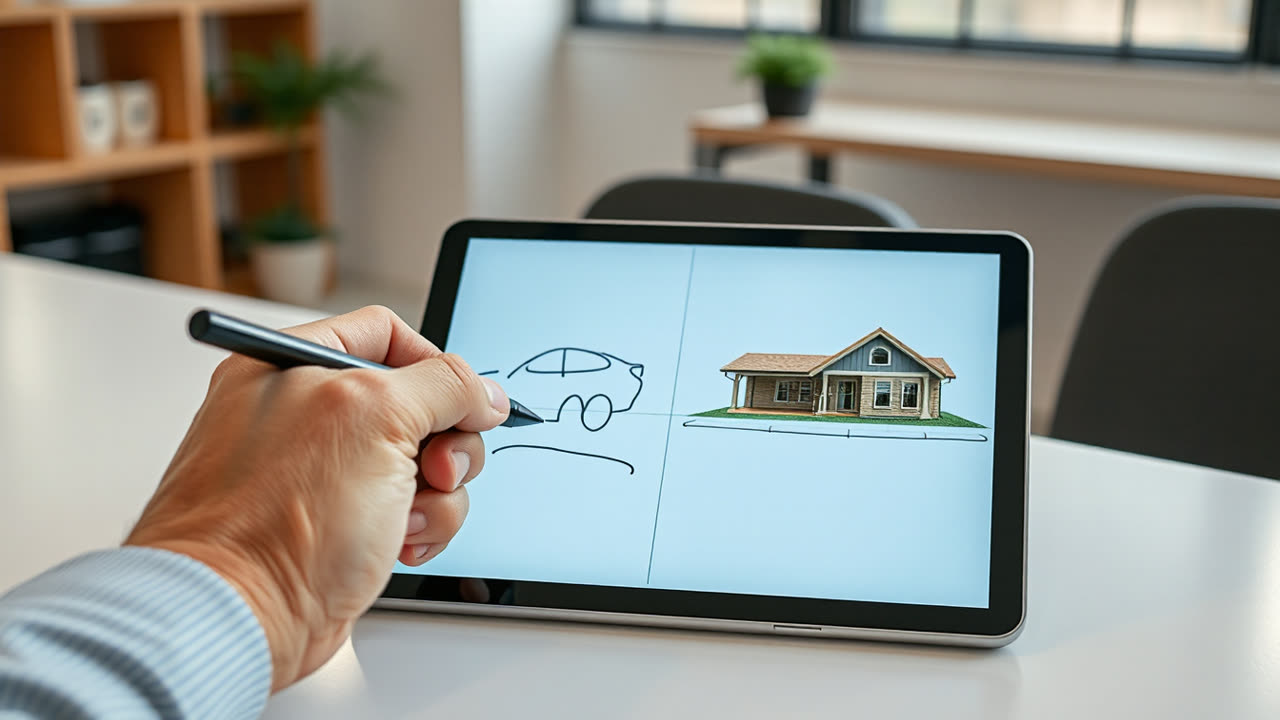
OpenAI has dramatically advanced the accessibility and precision of AI image generation with the release of ChatGPT Images 2.5 on September 8, 2026, introducing a groundbreaking "Sketch" feature that allows users to translate crude doodles directly into sophisticated visual outputs. This update marks a significant leap in multimodal interaction, enabling users to draw within ChatGPT, then leverage the model's enhanced capabilities to transform rough art into polished images. The innovation extends beyond simple conversion; Images 2.5 boasts up to 50% faster generation times compared to its predecessor, Images 2.0, which was released in April 2026. Furthermore, the model delivers sharper details, more precise editing, and maintains consistency across multiple conversational turns, ensuring earlier changes persist without degrading image quality.
This development fundamentally alters the landscape for both casual users and creative professionals. For the average user, Sketch democratizes image creation, lowering the barrier to entry for those without traditional artistic skills or extensive prompt engineering knowledge. Instead of struggling with verbose textual descriptions, a quick sketch—whether a room layout, an outfit contour, or a simple doodle—can now serve as an intuitive visual guide for the AI. This shift makes AI image generation more akin to natural human communication, where visual cues are as important as verbal ones. Professionals, including designers, concept artists, marketers, and game developers, will find their workflows significantly accelerated. The ability to rapidly iterate on visual concepts, test multiple styles, or refine elements by drawing directly within the AI interface compresses hours of traditional design work into minutes, fostering faster exploration and decision-making in the early stages of a project. New features like templates for popular formats such as flyers and product photos, along with the ability to place comments directly on images for focused editing, further streamline these creative processes.
Images 2.5 also showcases substantial technical improvements over its prior generation and positions OpenAI more strongly against rivals. The model is now better at understanding complex visual instructions, accurately translating real-world information, and handling intricate layouts, including transparent backgrounds. Its enhanced capacity to reflect visual styles and preserve subjects from reference photos ensures greater artistic alignment and fidelity. In comparison to competitors, OpenAI’s DALL-E 3, already integrated with ChatGPT, has been lauded for its ease of use and ability to generate images from simple text prompts. However, the Sketch feature pushes this integration further, bridging the gap between purely textual and purely visual input methods. Rivals like Midjourney continue to excel in delivering high aesthetic quality and stylized artistic outputs, often favored for brand visuals and editorial illustrations. Meanwhile, open-source platforms like Stable Diffusion offer unparalleled control for developers and local generation. Google's Nano Banana and Adobe Firefly also present strong competition, with Firefly notably offering its own sketch-to-image capabilities and integrating OpenAI's GPT-Image-2.5 models into its creative suite. The availability of Images 2.5 to all ChatGPT, ChatGPT Work, and Codex users across desktop, mobile, and web, along with the introduction of API models like GPT-Image-2.5 Flare for faster generation and Sunburst for precision work, signifies OpenAI's commitment to broad accessibility and developer utility. Individual access via ChatGPT Plus costs $20 per month.
Looking ahead, the introduction of Sketch is a clear indicator of the accelerating trend towards multimodal AI, where models seamlessly process and generate content across text, image, and even audio inputs. This paves the way for increasingly intuitive AI interfaces that mirror human interaction, moving beyond discrete commands to more fluid, context-aware dialogues. We can anticipate further evolution in image-to-image editing, allowing for more sophisticated transformations based on visual references beyond simple sketches, potentially incorporating video inputs in the future. The competition among major AI players will undoubtedly intensify, driving further innovations in speed, quality, and specialized features tailored to niche creative applications. This will likely result in AI becoming an even more deeply integrated "visual translation layer" within creative pipelines, allowing designers to focus on conceptualization while AI handles the rapid visualization and iteration. Ultimately, the trajectory points towards AI becoming an indispensable creative partner, refining ideas with unprecedented speed and fidelity, while continuously pushing the boundaries of what is possible at the intersection of human imagination and artificial intelligence.