OpenAI's GPT-6 Astra Ultrafast, powered by NVIDIA Blackwell GPUs, achieves unprecedented inference speed
OpenAI's new GPT-6 Astra Ultrafast model, leveraging NVIDIA Blackwell GPUs, delivers a dramatic reduction in latency for AI applications, fundamentally transforming real-time interactions and enterprise workflows across various sectors.
✨ This content was summarized and interpreted by AI; it may contain errors — please verify accuracy with the original sources. Learn more
Listen to this story
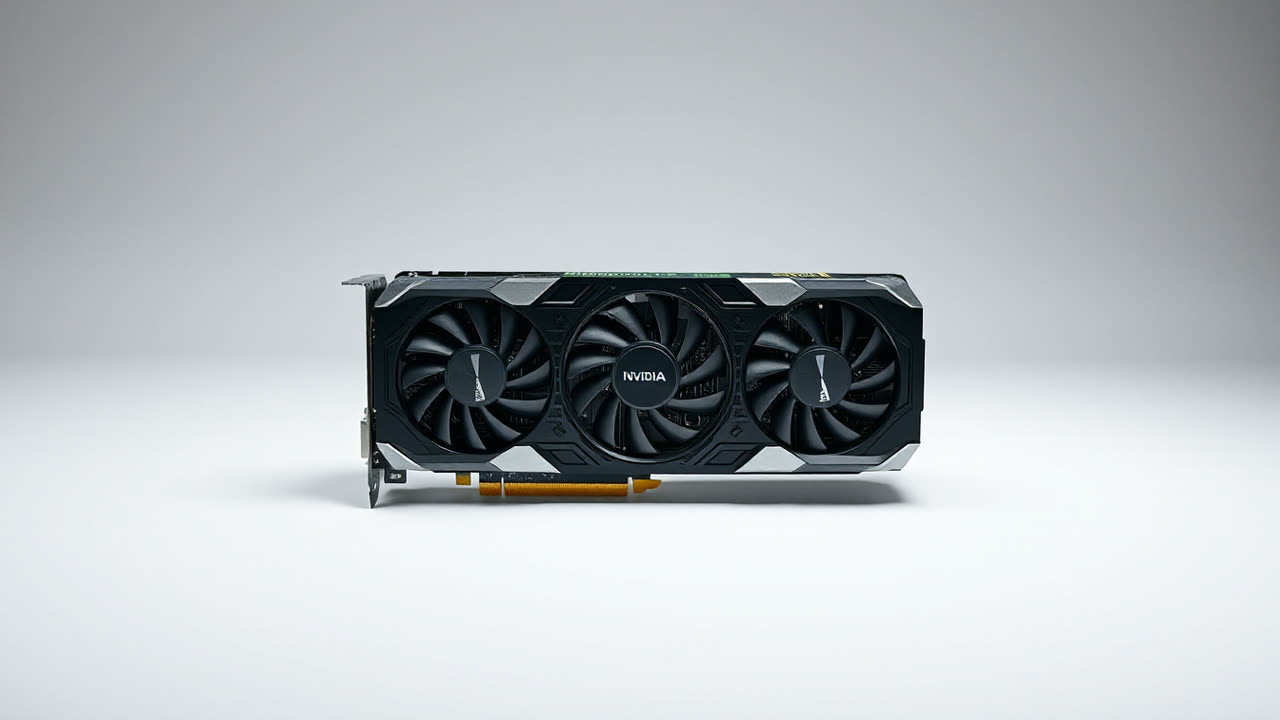
OpenAI's GPT-6 Astra Ultrafast, now available in the OpenAI API and to eligible ChatGPT Work and Codex users, leverages the formidable power of NVIDIA Blackwell GPUs, marking a significant leap in the speed and efficiency of large language model inference. This new offering, accelerated by sophisticated inference optimizations within OpenAI's models that directly tap into Blackwell's capabilities, promises a dramatic reduction in latency and an expansion of real-time AI applications across various sectors. The integration of Blackwell, a platform designed from the ground up for the demanding requirements of trillion-parameter AI models, enables GPT-6 Astra Ultrafast to process complex queries and generate responses with unprecedented velocity, fundamentally altering the landscape for developers and enterprises relying on advanced AI.
The immediate impact on users and the industry is profound, extending far beyond mere speed improvements. For developers utilizing the OpenAI API, the reduced latency of GPT-6 Astra Ultrafast translates into more responsive applications, enabling seamless real-time interactions previously constrained by processing delays. This is particularly critical for conversational AI, customer service bots, and dynamic content generation where immediate feedback is paramount. Enterprises leveraging ChatGPT Work can expect enhanced productivity and more fluid human-AI collaboration, transforming workflows in areas like code generation, data analysis, and creative ideation. For Codex users, the acceleration means faster code completion, debugging, and generation, potentially revolutionizing software development cycles. The Blackwell architecture, featuring a second-generation Transformer Engine and fifth-generation NVLink, delivers 4x faster training and 30x faster inference compared to its predecessor, the Hopper architecture, for trillion-parameter models, underscoring the raw power behind this acceleration. This leap in inference performance is not just about doing things faster; it's about enabling entirely new categories of AI applications that demand instantaneous processing and highly complex reasoning, such as real-time autonomous systems or highly personalized, adaptive learning environments.
NVIDIA's Blackwell GPU architecture, unveiled in early 2024, represents a substantial evolution from the preceding Hopper generation, which powered much of the initial LLM boom. While Hopper GPUs like the H100 were instrumental in both training and inference, Blackwell's design is specifically optimized for the gargantuan scale of next-generation AI, particularly excelling in inference workloads. The Blackwell B200 Tensor Core GPU, for instance, boasts 208 billion transistors and delivers 20 petaflops of FP4 inference performance, a staggering increase over Hopper's capabilities. This performance is achieved through innovations like the Blackwell Engine, which integrates specialized processing for Transformer models, and increased memory bandwidth, crucial for handling the immense parameter counts of models like GPT-6 Astra Ultrafast. This specialized optimization allows OpenAI to run GPT-6 Astra Ultrafast with greater efficiency, reducing operational costs per inference while simultaneously boosting throughput. Comparatively, prior generations of GPT models, while powerful, often faced latency hurdles when deployed at scale, limiting their real-time applicability. The tight coupling of OpenAI's model optimizations with Blackwell's hardware capabilities creates a synergy that rivals like Google's Gemini or Anthropic's Claude, which also rely on advanced GPU infrastructure, must now contend with in terms of raw speed and efficiency.
The immediate future points toward a race for even greater efficiency and model complexity. With GPT-6 Astra Ultrafast setting a new benchmark for inference speed, the industry will likely see a surge in demand for real-time AI applications across diverse sectors, from finance to healthcare. NVIDIA, with Blackwell, has positioned itself as the foundational hardware provider for this next wave of AI innovation, and its forthcoming GB200 Grace Blackwell Superchip, combining two Blackwell GPUs with a Grace CPU, promises even more integrated and powerful systems for both training and inference. OpenAI will undoubtedly continue to refine its models, pushing the boundaries of what's possible with the underlying hardware, potentially exploring multimodal capabilities that require even greater processing power and lower latency. The competitive landscape will intensify, with other major AI developers striving to match or exceed Astra Ultrafast's performance using their own optimized models and hardware, whether custom ASICs or next-generation GPUs from rivals like AMD. Ultimately, this accelerated inference capability will democratize access to highly sophisticated AI, enabling smaller developers and businesses to integrate advanced LLMs into their products and services without prohibitive latency or cost, fostering a new era of innovation driven by instantaneous artificial intelligence.