OpenAI's Premium AI Smart Speaker: A Bold Hardware Gambit
OpenAI's rumored premium AI smart speaker, priced between $300-$400, marks a strategic entry into consumer hardware, aiming to redefine the smart speaker market with advanced AI.
✨ This content was summarized and interpreted by AI; it may contain errors — please verify accuracy with the original sources. Learn more
Listen to this story
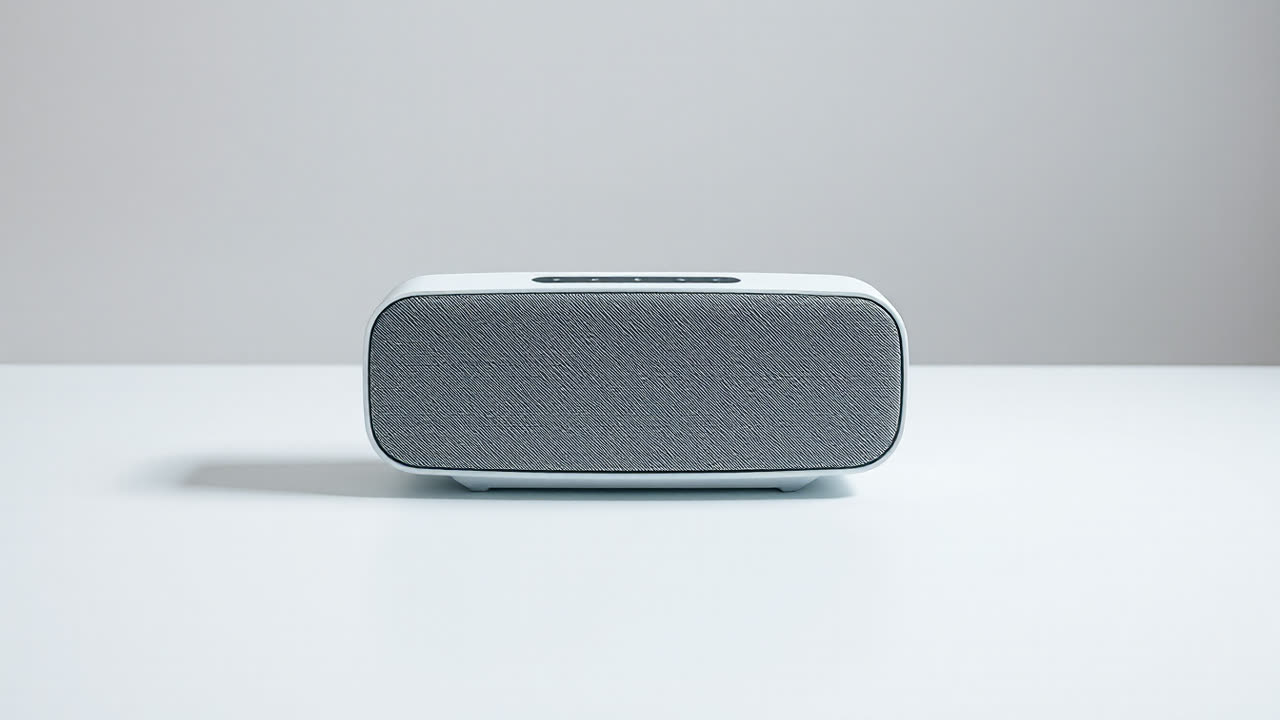
OpenAI's rumored AI smart speaker, projected to launch with a premium price tag between $300 and $400, signals a bold strategic pivot into consumer hardware, challenging the established smart speaker market with a potentially unprecedented level of artificial intelligence integration. This pricing places OpenAI's device squarely in the high-end segment, significantly above mass-market offerings from Amazon and Google, and even surpassing the standard pricing of Apple's HomePod, suggesting a device designed not for basic voice commands but for deeply integrated, intelligent ambient computing.
The decision by a predominantly software-first company to enter the competitive hardware arena underscores a critical shift towards controlling the end-to-end user experience for its advanced AI models, rather than relying solely on third-party integrations. While specific features beyond its "smart speaker" designation remain largely under wraps, industry speculation points towards a device leveraging OpenAI's most sophisticated conversational AI, such as the multimodal capabilities demonstrated by GPT-4o, which allows for highly natural, real-time voice interactions, emotional detection, and even vision processing. This level of AI could enable proactive assistance, nuanced contextual understanding, and a more human-like interface, fundamentally redefining what a smart speaker can be. The reported price point implies a substantial investment in both advanced computational hardware to run complex AI models locally or efficiently process cloud interactions, and potentially premium audio components, positioning it as a luxury AI companion rather than a simple home assistant.
This move carries significant implications for a smart speaker market that, despite its ubiquity, has largely stagnated in terms of innovative AI interaction. Amazon's Echo devices, with their various iterations like the Echo Dot ($49.99) and the standard Echo ($99.99), and Google's Nest speakers, such as the Nest Mini ($49) and Nest Audio ($99.99), have prioritized affordability and widespread adoption, resulting in a market saturated with devices primarily used for basic tasks like music playback, weather updates, and smart home control. Apple's HomePod, priced at $299 for the HomePod 2nd generation, has carved out a niche emphasizing superior audio quality and seamless integration within the Apple ecosystem, yet its Siri assistant has historically lagged behind rivals in general conversational fluidity and contextual understanding. OpenAI's entry, therefore, isn't merely adding another speaker; it's potentially introducing a new paradigm where the core value proposition is the intelligence itself, rather than just sound quality or ecosystem lock-in.
For users, a $300-$400 OpenAI device promises an AI experience that could transcend the current limitations of voice assistants, offering a truly proactive, context-aware, and highly personalized interaction. Imagine an assistant that not only answers questions but anticipates needs, participates in extended multi-turn conversations without losing context, and perhaps even offers complex problem-solving or creative assistance in real-time. This could unlock new levels of productivity and convenience, transforming the smart speaker from a utility into a genuine ambient AI companion. However, the high price also raises questions about accessibility and whether the advanced AI capabilities will justify the cost for the average consumer, particularly in a market accustomed to sub-$100 devices.
Looking ahead, OpenAI's foray into hardware represents a strategic gambit to establish a direct, unmediated relationship with its users, gather invaluable real-world interaction data for further AI refinement, and potentially set a new benchmark for ambient AI. If successful, it could force rivals like Amazon, Google, and Apple to dramatically accelerate their own AI development for consumer hardware, moving beyond incremental updates to their existing voice assistants. This could ignite a new phase of innovation in the smart speaker category, shifting focus from hardware specifications to the sophistication of the underlying AI. The primary challenges for OpenAI will include convincing consumers that its AI offers a sufficiently differentiated and superior experience to warrant the premium price, navigating potential privacy concerns associated with advanced always-on AI, and building out a robust hardware and distribution infrastructure. Ultimately, OpenAI's smart speaker could either become a niche luxury item or fundamentally reshape expectations for intelligent home devices, pushing the entire industry towards a future where hardware is merely a vessel for truly revolutionary AI.