OpenAI to Launch Screen-Free Smart Speaker with Jony Ive, Facing Apple Lawsuit
OpenAI, in a bold strategic pivot, is set to launch its first consumer hardware device – a screen-free smart speaker designed with Jony Ive – aiming to redefine human-AI interaction and control the entire AI stack, though its ambitious entry is immediately challenged by a significant trade-secret lawsuit from Apple and considerable privacy concerns.
✨ This content was summarized and interpreted by AI; it may contain errors — please verify accuracy with the original sources. Learn more
Listen to this story
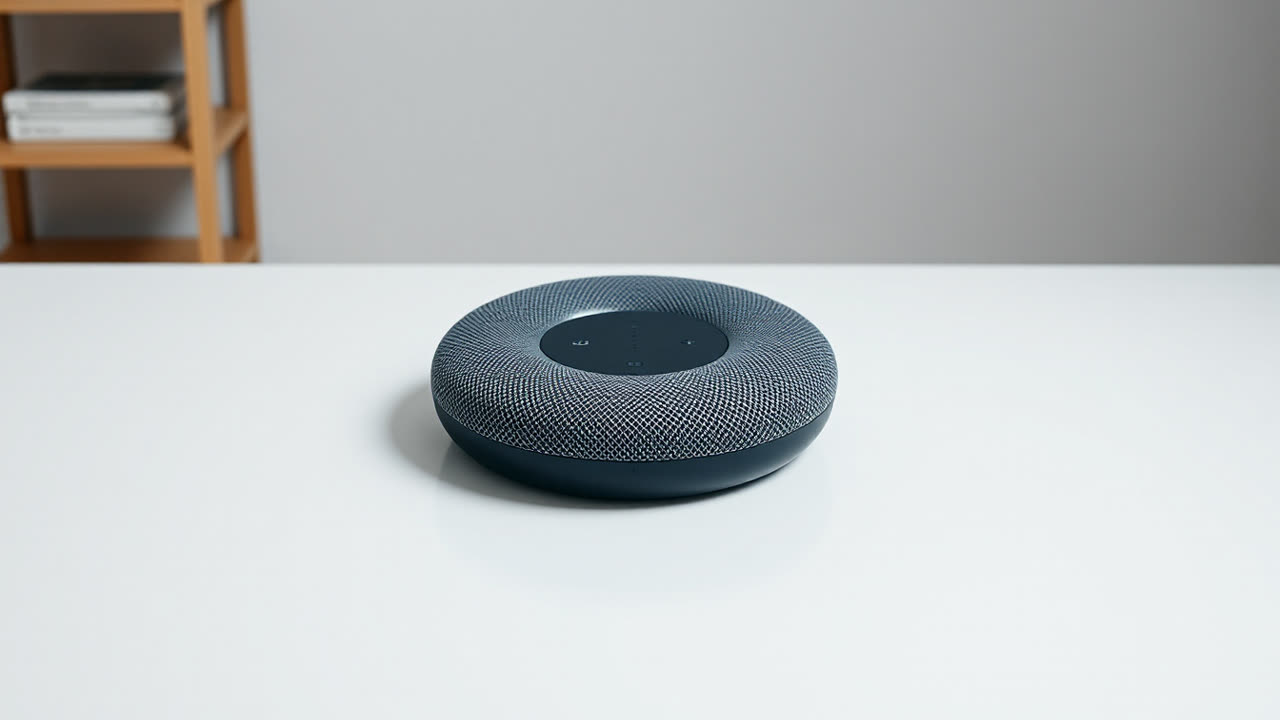
OpenAI is reportedly poised to launch its first consumer hardware device, a screen-free smart speaker designed in collaboration with former Apple design chief Jony Ive, slated for an early 2027 release with an anticipated price between $200 and $300. This "home computer," as OpenAI internally labels it, is a battery-powered, doughnut-shaped device, roughly the size of a hockey puck, and notably lacks a traditional display, instead featuring a camera, environmental sensors, and mechanical components that move autonomously to convey a sense of being "alive". The device will leverage an advanced version of OpenAI’s GPT-Live voice model, enabling it to listen and speak simultaneously, adapt mid-conversation, and offer proactive, personalized assistance by learning from its owner's habits and even personal information like emails.
This foray into physical hardware marks a pivotal strategic shift for OpenAI, a company predominantly known for its generative AI software like ChatGPT. By acquiring Ive's hardware startup, io Products, for approximately $6.5 billion in May 2025, and integrating his design firm LoveFrom, OpenAI signals an ambition to control the entire AI stack—from models to user interface—rather than solely relying on third-party platforms. The move aims to diversify revenue beyond API and enterprise software, reducing dependency on ecosystems controlled by tech giants like Apple and Google. For users, the promise is a fundamental redefinition of human-AI interaction, moving beyond reactive keyword-based assistants to a genuinely proactive, context-aware companion that anticipates needs and volunteers information, potentially making smartphones less central to daily AI engagement. This emphasis on "personality" and deeper connection is a calculated risk, aiming to cultivate an emotional bond that has largely eluded previous smart devices.
The smart speaker market, currently valued at approximately $15.8 billion in 2025, is mature and fiercely competitive, dominated by Amazon's Echo and Google's Nest lines, with Apple's HomePod also a player. Existing smart speakers, despite their ubiquity, often fall short of "true comprehension," operating primarily on keyword recognition and remaining largely tethered to their respective ecosystems. OpenAI's device, with its integrated camera and advanced multimodal AI capabilities, aims to transcend these limitations by "seeing" and understanding its environment and users' behavior, facilitating functions like Face ID-level facial recognition for secure voice shopping. This represents a significant leap from the "smart display" trend, where companies like Amazon have seen 78% of recent purchases for devices that, while offering visual feedback, still largely operate within a reactive paradigm. Google, for instance, recently launched a $99 Gemini-powered Home Speaker in June, focusing on natural conversations and smart-home controls. Apple is also developing its own AI home product, code-named J490, a "command center" with a 7-inch display, videoconferencing, facial recognition, and an overhauled Siri expected with iOS 27, even exploring a version mounted on a robotic arm. OpenAI's approach, however, is a deliberate rejection of the screen, betting on a more ambient, subtle form of intelligence.
Despite the ambitious vision, the path ahead for OpenAI's hardware venture is fraught with challenges. Most immediately, the company faces a significant legal battle; Apple filed a lawsuit against OpenAI on July 10, accusing the AI firm of trade-secret theft. The complaint alleges that former Apple employees, including Tang Tan, ex-head of iPhone product design and an io co-founder, brought confidential information to OpenAI to accelerate its hardware ambitions. This lawsuit could potentially lead to an injunction, stalling the scheduled unveiling later this year and the 2027 shipping timeline. Beyond legal hurdles, the device's proactive nature, camera, and ability to process personal data raise substantial privacy concerns, particularly regarding "always-listening" and "always-watching" hardware in the home. While OpenAI has indicated a commitment to "privacy by default" through on-device processing and clear visual indicators for active attention, building user trust will be paramount in a landscape where previous AI hardware attempts, such as the Humane AI Pin, have struggled with public acceptance and weak demand.
Looking ahead, the smart speaker is reportedly just the first of "roughly five products" in OpenAI's hardware pipeline, with explorations into smart glasses and smart lamps for 2028 and beyond, and a long-term ambition to develop a mobile device capable of replacing the smartphone. OpenAI's broader strategy includes establishing US-based hardware manufacturing and assembly, seeking partners for components from consumer electronics to robotics, aiming for supply chain resilience and national technological leadership. This bold move into hardware, leveraging Jony Ive's unparalleled design expertise, positions OpenAI not merely as a software provider but as a potential architect of the next generation of AI-native computing. Its success or failure will hinge not only on technological prowess and design elegance but also on its ability to navigate complex legal landscapes, overcome deep-seated privacy anxieties, and ultimately convince consumers that a truly intelligent, screenless companion offers indispensable value beyond what existing smart devices can provide.