OpenAI to Launch Screenless, Moving Smart Speaker as First Hardware Device
OpenAI is reportedly set to enter the consumer electronics market with a unique screenless, portable smart speaker featuring self-moving mechanical elements, aiming to create a humanlike AI companion.
✨ This content was summarized and interpreted by AI; it may contain errors — please verify accuracy with the original sources. Learn more
Listen to this story
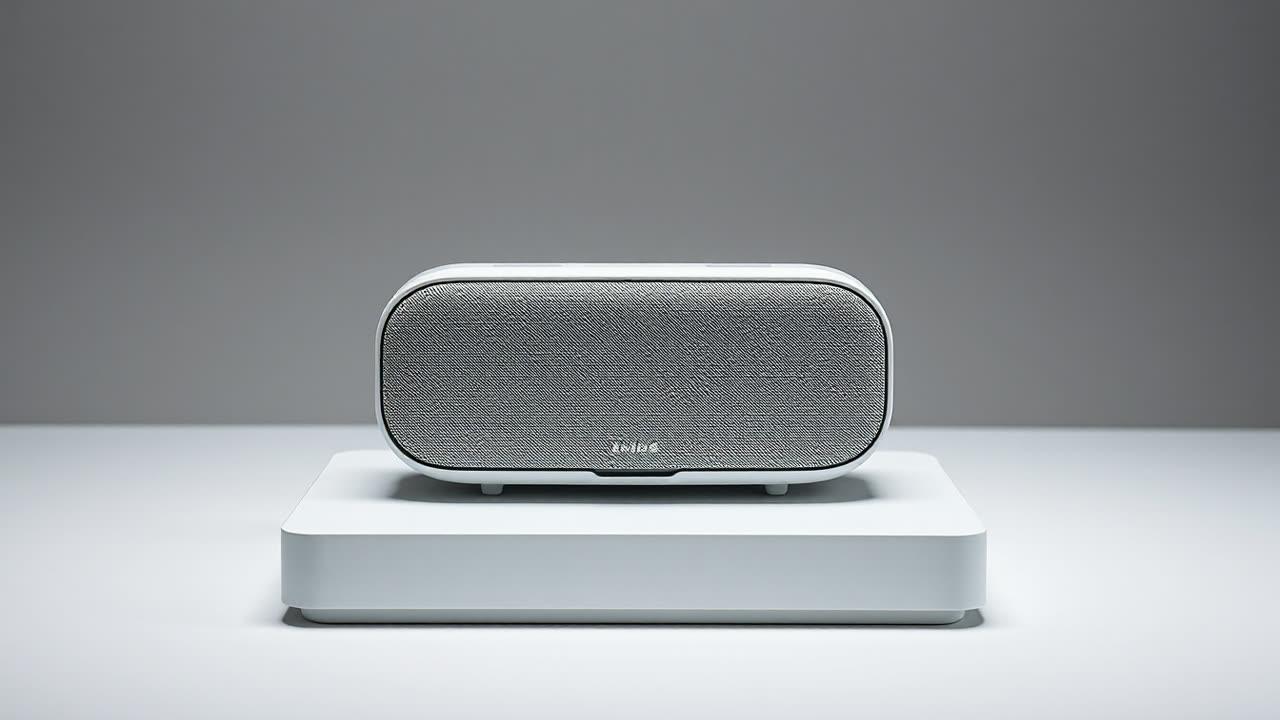
OpenAI is reportedly poised to disrupt the consumer electronics market with its debut hardware device: a screenless, portable smart speaker featuring "mechanical elements that can move on their own." This peculiar design, detailed in a Bloomberg report, aims to create a "humanlike AI companion" that lives within the home, signaling a significant strategic shift for the generative AI leader.
The device, which is said to possess a "personality" and integrate a camera and sensors to understand its surroundings, is designed to learn about its owner over time, offering proactive assistance and controlling smart home appliances using an advanced version of ChatGPT Voice Mode. This ambitious venture follows OpenAI's $6.5 billion acquisition of Jony Ive’s AI device startup, io, in May 2025, with Ive’s design firm LoveFrom playing a crucial role in its development. Expected to be unveiled in 2026 and released in 2027 with a price point between $200 and $300, the product is internally described as "a computer built for AI".
This move signifies OpenAI's intent to diversify revenue beyond software and establish a powerful "AI moat" through vertical integration, controlling the entire user experience and gathering richer real-world data. CEO Sam Altman has long articulated a vision for a "fundamentally new type of computer" that redefines human-AI interaction, moving beyond traditional screens to offer more natural, context-aware engagement. The company's entry directly challenges established smart speaker giants like Amazon, Apple, and Google, positioning itself as the "default assistant" layer in the burgeoning AI ecosystem.
However, the path is not without hurdles. The device's perceived invasiveness due to its always-on camera and learning capabilities raises considerable privacy questions. Furthermore, Apple recently filed a lawsuit alleging trade secret theft related to OpenAI's hardware push, though OpenAI maintains its product is distinct from anything Apple currently offers. Despite these challenges, if OpenAI can successfully deliver on its promise of an embodied, intuitive AI companion, it could indeed usher in a new paradigm of computing, shifting focus from screen-centric interaction to a more ambient and personalized AI experience.