OpenAI Unveils Visual Ads in ChatGPT Image Generation, Targets $100B Ad Revenue
OpenAI, leveraging its 1.2 billion weekly users, introduces a new visual ad format within ChatGPT's image generation interface and ambitious revenue targets, marking a significant strategic pivot in AI monetization.
✨ This content was summarized and interpreted by AI; it may contain errors — please verify accuracy with the original sources. Learn more
Listen to this story
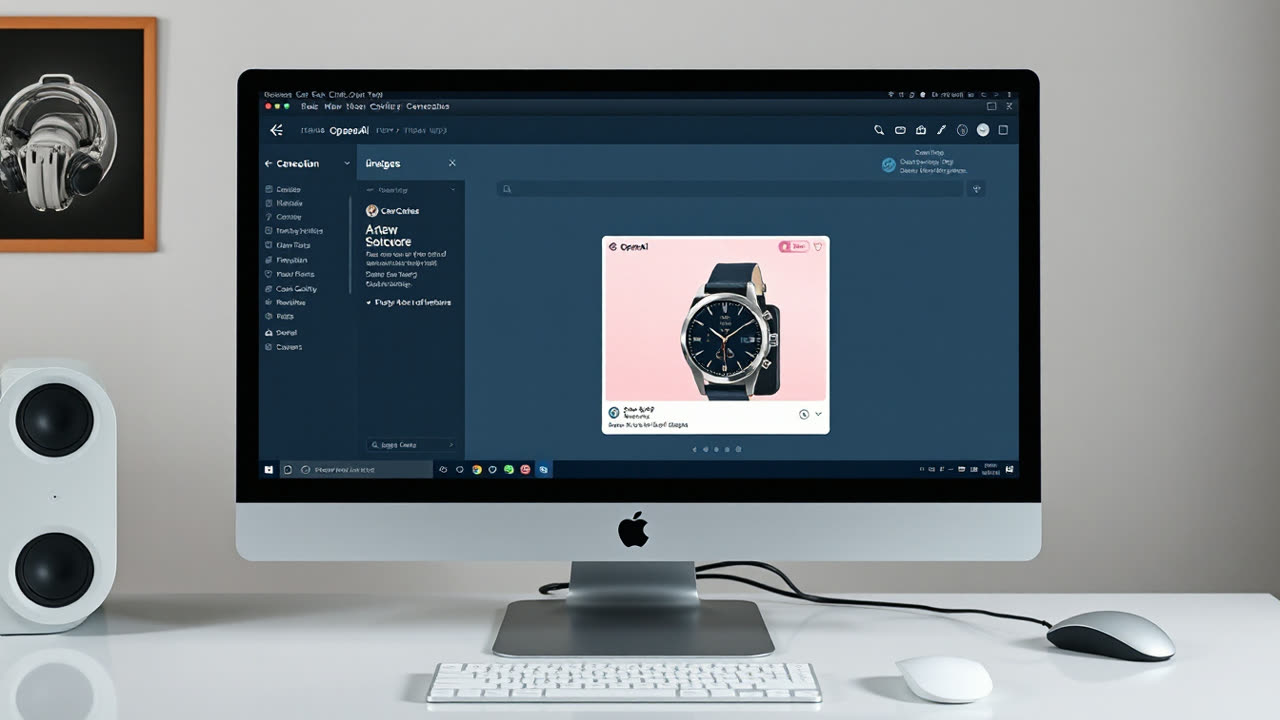
OpenAI, the architect of ChatGPT, has initiated a pivotal expansion of its advertising ecosystem, introducing a novel visual ad format directly within ChatGPT's image generation interface and bolstering its measurement, attribution, and brand suitability frameworks. This move, announced on October 5, 2026, marks a significant strategic pivot, leveraging the platform's staggering 1.2 billion weekly users to diversify revenue streams beyond subscriptions and API usage. The new visual ads, slated for testing later this month in the US, are designed to appear while users are generating images, showcasing product inspiration, usage, or experiences, with clear labeling and a strict separation from the AI-generated content to maintain user trust.
This foray into visually rich, contextually integrated advertising is more than a simple product update; it represents OpenAI's aggressive commitment to monetization and a profound redefinition of the digital advertising landscape. The company’s advertising business has already demonstrated remarkable velocity, achieving a $1 billion annualized revenue run rate in under 200 days since its initial ad trials in February 2026. OpenAI projects an ambitious $2.5 billion in ad revenue for 2026, with a long-term target of $100 billion by 2030. This trajectory underscores the immense financial pressure and opportunity inherent in operating leading-edge large language models (LLMs), which demand colossal computational resources and ongoing investment. The shift to visual formats during image generation is particularly insightful, tapping into a creative, high-intent user state where product visualization can feel less intrusive and more genuinely helpful.
For users, the introduction of ads, particularly visual ones, will continue to be a nuanced experience. While 83% of surveyed answer engine users indicated they would tolerate ads for continued free access, there remains a palpable sensitivity around the potential for ads to blur the lines between organic information and paid promotion. OpenAI's commitment to clear labeling and ensuring ads do not influence ChatGPT's answers is crucial for maintaining user trust, a fragile commodity in the AI space. The platform also offers users control over ad personalization through memory settings, a vital feature given privacy concerns. However, the real test will be whether the visual ads genuinely enhance the user experience by offering relevant, non-disruptive suggestions that align with their creative or informational needs during image generation.
From an industry perspective, OpenAI is pioneering a "fundamentally different advertising environment". Unlike traditional search or display, conversational AI surfaces richer, more continuous intent signals, providing advertisers with unprecedented contextual relevance. The expansion of measurement tools and a robust partner ecosystem, including integrations with data platforms like Hightouch, Tealium, and LiveRamp, and attribution specialists such as AppsFlyer and Adjust, is critical. These partnerships aim to provide advertisers with the familiar metrics and accountability needed to justify significant spend in this nascent channel. AI-driven attribution models, which analyze complex customer journeys and dynamically assign value to touchpoints, are becoming indispensable for understanding ROI in this evolving landscape.
A significant challenge, and an area of intense focus for OpenAI, is brand suitability. The dynamic, generative nature of AI introduces unique risks, such as "AI hallucination," where models might misrepresent products or generate content adjacent to sensitive topics. OpenAI's collaboration with industry leaders DoubleVerify and Integral Ad Science for independent brand suitability evaluations is a strategic imperative to instill advertiser confidence, ensuring placements align with brand values without compromising user conversation privacy. This proactive approach signals a recognition that trust infrastructure is as vital as technological innovation in scaling AI advertising.
The competitive landscape for AI advertising is rapidly intensifying. While OpenAI charges ahead with its monetization strategy, rivals are adopting varied approaches. Anthropic, with its Claude chatbot, has notably positioned itself as an ad-free alternative, even running a Super Bowl campaign highlighting "ads are coming to AI, but not to Claude". However, some analysts view this as a temporary stance, suggesting that the economic realities of running advanced LLMs will eventually necessitate similar monetization. Meanwhile, tech giants like Google and Meta are deeply embedding advertising into their AI offerings. Google's Gemini integrates with its vast search and workspace ecosystem, and its recent "Business Agent for YouTube Ads" allows conversational AI alongside video ads, blurring the lines between ad unit and interactive assistant. Meta's Llama powers Meta AI, which leverages user interactions across its social platforms for ad personalization. Microsoft's Copilot has featured ads since 2023, demonstrating an earlier commitment to AI monetization. OpenAI's visual ad format during image generation distinguishes it by targeting a specific, creative user workflow, offering a unique ad placement compared to more general text-based or agentic conversational ads.
Looking ahead, the future of AI advertising will be characterized by rapid evolution and increasing regulatory scrutiny. OpenAI's stated "next phase of growth" promises more formats, objectives, and "more native ways" for businesses to interact with consumers within ChatGPT, potentially leading to sophisticated conversational brand agents. However, this expansion will occur under a watchful eye. ChatGPT's designation as a "very large online search engine" in Europe requires a public ad repository by January 2027, demanding unprecedented transparency regarding ad runtime, targeting, and reach. This regulatory environment will undoubtedly shape best practices and push for greater accountability. While OpenAI's revenue projections are ambitious, market analysts like eMarketer remain more conservative, forecasting the entire U.S. standalone chatbot advertising market at less than $1 billion for 2026, highlighting the need for OpenAI to consistently prove ROI beyond initial advertiser experimentation. The long-term success of OpenAI's advertising gambit hinges on its ability to balance aggressive monetization with user experience, maintaining trust, and navigating the complex ethical and regulatory landscape of AI.