Oppo's Find X10 Pro Max Breaks Ground with Triple 200MP Cameras
Oppo's new Find X10 Pro Max, launched today in China, is the first smartphone globally to feature 200-megapixel sensors across all three of its rear cameras: wide, ultrawide, and periscope telephoto.
✨ This content was summarized and interpreted by AI; it may contain errors — please verify accuracy with the original sources. Learn more
Listen to this story
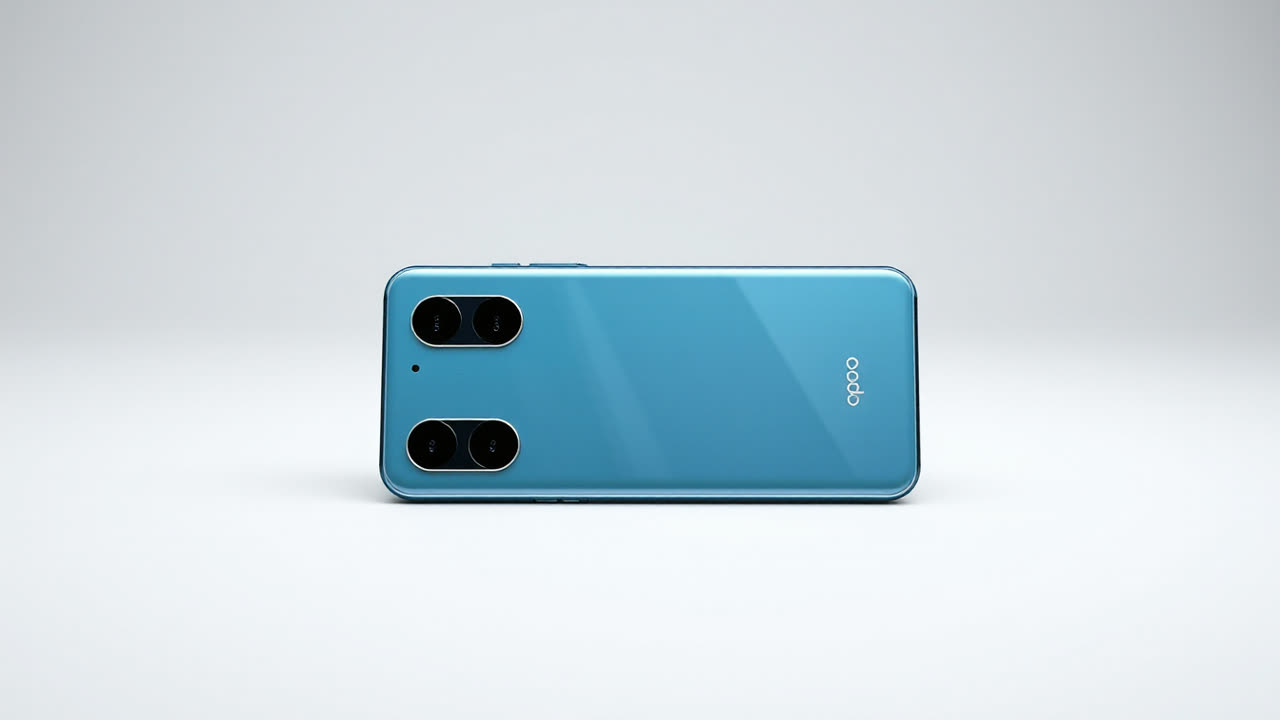
Oppo's new Find X10 Pro Max, officially launched today in China, shatters current smartphone imaging paradigms by becoming the first device globally to integrate 200-megapixel sensors across all three of its rear cameras: wide, ultrawide, and periscope telephoto. This unprecedented triple-200MP configuration, developed in collaboration with Hasselblad, aims to deliver a new echelon of photographic detail and flexibility.
The primary wide-angle camera on the Find X10 Pro Max leverages Samsung's new ISOCELL HPC sensor, boasting an f/1.5 aperture and achieving an astonishing 17-stop dynamic range, thanks to Oppo's "Deep" technology, a key component of its new ProXDR processing system. This wide dynamic range allows the camera to retain exceptional detail in both extreme highlights and deep shadows within a single frame, rivaling the capabilities of some mirrorless cameras. The ultrawide camera, with its 200MP sensor and f/2.2 aperture, offers a expansive 124-degree field of view, marking a significant first for such a high-resolution ultrawide lens in a smartphone. Rounding out the trio is a 200MP periscope telephoto lens, featuring an f/2.1 aperture and impressive 7.5-stop CIPA optical image stabilization, promising superior long-range clarity. Beyond still photography, the Find X10 Pro Max emphasizes professional-grade video capabilities, supporting 8K Log Cinematic Video and Open Gate recording across all three rear cameras. A dedicated 3MP multispectral sensor further enhances color accuracy.
This aggressive pursuit of raw megapixel count across multiple lenses signals a pivotal moment in mobile photography, pushing the boundaries of what consumers can expect from a smartphone camera system. While high megapixel counts historically faced skepticism regarding their practical benefits over sensor size and pixel quality, advancements in computational photography have made them increasingly relevant. The massive amount of data captured by three 200MP sensors provides algorithms with richer information, enabling superior detail retention, more aggressive cropping without significant quality loss, and enhanced computational effects like depth mapping and HDR processing across all focal lengths. For users, this translates to unparalleled post-capture flexibility, allowing for creative freedom previously confined to dedicated cameras. Content creators, in particular, stand to benefit from the ability to extract multiple focal lengths from a single capture and achieve higher-quality super-steady video.
However, the sheer volume of image data generated by a triple-200MP setup introduces significant challenges. Processing such immense files demands exceptional computational power, raising questions about potential impacts on shutter speed, heat management, and battery consumption. Oppo has attempted to address this by equipping the Find X10 Pro Max with MediaTek's Dimensity 9600 Pro chipset, a 2nm processor that reportedly offers a 61% improvement in multi-core CPU efficiency over its predecessor. The phone also features a substantial 8,000mAh battery to power these demanding operations. Despite these hardware advancements, the real-world performance will hinge on Oppo's software optimization and how efficiently its ProXDR engine can handle the workload without introducing lag or compromising image quality through aggressive noise reduction in challenging conditions.
The Find X10 Pro Max sets a new benchmark in a fiercely competitive market, where other flagships typically feature a single high-resolution main sensor. For instance, the prior generation Oppo Find X9 Ultra already incorporated two 200MP sensors (for its main and 3x periscope telephoto cameras), alongside a 50MP ultrawide and a 50MP 10x periscope. The Find X9 Pro also featured a 200MP telephoto. Rivals like the Samsung Galaxy S26 Ultra offer a 200MP primary camera, complemented by a 50MP periscope zoom and a 50MP ultrawide. Even Apple, traditionally conservative with megapixel counts, is reportedly testing a 200MP main camera for its 2027 iPhone models, though its current iPhone 18 Pro Max features a 48MP Fusion Main camera. Oppo's move to standardize 200MP across all three lenses positions it as a leader in the megapixel race, pushing other manufacturers to re-evaluate their camera strategies.
Looking ahead, the Find X10 Pro Max is expected to see a global rollout in late October 2026, with an estimated international price around USD $1,620. This launch will undoubtedly intensify the focus on hardware specifications in the premium smartphone segment. The industry will closely watch how Oppo's "Deep" technology and powerful Dimensity 9600 Pro chipset manage the complexities of such high-resolution imaging. While the raw megapixel count is a compelling marketing point, the true measure of its success will be its ability to consistently deliver superior image quality across diverse shooting scenarios, particularly in low light where smaller pixels can traditionally struggle without robust computational intervention. This bold move by Oppo not only raises the bar for hardware but also underscores the critical role of computational photography and powerful processing in shaping the future of mobile imaging. The era of the smartphone as a truly professional-grade, multi-focal length imaging system is here, with Oppo leading the charge into a hyper-megapixel future.