Optimizing AirPods audio settings unlocks significantly richer, personalized listening
Apple's AirPods, through features like Personalized Spatial Audio and Headphone Accommodations, offer deep customization that transforms them into sophisticated audio tools, often overlooked by users.
✨ This content was summarized and interpreted by AI; it may contain errors — please verify accuracy with the original sources. Learn more
Listen to this story
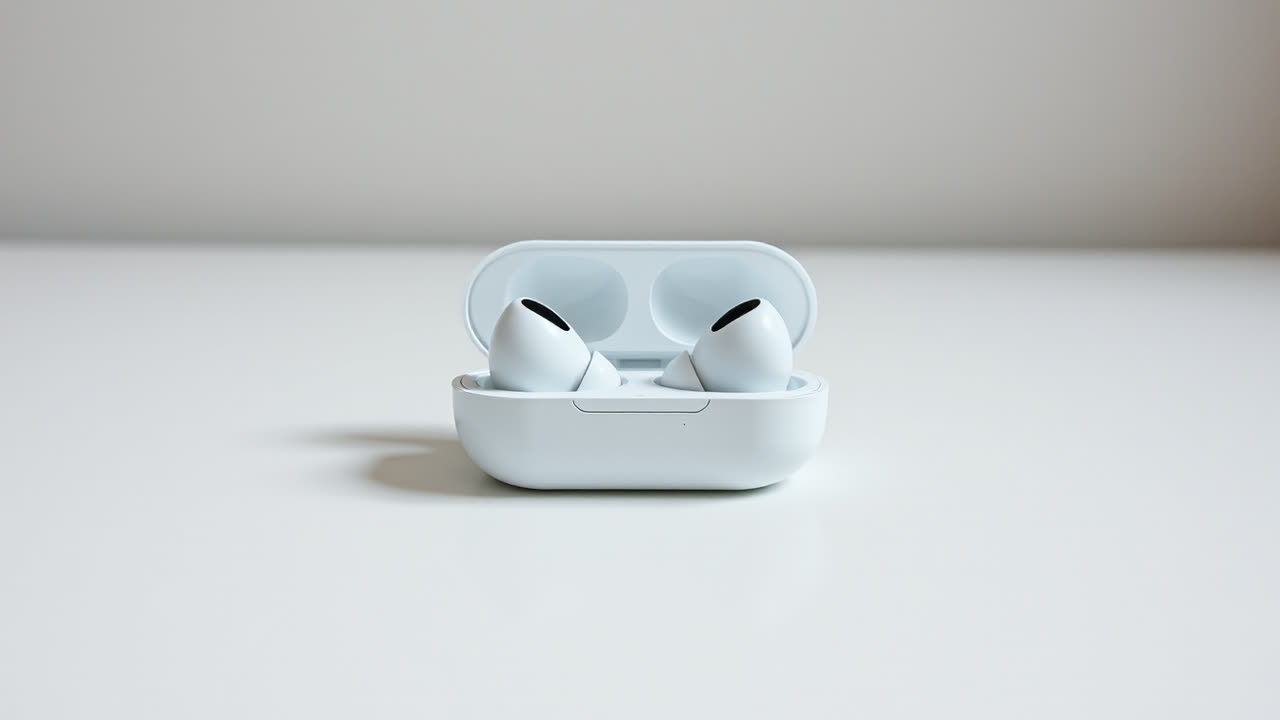
Optimizing AirPods audio settings unlocks a significantly richer and more personalized listening experience that many users unknowingly forgo, transforming the device from a casual accessory into a sophisticated audio tool. The primary avenues for this enhancement lie within Apple's ecosystem, specifically through features like Personalized Spatial Audio, Headphone Accommodations, and, for AirPods Pro models, Adaptive Transparency and Conversation Boost, all accessible directly from an iOS device. These granular adjustments are not mere cosmetic tweaks; they fundamentally alter how sound is delivered, addressing individual hearing profiles and environmental challenges to an extent rarely seen in mass-market earbuds.
The impact of these customizable settings on the user is profound, shifting the paradigm from a generic sound profile to a tailor-made auditory landscape. Personalized Spatial Audio, for instance, uses the TrueDepth camera on an iPhone to scan the user's ear and head geometry, creating a unique acoustic profile that dynamically adapts sound to the individual's physical characteristics. This isn't just about surround sound; it's about making audio feel as if it's originating from a fixed point in space relative to the listener, enhancing immersion for movies, music, and games. For users with mild hearing variations, Headphone Accommodations can be a game-changer, amplifying soft sounds and adjusting specific frequencies to make music, podcasts, and calls clearer and more detailed. This feature goes beyond a simple EQ, performing real-time analysis to boost clarity based on a user's audiogram or a custom sound profile. Such personalization directly addresses a critical user need: the desire for audio that sounds "right" for *them*, not just generally good. For the industry, this emphasis on individual biometric and environmental adaptation sets a high bar, pushing competitors to move beyond generic sound signatures and invest in more sophisticated, user-centric audio processing.
Compared to earlier generations of wireless earbuds, and even some current rivals, the depth of customization offered by AirPods, particularly the Pro and Max models, highlights Apple's strategic focus on integrated hardware-software experiences. While many high-end earbuds from Sony, Bose, and Samsung offer robust companion apps with multi-band equalizers and noise cancellation adjustments, few integrate the level of biometric personalization seen in Personalized Spatial Audio or the accessibility-focused intelligence of Headphone Accommodations directly into the operating system. For example, Sony's WF-1000XM5 earbuds offer an excellent custom EQ and DSEE Extreme upscaling, and Bose QuietComfort Ultra Earbuds boast impressive noise cancellation and Immersive Audio, but their personalization primarily revolves around sound profiles and fit rather than individual ear geometry or real-time hearing compensation in the same manner as Apple. The Adaptive Transparency mode on AirPods Pro 2, which intelligently reduces loud environmental noises while allowing ambient sound to pass through, and Conversation Boost, which isolates and amplifies voices during face-to-face interactions, further differentiate Apple's offerings by blending sophisticated audio processing with practical, real-world utility. These features represent a maturation of the wireless earbud market, moving beyond basic connectivity and sound quality to intelligent, context-aware audio management.
Looking ahead, the trajectory for AirPods audio customization points towards even deeper integration with health and environmental data, potentially leveraging the growing array of sensors within Apple's ecosystem. We can anticipate more sophisticated real-time acoustic analysis, perhaps incorporating machine learning to predict and adapt audio output based on a user's current activity, location, and even physiological state. Imagine AirPods automatically adjusting EQ and noise cancellation based on whether you're in a library, a gym, or commuting, not just reacting to noise levels but understanding the *context* of the environment and your listening preferences within it. Further advancements might include more precise integration with spatial mapping technologies, allowing for "audio augmented reality" where digital sounds are anchored to specific physical locations around the user, enhancing navigation or interactive experiences. As computational audio continues to evolve, the distinction between sound reproduction and intelligent audio interaction will blur, transforming AirPods from mere output devices into proactive, personalized auditory companions that seamlessly adapt to and enhance every listening scenario.