Paris Mandates Helmets and High-Visibility Vests for Electric Scooter Riders
Paris tightens electric scooter regulations, requiring riders to wear helmets and high-visibility vests on public roads starting August 7, 2026, to combat rising accident rates.
✨ This content was summarized and interpreted by AI; it may contain errors — please verify accuracy with the original sources. Learn more
Listen to this story
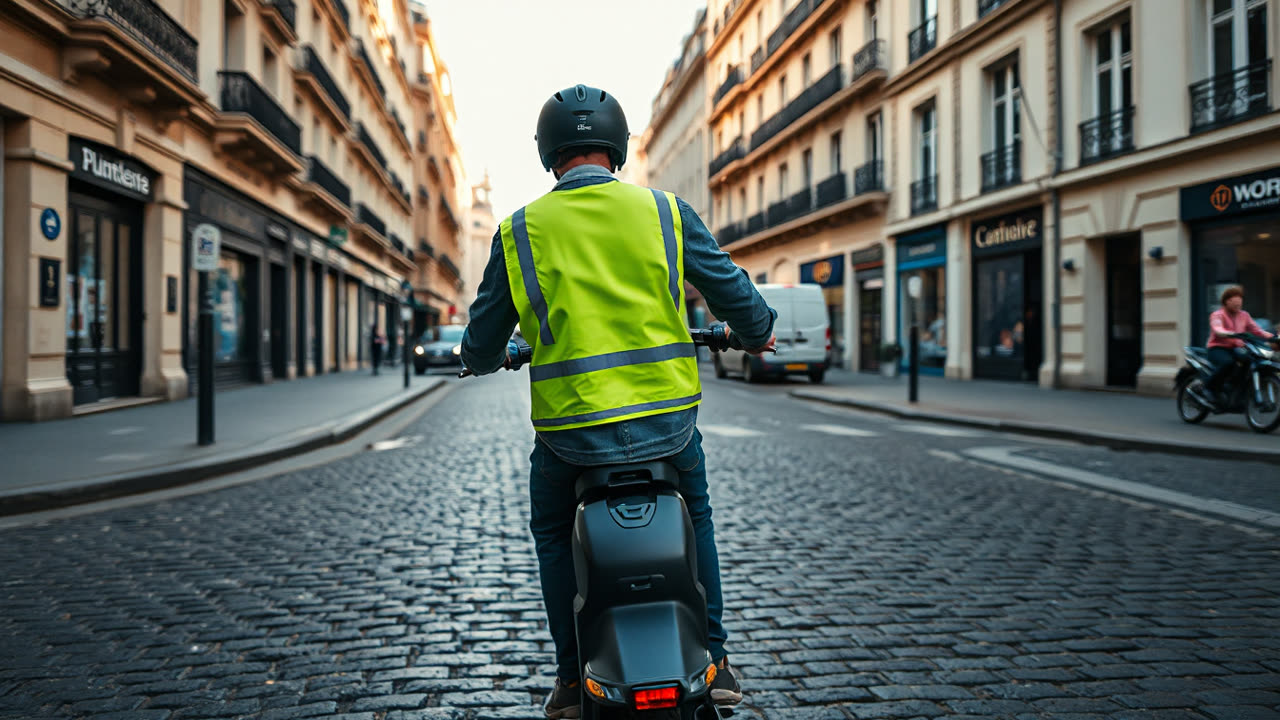
Paris has intensified its regulatory grip on electric scooters, mandating that riders now wear both a helmet and a high-visibility vest or reflective gear on public roads, effective August 7, 2026. This comprehensive safety measure extends across Paris and its inner suburbs, including Hauts-de-Seine, Seine-Saint-Denis, and Val-de-Marne, targeting a broad category of motorized personal transportation devices (EDPMs), such as electric unicycles, Segways, and hoverboards, though notably exempting electric bicycles. Non-compliance carries significant penalties: a €135 fine for not wearing an approved helmet and a €35 fine for lacking high-visibility attire, accumulating to a total of €170 if both violations occur simultaneously. This decisive action by Parisian authorities is a direct response to a concerning escalation in accident rates, with France's road safety watchdog reporting 79 fatalities from e-scooter crashes nationwide in 2025, a sharp increase from 45 in 2024. In Paris alone, approximately 1,100 e-scooter users sustained serious injuries in 2025, marking a 33% year-over-year rise, with a significant proportion resulting in severe or fatal head trauma.
This regulatory tightening signals a crucial pivot in urban micro-mobility governance, moving beyond mere coexistence to a proactive stance on rider and pedestrian safety. For users, the new mandates introduce a layer of inconvenience and cost, fundamentally altering the spontaneous appeal of electric scooters. Owning and consistently carrying a helmet and a reflective vest for every trip will likely deter casual usage, potentially impacting the substantial private ownership rate in France, which stood at around 2.5 million privately owned scooters in 2023. While the measures undeniably enhance rider protection, particularly against severe head injuries, they also impose an additional barrier to entry for new users and could lead to a decline in overall ridership if the perceived hassle outweighs the utility. This shift could push some commuters towards alternative modes like electric bicycles, which remain exempt from these specific helmet and vest requirements, thereby creating a regulatory divergence that could reshape urban transport choices.
The industry, already navigating Paris's 2023 ban on shared rental e-scooters following a public referendum where 89% of voters supported the ban, now faces an even more stringent environment for privately owned devices. While the rental ban primarily affected operators like Lime, Dott, and Tier, the new rules directly impact the millions of private owners. This could stimulate sales of integrated safety gear or more compact, portable helmet designs. However, the overarching trend suggests a maturing market where regulatory frameworks are catching up to technological adoption, often at the expense of user freedom. Historically, Paris has progressively tightened controls, from capping rental fleets at 15,000 scooters and imposing speed limits of 20 km/h in 2020, to banning sidewalk riding with a €135 fine. These new requirements are a logical extension of that trajectory, reflecting a broader European movement towards stricter micro-mobility regulation, as seen with Madrid banning rental e-scooters in 2024 and Brussels announcing a similar ban in June. The neighboring Hauts-de-Seine department had already implemented comparable helmet and high-vis vest rules on July 28, 2026, with even higher potential fines of up to €1,500, indicating a regional consensus on enhanced safety.
Looking ahead, the Parisian model could serve as a blueprint for other global cities grappling with e-scooter safety. Accident data, such as a 2017-2019 Paris study revealing only 12% of injured e-scooter riders wore helmets and 87% engaged in risky behavior, underpins the rationale for these mandates. A more recent 2019-2022 study across France further highlighted that only 22.5% of e-scooter users wore helmets, with a staggering 36.7% having high blood alcohol content at the time of accidents, and e-scooter incidents leading to twice as many severe traumatic brain injuries as motorbike crashes. These statistics unequivocally demonstrate the urgent need for intervention. The challenge, however, will lie in consistent enforcement, a hurdle that has plagued similar regulations in other regions, as noted by some riders regarding Italy's helmet law. If effectively enforced, these measures could significantly reduce the severity of injuries and fatalities, making Parisian streets safer for all. However, they also raise questions about the long-term viability of privately owned electric scooters as a convenient urban transport solution, potentially pushing micro-mobility further into niche recreational use rather than a widespread commuter alternative, thus solidifying Paris's reputation as a city prioritizing public order and safety above the "wild west" ethos that once characterized e-scooter adoption.