PChome24h Bundles Nvidia RTX 5090 with Eight Motherboards, Sparking Market Manipulation Concerns
Taiwanese e-commerce giant PChome24h is forcing consumers to purchase Nvidia's flagship RTX 5090 GPU alongside eight unwanted motherboards and other components, signaling a troubling regression in market fairness.
✨ This content was summarized and interpreted by AI; it may contain errors — please verify accuracy with the original sources. Learn more
Listen to this story
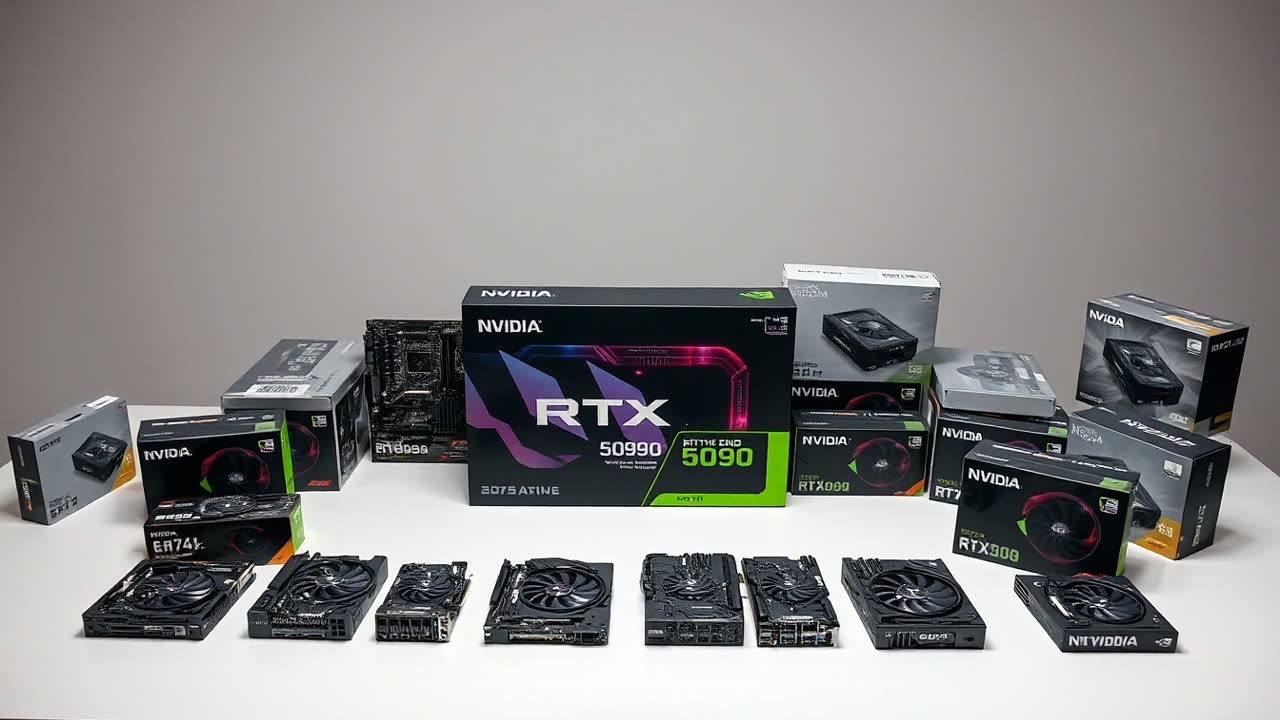
Taiwanese e-commerce giant PChome24h has begun shipping Nvidia's flagship RTX 5090 GPU in an unprecedented and alarming bundle, forcing consumers to purchase the high-end graphics card alongside eight entry-to-mid-range motherboards, additional lower-tier GPUs, and an array of other peripheral components. This bizarre packaging strategy, reminiscent of the speculative hoarding seen during the cryptocurrency mining boom, effectively holds the most coveted GPU of the new generation hostage, driving up the true cost for consumers and signaling a troubling regression in market fairness.
The core news is not merely an unusual retail tactic; it represents a concerning evolution of market manipulation, leveraging the insatiable demand for top-tier graphics processing power. While the exact specifications of the bundled motherboards and secondary GPUs vary, reports indicate they are predominantly B650 and A620 chipsets, often paired with older generation RTX 3050 or AMD RX 6600 cards, components that are typically difficult to offload individually in a saturated market. This creates an artificial scarcity for the RTX 5090, compelling enthusiasts and professionals to absorb hundreds, if not thousands, of dollars in unwanted hardware to acquire the singular component they truly desire. The initial street price for the PChome24h RTX 5090 bundle has been observed to be upwards of $4,500, significantly exceeding the RTX 5090's standalone Manufacturer's Suggested Retail Price (MSRP) of $1,999, effectively making the unwanted components a mandatory, inflated premium.
This practice matters profoundly for several reasons. For users, it translates directly into diminished purchasing power and restricted access to cutting-edge technology. The barrier to entry for the RTX 5090, already a premium product, becomes insurmountable for many who cannot justify the exorbitant cost of an entire system's worth of superfluous components. It stifles innovation at the consumer level, preventing independent builders, content creators, and competitive gamers from upgrading their systems efficiently and affordably. Furthermore, it creates a secondary market nightmare, as individuals attempt to resell the unwanted motherboards and GPUs, often at a loss, further devaluing those components and flooding the market with used, unneeded hardware.
For the industry, this bundling strategy by a prominent retailer like PChome24h sends a dangerous signal. It indicates a willingness to exploit demand imbalances, potentially setting a precedent for future hardware launches across various categories. During the crypto boom of 2021-2022, GPU availability plummeted, and prices skyrocketed, driven by miners buying cards en masse. While that era saw market forces dictate price inflation, this current scenario represents a deliberate, retailer-driven act of artificial scarcity and value extraction. It shifts the power dynamic further away from the consumer and towards the distributor, undermining the competitive landscape that typically encourages fair pricing and product availability. Nvidia, as the manufacturer, faces a delicate balancing act; while such practices move units, they risk alienating their most loyal customer base and damaging the brand's reputation for accessibility and fair play.
Comparing this to the prior generation, the RTX 4090's launch, while experiencing initial high demand, largely avoided such extreme, mandatory bundling in major markets, though some retailers did push less egregious combo deals. The RTX 5090 itself, built on the Blackwell architecture, offers substantial performance gains over its predecessor, with early benchmarks indicating a 50-70% uplift in rasterization and ray tracing performance, alongside significant AI acceleration capabilities. This makes it an even more desirable product, and therefore, a prime target for such exploitative bundling. Rivals like AMD, with their upcoming RDNA 4 high-end offerings, and Intel, with their burgeoning Battlemage series, could potentially capitalize on Nvidia's perceived market control if they can ensure more straightforward retail availability for their flagship cards. However, if this bundling trend proves profitable, it poses a risk that other retailers or even competing manufacturers might adopt similar tactics, further eroding consumer choice.
Looking ahead, the immediate future for high-end GPU consumers appears bleak if this trend propagates. Regulatory bodies in various regions may need to scrutinize such anti-consumer practices, particularly if they become widespread and demonstrably stifle market competition or consumer access to essential technology. Nvidia, for its part, may need to exert greater control over its distribution channels, perhaps through direct-to-consumer sales or stricter agreements with retailers, to ensure its flagship products are available at their intended MSRP. Without intervention, either from market forces rejecting these bundles or from industry oversight, the precedent set by PChome24h suggests a future where acquiring the latest, most powerful hardware increasingly comes with the hidden cost of unwanted, bundled components, transforming a simple purchase into a complex liquidation challenge for the end-user. The long-term health of the PC hardware ecosystem depends on a return to transparent pricing and readily available components, rather than a reversion to the chaotic, scarcity-driven market of past eras.