PCIe 5.0 SSDs Offer Negligible Gaming Performance Boost Over Older Drives, Analysis Shows
Despite theoretical speed leaps, extensive testing across 11 diverse titles confirms that upgrading to PCIe 5.0 NVMe SSDs provides almost no discernible performance uplift in most PC games.
✨ This content was summarized and interpreted by AI; it may contain errors — please verify accuracy with the original sources. Learn more
Listen to this story
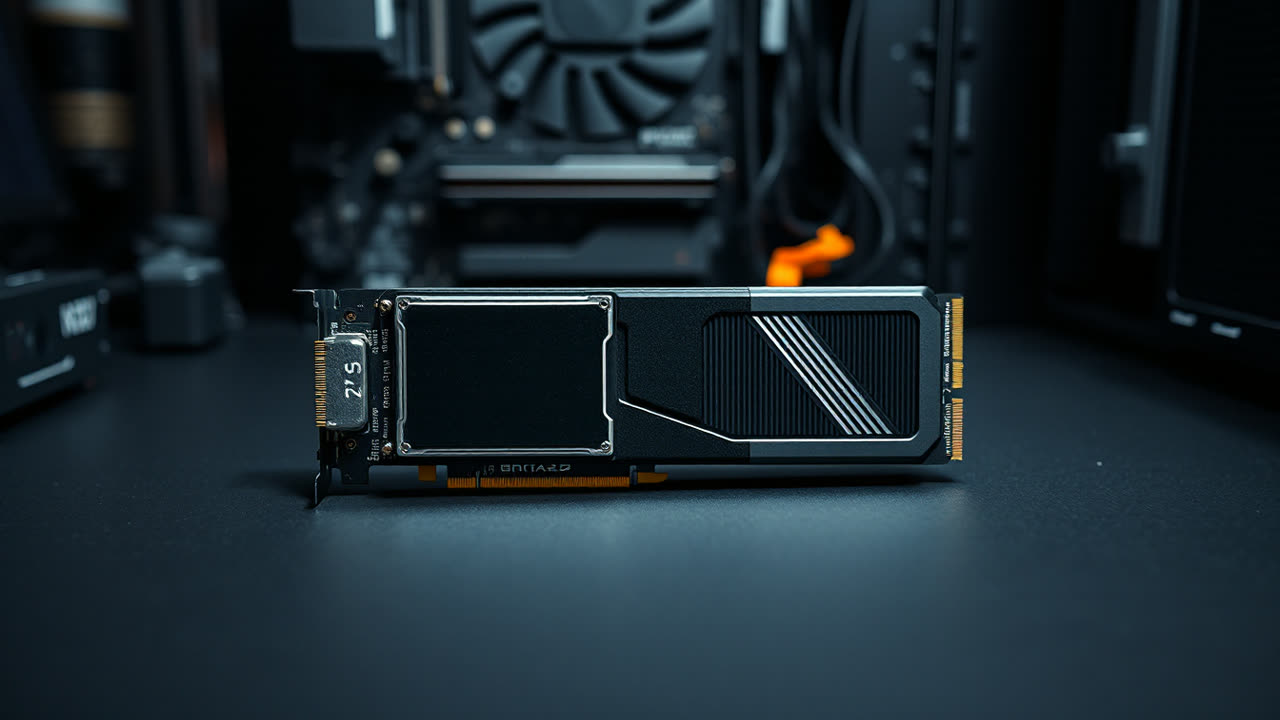
Upgrading from a conventional SATA solid-state drive (SSD) to even the fastest PCIe 5.0 NVMe solution currently offers negligible to no discernible performance uplift in the vast majority of PC games, a recent extensive analysis across 11 diverse titles reveals. While theoretical bandwidth jumps from SATA's roughly 550 MB/s to PCIe 5.0's staggering 14,000 MB/s sequential read speeds are monumental, real-world gaming benchmarks consistently show that loading times, in-game stuttering, and overall frame rates remain largely unaffected by these generational leaps in storage technology. The comprehensive testing by Tom's Hardware, spanning a spectrum of SSDs from SATA to bleeding-edge PCIe 5.0, concluded that for most contemporary games, the performance gains are often within the margin of error or amount to mere seconds in loading screens, a difference many users may not even perceive.
This finding fundamentally challenges the prevailing marketing narrative that faster storage inherently translates to a superior gaming experience, particularly as console manufacturers like Sony have championed ultra-fast SSDs as a cornerstone of next-generation gaming. The PlayStation 5, for instance, leverages a custom PCIe 4.0 SSD capable of 5.5 GB/s raw throughput, which is integral to its game design philosophy, allowing for rapid asset streaming and eliminating traditional loading screens. However, PC game developers have yet to fully optimize their titles to exploit such speeds on the Windows platform. The disparity highlights a critical bottleneck: the software layer. Microsoft's DirectStorage API, designed to bypass CPU overhead and allow the GPU to directly access SSD data, is the key enabler for truly next-gen storage performance on PC. While DirectStorage has been available since early 2022 and is now integrated into titles like *Forspoken* and *Ratchet & Clank: Rift Apart*, its widespread adoption and the subsequent re-engineering of game engines to leverage it remain nascent. Without this software optimization, even a PCIe 5.0 SSD, theoretically capable of loading an entire game in seconds, is bottlenecked by traditional data pathways, rendering its extreme speed largely moot for current gaming workloads.
For consumers, this analysis provides crucial insight into upgrade decisions. The substantial premium associated with top-tier PCIe 5.0 NVMe drives, which can cost upwards of $200 for a 1TB model, compared to less than $100 for a high-quality PCIe 4.0 equivalent or even a fast SATA SSD, makes the current return on investment for gaming negligible. Gamers seeking tangible performance improvements are still better served by investing in a more powerful graphics card, a faster CPU, or additional RAM, which demonstrably impact frame rates and visual fidelity. The "sweet spot" for gaming storage remains a mid-range PCIe 4.0 NVMe SSD, offering excellent general computing performance and future-proofing without the unnecessary expense of PCIe 5.0 for a benefit that, at present, does not materialize in games. Even older PCIe 3.0 NVMe drives still offer a significant upgrade over traditional hard disk drives (HDDs) and often perform almost identically to their faster siblings in gaming scenarios.
The industry impact of this performance plateau is multifaceted. For SSD manufacturers, it means the current race for ever-higher sequential read/write speeds, while impressive for synthetic benchmarks and specific professional workloads like video editing or large data transfers, holds limited sway in the lucrative gaming market until DirectStorage becomes ubiquitous. This could shift marketing focus from raw speed numbers to other attributes like endurance, power efficiency, or even innovative cooling solutions for high-performance drives. For game developers, the findings underscore the imperative to fully embrace and optimize for DirectStorage and similar APIs. The true potential of modern NVMe SSDs will only be unlocked when games are built from the ground up to stream assets directly to the GPU, dramatically reducing loading times, enabling larger, more seamless game worlds, and potentially even influencing new gameplay mechanics that rely on instantaneous asset availability.
Looking ahead, the landscape is poised for change, albeit not as rapidly as raw hardware speeds suggest. The maturation of DirectStorage and its integration into upcoming game engines like Unreal Engine 5 will be the primary catalyst for SSDs to genuinely impact gaming performance. As more titles are developed with these optimizations in mind, the performance gap between generations of NVMe SSDs, and particularly between NVMe and SATA, will widen significantly. We can anticipate future games to increasingly list NVMe SSDs as a minimum or recommended requirement, eventually making SATA SSDs obsolete for new releases. Furthermore, the evolution of PCIe 6.0 and beyond, promising even more astronomical bandwidth, will continue, but its practical application in gaming will remain contingent on software advancements. Until then, the current generation of PCIe 4.0 NVMe SSDs offers an optimal balance of cost and performance for PC gamers, with PCIe 5.0 remaining a niche luxury for those who prioritize synthetic benchmarks or have specific professional use cases.