Photoshop Gets Major AI Overhaul with New Assisted Editor View
Adobe is rolling out a significant update to Photoshop, introducing an "AI Assisted Editor" view in beta, a dedicated optional interface designed to consolidate and simplify access to the software's burgeoning artificial intelligence capabilities.
✨ This content was summarized and interpreted by AI; it may contain errors — please verify accuracy with the original sources. Learn more
Listen to this story
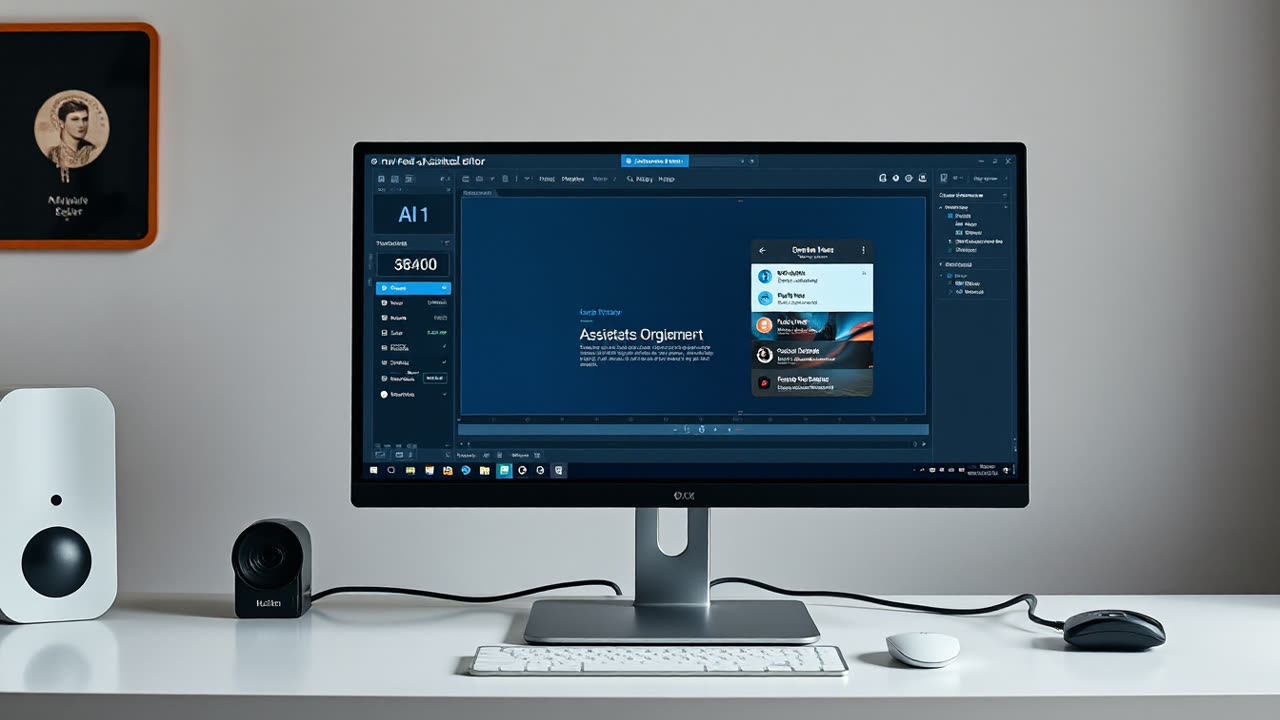
Adobe is rolling out a significant update to Photoshop, introducing an "AI Assisted Editor" view in beta, a dedicated optional interface designed to consolidate and simplify access to the software's burgeoning artificial intelligence capabilities. Launched on August 27, 2026, this new mode shifts complex, multi-step image editing into a streamlined, prompt-based workflow, fundamentally altering how users interact with Photoshop's powerful tools. This interface, accessible via a new toggle in the menu bar, presents a simplified environment where creative professionals and novices alike can leverage AI for tasks ranging from basic adjustments to complex content generation.
At its core, the AI Assisted Editor integrates a suite of advanced features powered predominantly by the latest Adobe Firefly Image Model, including Firefly Image 5. Users can now "Prompt to Edit," transforming images through natural language commands, eliminating the need for intricate manual adjustments. Key functionalities include an enhanced "Remove Background" tool that isolates subjects and refines edges with greater precision, and "Generative Expand," which intelligently extends image canvases by generating new content that seamlessly blends with existing compositions. The "Remove Tool" has been refined to eliminate unwanted objects and distractions while maintaining realistic image quality, building on the success of features like Content-Aware Fill. "Generative Fill," already one of Photoshop's most frequently used beta features, allows for adding, replacing, or removing content with simple text prompts, now yielding richer, more lifelike results that more closely resemble detailed descriptions. Additionally, "Generative Upscale" boosts image resolution while preserving sharpness and visual fidelity. A particularly innovative addition is "AI Markup," enabling visual prompting directly on the canvas, where users can draw or click on areas and add natural-language instructions like "Add more clouds" to guide Firefly's adjustments. Other notable updates include a "Light Adjustment Layer" for Camera Raw-style tone controls within the layer stack, and "Instruct Edit with Masks," which interprets contextual natural-language alongside masks for localized changes.
This strategic overhaul signifies Adobe's deepening commitment to embedding artificial intelligence across its entire Creative Cloud ecosystem, moving beyond individual AI features to create a cohesive, AI-driven editing experience. For users, the impact is transformative: it dramatically accelerates the design process, turning tasks that once took hours into minutes. This newfound efficiency allows designers to reallocate time from repetitive, mundane editing to higher-value creative thinking, conceptualization, and strategic direction, ultimately elevating their role within the creative workflow. The simplified, prompt-based interface also democratizes advanced editing, making sophisticated tools accessible to a broader audience, including beginners and those working on quick concepts. According to Adobe's 2026 Creators' Toolkit Report, 87% of creators leveraging AI report accelerated business or audience growth, with 75% finding creative AI integrated into or essential to their daily workflow. This integration is not merely about speed but also about fostering deeper personalization and expanding creative exploration, enabling users to rapidly prototype ideas and experiment with diverse visual territories.
Industry-wide, Adobe's "AI Assisted Editor" solidifies the shift towards a hybrid human-AI creative paradigm, where AI acts as an indispensable collaborator rather than a replacement. By 2026, AI has moved from an experimental tool to an everyday essential in professional workflows, and Adobe is positioning itself to lead this evolution by offering an integrated platform that aims to outpace standalone AI image generators. While rivals like Midjourney offer powerful generative capabilities, Adobe's strength lies in its comprehensive suite and the seamless integration of AI directly into established professional tools, allowing for subsequent fine-tuning with precise editing instruments. However, the journey is not without its challenges; some early beta users have noted limitations in output resolution for certain AI-generated content, indicating an area for continued development. Adobe's broader AI strategy, which includes "agentic AI" and initiatives like GenStudio and Project Graph, aims to build an "agentic content supply chain" that automates content production while maintaining brand compliance and creative control.
Looking ahead, the trajectory of creative software, spearheaded by Adobe, points towards "design-aware AI" that understands context, brand guidelines, and user intent beyond mere prompt interpretation. The goal is not just faster output but "better design: clearer communication, stronger brands, more accessible experiences, and less friction between idea and shipped product". Adobe's focus on agentic AI, which can interpret marketing briefs and automatically produce campaign assets while tailoring outputs to specific goals, underscores a future where AI handles the heavy lifting of execution, freeing human designers to focus on strategic thinking, emotional storytelling, and ensuring cultural nuance. Despite the rapid advancements, human judgment remains paramount for originality, deep brand alignment, and the critical decisions that imbue creative work with genuine impact. Adobe explicitly states its commitment to responsible AI development, respecting creator rights and ensuring that AI serves to amplify, not diminish, human ingenuity. The "AI Assisted Editor" is not merely an update; it is a foundational step in reshaping the creative professional's relationship with their tools, promising a future where the barrier between imagination and realization is dramatically reduced, contingent on continued refinement of AI output quality and the collaborative evolution of human-AI workflows.