Pilot Company Surpasses 300 DC Fast-Charging Locations, Revolutionizing Long-Haul EV Travel
This milestone expansion by Pilot Company significantly alleviates range anxiety for electric vehicle drivers, transforming traditional travel centers into comprehensive energy and convenience hubs just in time for peak summer road trips.
✨ This content was summarized and interpreted by AI; it may contain errors — please verify accuracy with the original sources. Learn more
Listen to this story
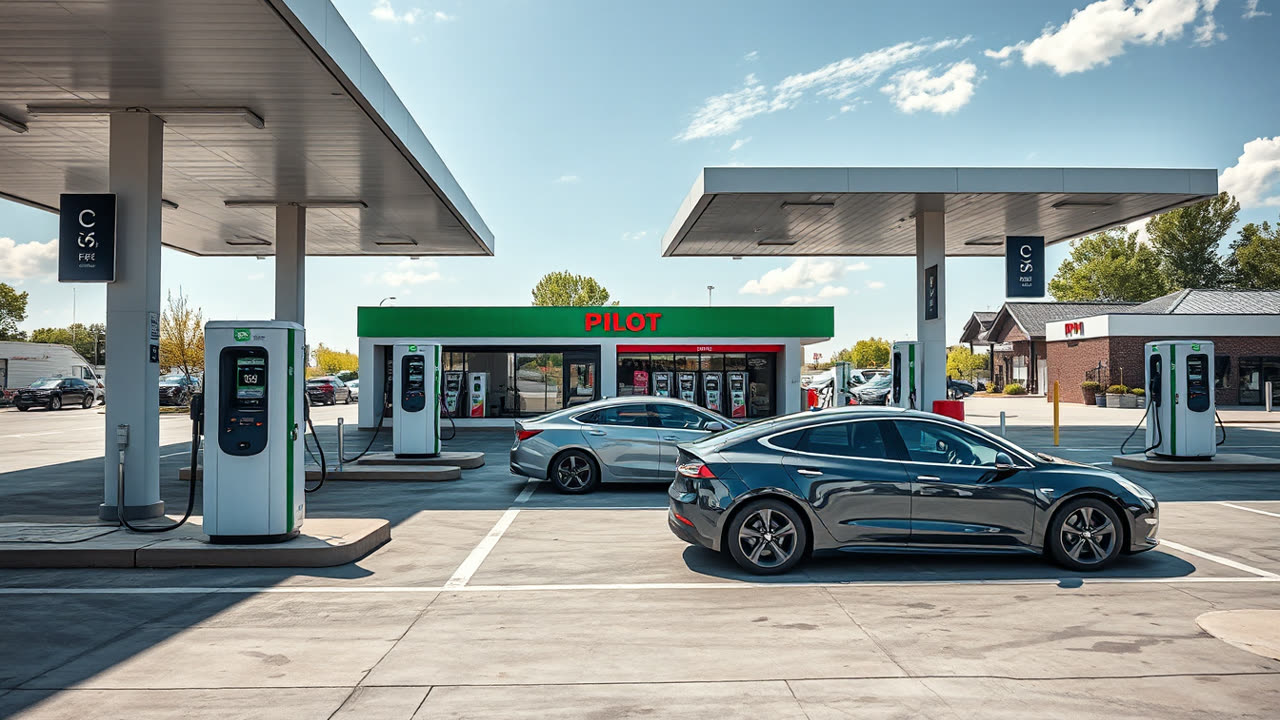
Pilot Company has officially surpassed 300 DC fast-charging locations across its vast network of travel centers, a significant milestone that underscores the accelerating shift in America's long-haul travel infrastructure. This expansion, strategically timed for the peak summer road trip season, positions Pilot as a pivotal player in alleviating range anxiety for electric vehicle (EV) drivers, transforming the traditional gas station model into a comprehensive energy and convenience hub. The company's commitment extends beyond merely adding plugs, integrating 24/7 convenience and an expanded array of healthier snack and meal options, signaling a holistic approach to the evolving needs of modern travelers.
This rapid scaling of DC fast charging is not just about numbers; it represents a critical inflection point for EV adoption, particularly for those contemplating longer journeys. Historically, the lack of reliable, high-speed charging options outside of urban centers has been a significant deterrent for prospective EV owners. Pilot's strategy directly addresses this void by leveraging its existing footprint of strategically located travel centers along major interstates. These sites inherently offer ample parking, restrooms, and food services, providing a more comfortable and practical charging experience compared to standalone chargers in less developed areas. The partnership with industry leaders like EVgo and GM’s Ultium Charge 360 network has been instrumental in accelerating this deployment, ensuring widespread compatibility and robust infrastructure. This collaboration is crucial, as a fragmented charging ecosystem has been a major pain point for consumers, often requiring multiple apps and accounts. By integrating with established networks, Pilot enhances interoperability, simplifying the charging process for drivers.
The impact on users is profound, extending the practical range of EVs and making cross-country travel genuinely feasible without meticulous route planning around limited charging points. For the industry, this expansion signals a maturing EV infrastructure that is increasingly capable of supporting mainstream adoption. It validates the "hub-and-spoke" model of leveraging existing travel plaza real estate for charging, a strategy that is proving more effective than building entirely new, dedicated charging stations in unfamiliar locations. This move also puts pressure on competitors in the travel center space, such as Love's and TA Petro, to accelerate their own EV charging rollouts. While Love's has also made significant strides with its own branded charging network and partnerships, Pilot's current pace and scale, particularly with its deep integration of major charging providers, sets a high bar. Prior generations of charging infrastructure were often characterized by slower Level 2 chargers or sparse DC fast charging, making long-distance EV travel an adventurous, rather than convenient, endeavor. The current generation, exemplified by Pilot's expansion, emphasizes speed and ubiquity. Most of these new DC fast chargers offer speeds of 150 kW or higher, with many capable of 350 kW, drastically reducing charging times and bringing them closer to the refueling experience of gasoline vehicles.
Looking ahead, Pilot’s trajectory suggests a continued focus on higher power outputs and potentially integrating battery storage solutions at key locations to manage grid demand and ensure consistent charging speeds. The ongoing rollout of the National Electric Vehicle Infrastructure (NEVI) Formula Program, which provides states with funding to build out a national EV charging network, will undoubtedly further accelerate deployments, with travel centers being prime candidates for these federal investments. We can anticipate a future where amenities at these charging hubs become even more sophisticated, potentially including dedicated EV driver lounges, advanced booking systems for charging slots, and even vehicle-to-grid (V2G) capabilities as the technology matures. The integration of hydrogen fueling stations at these travel centers for heavy-duty trucks, while still nascent, also remains a long-term possibility, evolving these locations into multi-energy transportation hubs. Pilot's current milestone is not just a numerical achievement; it's a foundational step towards a truly electrified American road network, setting a precedent for convenience, reliability, and ultimately, widespread EV acceptance.