Pixel 11: Google's AI Companion Smartphone
Google's Pixel 11, powered by the new Tensor G7 chip and Gemini Pro Nano, transforms the smartphone into an intensely personalized, proactive AI companion with unprecedented on-device generative AI capabilities.
✨ This content was summarized and interpreted by AI; it may contain errors — please verify accuracy with the original sources. Learn more
Listen to this story
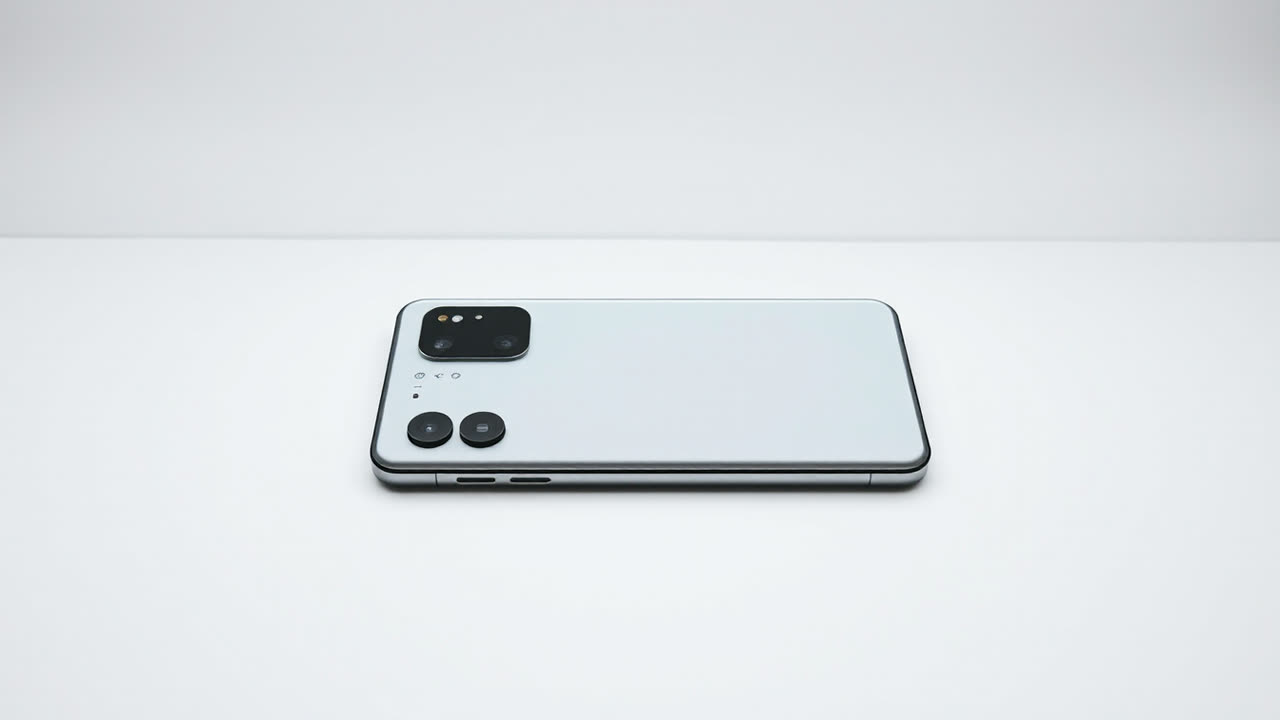
Google's Pixel 11 launch has redefined the smartphone's role, positioning it not merely as a communication device but as an intensely personalized, proactive AI companion, primarily through the introduction of the Tensor G7 chip and a suite of on-device generative AI capabilities. The flagship Pixel 11 Pro, starting at $1099, boasts a formidable 6.8-inch LTPO OLED display with a peak brightness of 2500 nits and a dynamic 120Hz refresh rate, alongside a sophisticated triple-camera system featuring a 64MP main sensor, a 48MP ultrawide lens, and a 60MP periscope telephoto lens offering 5x optical zoom and an astounding 30x Super Res Zoom. Its standard sibling, the Pixel 11, priced from $799, integrates the same Tensor G7 within a more compact 6.2-inch form factor, featuring a dual-camera setup and slightly reduced battery and charging specifications, but crucially retaining the full breadth of Google's new AI innovations.
The pivotal element of this generation lies in Google's deep integration of "Gemini Pro Nano" directly onto the Tensor G7 silicon, enabling a quantum leap in on-device AI processing that significantly impacts user experience and industry trajectory. Users will immediately benefit from real-time, multi-language translation during live calls and video conferences, a feature that runs entirely on-device, promising enhanced privacy and reduced latency compared to cloud-dependent solutions. This local processing also fuels an advanced "Magic Editor Pro," extending the familiar Magic Editor’s object removal capabilities to video, allowing seamless deletion of unwanted elements from recorded footage with unprecedented precision. Furthermore, the Pixel 11 introduces "Adaptive Audio," which intelligently adjusts sound profiles and noise cancellation based on the user's immediate environment and activity, creating personalized soundscapes for focus or relaxation without manual intervention. These advancements are not mere iterative improvements; they represent Google's definitive strategic pivot towards making the smartphone an ambient, intelligent agent that anticipates and responds to user needs with minimal explicit input.
This aggressive push into on-device AI represents a significant challenge to rivals and a natural evolution from the Pixel 10's already strong AI foundation. While the Pixel 10 introduced foundational elements like improved Magic Eraser and Call Screen, the Pixel 11’s Tensor G7 is engineered for generative AI at a scale previously reserved for cloud computing. Compared to competitors, Google is leveraging its AI research dominance to differentiate. Apple's latest iPhone 18 Pro, while offering stellar performance with its A18 Bionic chip, still relies heavily on cloud processing for many of its more complex AI tasks, particularly those involving generative models. Samsung's Galaxy S26 Ultra, powered by the Snapdragon 8 Gen 6 or Exynos 2600, has made strides in AI, but Google's integrated hardware-software approach with Gemini Pro Nano provides a more cohesive and potentially more efficient on-device AI experience. The Pixel 11's advancements in computational photography, particularly with its enhanced 64MP main sensor and improved low-light performance, alongside the periscope zoom on the Pro model, directly compete with the optical prowess of its rivals, often surpassing them through Google's superior post-processing algorithms. Google's pricing strategy, starting at $799 for the base Pixel 11, continues to offer premium AI features at a competitive price point, often undercutting similarly specced flagships from Apple and Samsung.
Looking ahead, the Pixel 11's launch signals a profound shift in the smartphone industry, accelerating the race for localized AI processing power. The immediate impact will be felt in enhanced user privacy as more sensitive data processing remains on the device, and in the potential for entirely new application categories that leverage real-time, context-aware intelligence without constant network dependency. The "Lens Live" feature, which overlays augmented reality information directly onto real-world objects through the camera viewfinder, hints at a future where our devices provide seamless, integrated digital overlays to our physical world, pushing towards a more immersive computing paradigm. Google's commitment to the Tensor chip architecture and deep AI integration suggests a future where the Pixel line could become the primary interface for an increasingly interconnected ecosystem of smart devices, from wearables to home automation. The next generation of Pixel devices is likely to further blur the lines between virtual and physical realities, potentially incorporating more sophisticated mixed-reality capabilities and even more proactive, predictive AI assistants that learn and adapt to individual user patterns with unprecedented accuracy. The company's ongoing investment in custom silicon and AI research positions it strongly to lead this charge, continually pushing the boundaries of what a smartphone can truly be.