PlayStation 2's 'Deckard' Security Chip Reverse-Engineered After Two Decades
After guarding Sony's best-selling console for over two decades, the PlayStation 2's long-enigmatic 'Deckard' security chip has finally been reverse-engineered, revealing a surprisingly complex and unconventional design.
✨ This content was summarized and interpreted by AI; it may contain errors — please verify accuracy with the original sources. Learn more
Listen to this story
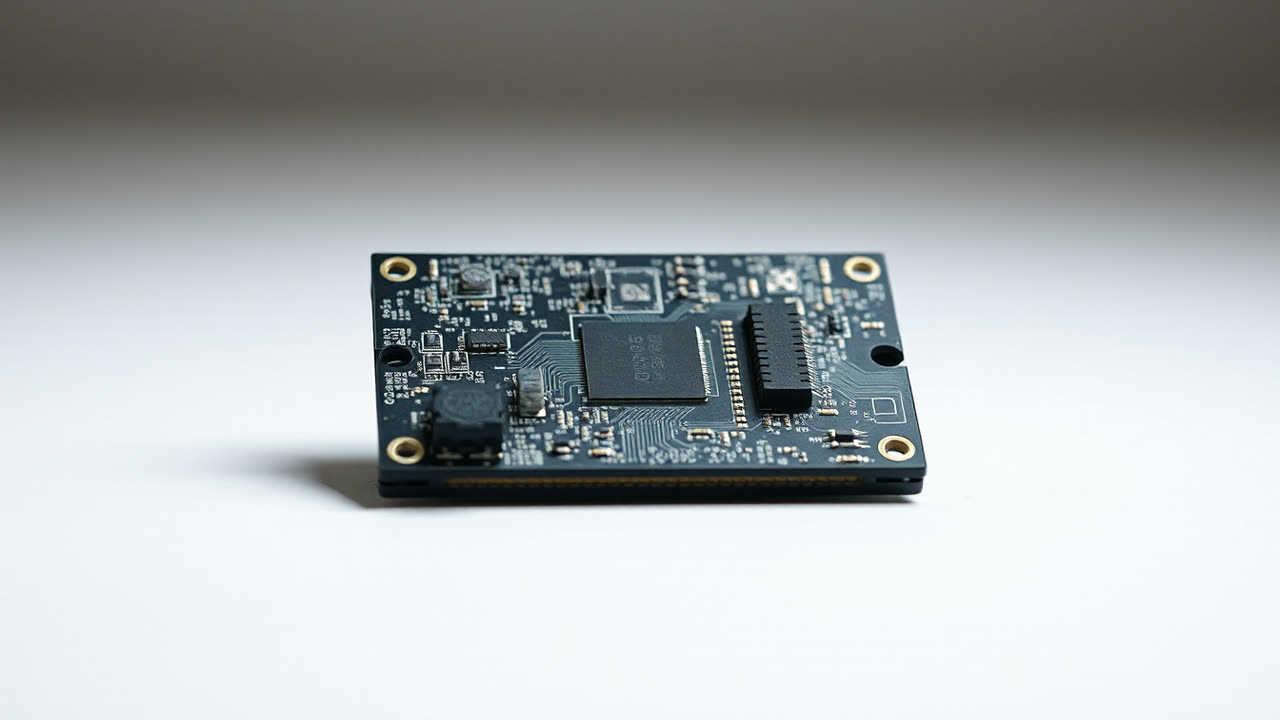
The PlayStation 2's long-enigmatic "Deckard" security chip, a component that has guarded Sony's best-selling console for over two decades, has finally been reverse-engineered, revealing a surprisingly complex and somewhat unconventional design that hints at the console's challenging development journey and its enduring legacy. This breakthrough, attributed to a dedicated team of hardware enthusiasts and researchers, specifically "The Obscure" group, led by a researcher known as "Jackson" and detailed by Engadget, lays bare the intricate cryptographic mechanisms and internal architecture of a chip that previously presented a significant barrier to complete hardware understanding and emulation accuracy. The core revelation centers on the chip's internal structure: a "microcontroller-like" design integrating a custom 3DES (Triple Data Encryption Standard) engine, a random number generator, and a small amount of embedded memory, all working in concert to authenticate game discs and prevent unauthorized software execution. Far from a simple lockout mechanism, the Deckard chip employed a sophisticated, multi-layered authentication process that involved not only checking a disc's region but also validating specific cryptographic signatures embedded within the game data and the console's firmware, a method that proved remarkably resilient against early piracy attempts.
This decoding is not merely an academic exercise; it carries profound implications for the preservation of video game history and the future of emulation. For years, the lack of a complete understanding of the Deckard chip meant that even the most advanced PS2 emulators, such as PCSX2, had to rely on workarounds, heuristics, or incomplete simulations for certain security-related functions, potentially leading to minor inaccuracies or compatibility issues with some titles. While modern PCs can brute-force their way through many of these computational challenges, a precise, cycle-accurate understanding of the security chip allows emulators to achieve a level of authenticity previously unattainable, ensuring that games behave exactly as they would on original hardware. This is particularly crucial for obscure titles, region-locked content, or games that employed unique anti-piracy measures interacting directly with the security hardware. Furthermore, the detailed schematics and operational insights gleaned from this reverse engineering effort will significantly aid in the development of open-source hardware reproductions of the PS2, extending the console's lifespan indefinitely and making its vast library accessible to future generations without reliance on aging, failing original units.
The PS2's security approach, while robust for its time, reflects a pivotal era in console design where hardware-level security was becoming increasingly sophisticated but still retained elements of bespoke, often quirky, engineering. Compared to its predecessor, the PlayStation 1, which primarily relied on a relatively simpler disc authentication chip (the "PIC" or "Sub-CPU") that checked for a specific wobble on the disc's data track, the PS2's Deckard represented a significant leap forward in cryptographic complexity. It was more akin to the nascent security strategies seen in the original Xbox, which also featured a complex boot chain and cryptographic checks to prevent tampering, though the Xbox's reliance on a modified PC architecture presented different attack vectors. Nintendo's GameCube, launched around the same time, also employed proprietary disc formats and encryption, but the PS2's sheer market dominance and the longevity of its security measures made its particular chip a more challenging and sought-after target for reverse engineering. The "surprising design choices" mentioned in the initial reports likely refer to the custom nature of the 3DES implementation or the specific ways its various internal components interacted, suggesting a design team working under tight constraints, possibly optimizing for cost or specific performance targets rather than adhering strictly to off-the-shelf security standards.
Looking ahead, the full decryption of the Deckard chip opens the door to several exciting possibilities. Beyond enhancing emulation accuracy, it will empower homebrew developers to create new applications and even operating systems for the original PS2 hardware, bypassing previous security restrictions that limited their scope. This could lead to a resurgence of interest in the console's hardware, fostering a new wave of creative projects and potentially even new ways to interact with its unique Emotion Engine and Graphics Synthesizer architecture. Moreover, the detailed documentation of the Deckard chip's inner workings contributes to a broader understanding of historical hardware security, offering valuable lessons for contemporary system designers. As modern consoles continue to evolve their security measures, often relying on trusted execution environments, secure enclaves, and online authentication, the successful dismantling of a system like the PS2's reminds us that even the most formidable hardware barriers can eventually be overcome by persistent, collaborative research. This achievement underscores the critical importance of open-source hardware documentation and the continuous effort to preserve digital heritage, ensuring that the technological marvels of the past remain accessible and understandable, rather than becoming lost to the sands of time and proprietary secrecy.