Porsche CEO Confirms All-Electric 718 Sports Car and Taycan's Future
Porsche's new CEO, Michael Leiters, has definitively greenlit the all-electric 718 sports car, ending speculation and reaffirming the brand's commitment to its electric future while clarifying the Taycan's ongoing role.
✨ This content was summarized and interpreted by AI; it may contain errors — please verify accuracy with the original sources. Learn more
Listen to this story
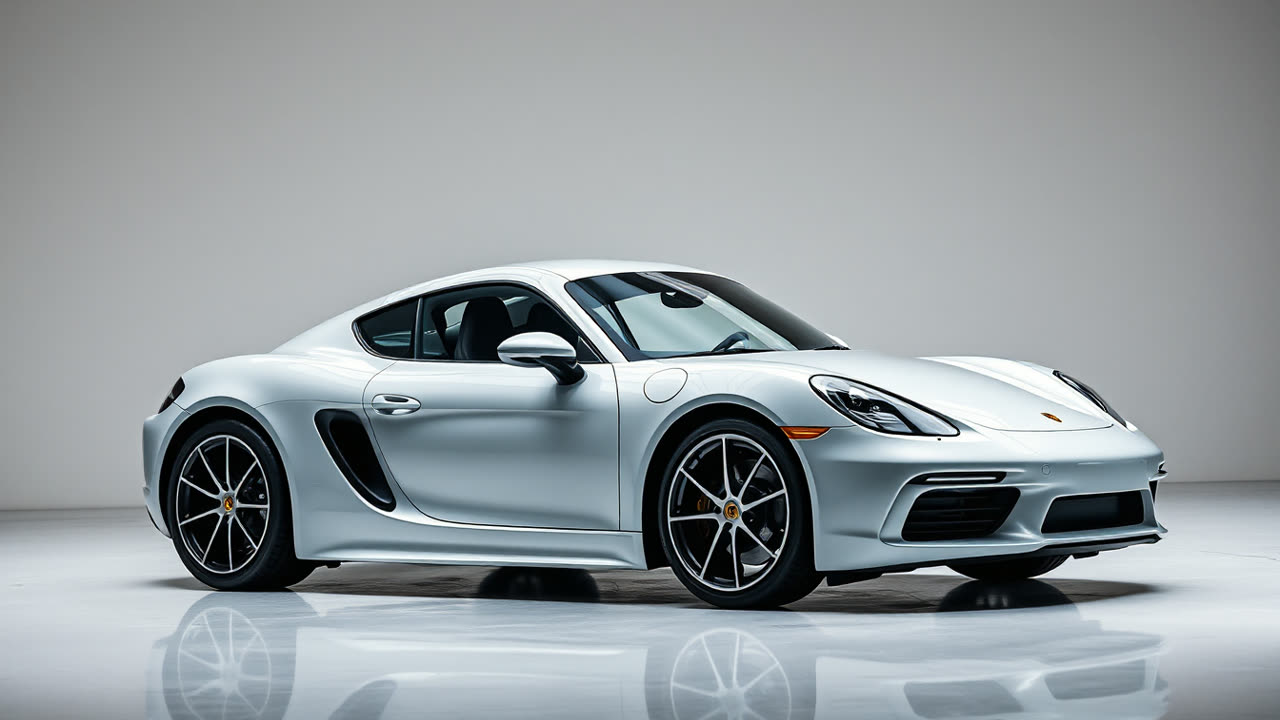
Porsche's new CEO, Michael Leiters, has emphatically confirmed the green light for the all-electric 718 sports car, a pivotal decision that dispels months of industry speculation and reaffirms the brand's commitment to its electric future, albeit with a refined strategy. Leiters, who assumed the top executive role on January 1, 2026, stated in a recent interview with Frankfurter Allgemeine Zeitung that the electric 718 "will be built – because it is the best solution economically and will be a fantastic car". This declaration follows a period of uncertainty, including reports in February 2026 suggesting the project faced potential cancellation due to "ballooning expenses and development delays," exacerbated by the bankruptcy of battery partner Northvolt and engineering challenges in reconciling battery weight with the agile driving dynamics inherent to the 718's DNA.
Beyond the 718, Leiters also assured that the groundbreaking Taycan, Porsche’s first all-electric production vehicle, "isn't going anywhere". While the CEO indicated a strategic move to streamline the Taycan's model variants for reduced complexity, he explicitly stated, "We do not plan to discontinue the Taycan in the short term. We have invested a lot in the model and want to observe how demand develops". This clarity arrives as the 2026 Taycan received significant updates, enhancing its market position with improved battery efficiency, refined software, and an extended real-world range, boasting up to 35 additional miles depending on the trim. Performance figures remain stellar, with the Turbo GT models offering up to 1,019 horsepower and a blistering 0-60 mph acceleration in 2.2 seconds. The updated 800-volt architecture now facilitates ultra-fast DC charging, capable of adding up to 186 miles of range in just 10 minutes. These enhancements, alongside a new generation of infotainment software and expanded smartphone integration, ensure the Taycan remains a formidable contender in the luxury EV segment. However, Leiters' candid admission in June 2026 that the Taycan's 2020 launch timing "wasn't ideal" and that Porsche "was apparently too fast" offers a rare glimpse into the complexities of pioneering EV technology.
The confirmation of the electric 718 marks a critical juncture for Porsche, signaling a firm commitment to electrifying its core sports car lineup, a segment where emotional engagement and driving purity are paramount. The combustion-powered 718 Boxster and Cayman ceased production in October 2025, paving the way for their electric successors. While former CEO Oliver Blume had initially targeted a 2025 arrival for the electric 718, the recent delays highlight the profound engineering challenges in translating the mid-engine, lightweight sports car experience into an EV platform. Reports suggest the electric 718 will be built on a dedicated performance-focused electric architecture, prioritizing optimal weight distribution, handling precision, and driver engagement—a direct response to the concern that a fast EV alone doesn't equate to a "Porsche feel". This bespoke platform is crucial for the 718 to differentiate itself from rivals like the forthcoming Lotus Emira EV or Alpine A110 EV, which also grapple with the inherent weight penalties of battery technology.
Leiters' broader "Strategy 2035," introduced in March 2026, emphasizes "Value over Volume," a philosophy aimed at strengthening profitability, cash flow, and resilience by streamlining the company and focusing on core business. This strategy includes reducing model variants across the portfolio and structurally adapting the organization. Notably, Porsche will continue to invest in all three drive types—combustion, hybrid, and all-electric—explicitly stating that hybrid technology is not merely a bridging solution. This diversified approach, coupled with a reported $6 billion writedown in 2025 that some interpreted as a slowdown in electrification, indicates a more cautious, yet pragmatic, path forward compared to some competitors pushing for rapid, full electrification. The introduction of the Macan EV and the anticipated Cayenne EV after 2026 further solidify Porsche's multi-pronged EV expansion beyond the Taycan and 718.
Looking ahead, Porsche's strategy under Leiters suggests a finely balanced approach. The commitment to the electric 718, slated for a 2027-2028 release, alongside the continuous evolution of the Taycan, demonstrates an unwavering belief in performance EVs. Yet, the simultaneous commitment to combustion and hybrid powertrains, coupled with a focus on higher-margin segments and a "cautious electrification strategy", indicates a recognition of market realities and the enduring appeal of traditional Porsche DNA. The true test for the electric 718 will be its ability to deliver the visceral, connected driving experience expected from a Porsche, potentially through innovations in chassis dynamics, torque vectoring, and even haptic feedback to simulate engine characteristics. While the 911 will remain the last bastion of internal combustion, its eventual electrification is inevitable, with learnings from the Taycan and 718 pivotal to its success. Porsche is not just building electric cars; it is meticulously engineering electric Porsches, a distinction that will define its competitive edge in an increasingly crowded EV landscape.