Porsche's Cayenne Electric Now Offers Production Wireless Charging
Porsche has officially integrated wireless inductive charging into its Cayenne Electric, marking a pivotal step towards a more seamless and convenient electric vehicle ownership experience.
✨ This content was summarized and interpreted by AI; it may contain errors — please verify accuracy with the original sources. Learn more
Listen to this story
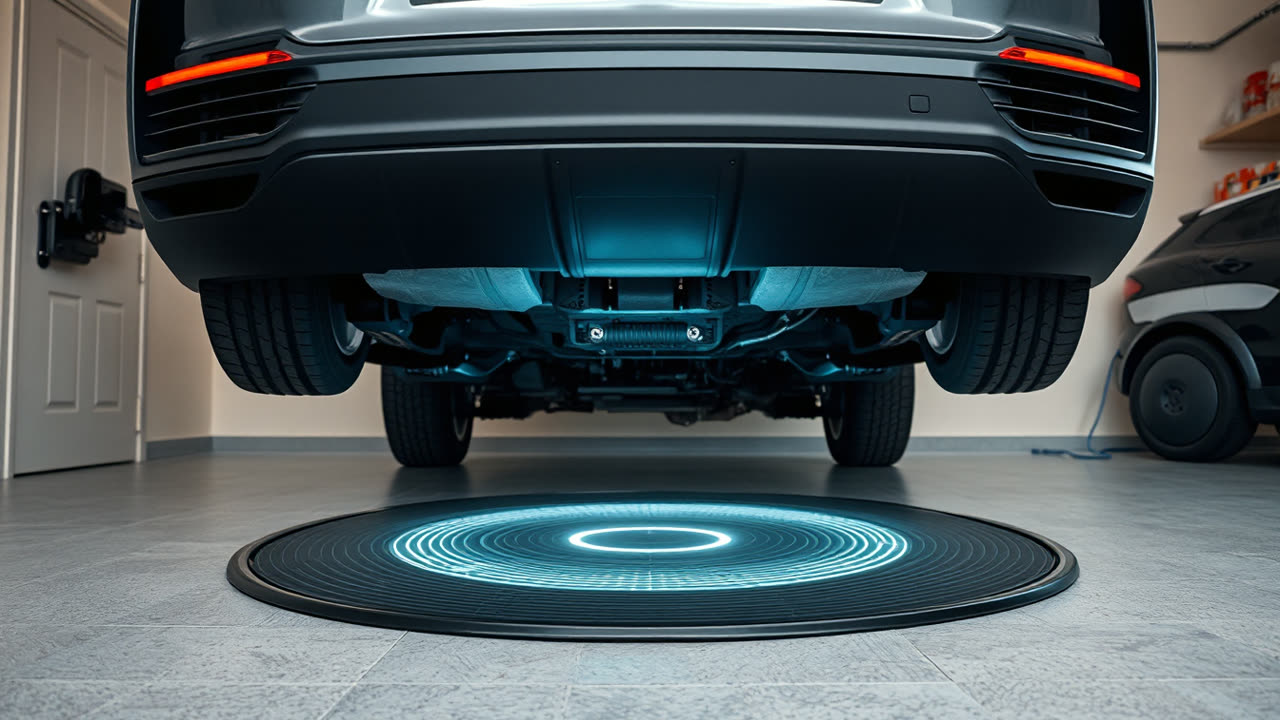
Porsche has officially begun offering wireless inductive charging for its Cayenne Electric model, marking a significant step towards a more seamless electric vehicle ownership experience. This groundbreaking integration, initially revealed within a press release detailing new color options and conveniences for the Cayenne Electric, positions Porsche at the forefront of automotive innovation by bringing a technology long discussed in concept form into mainstream production. The system, which allows for charging simply by parking the vehicle over a ground-mounted pad, eliminates the need for physical cable connections, streamlining the daily charging ritual and enhancing user convenience.
This move by Porsche is not merely an incremental upgrade; it represents a pivotal moment for the broader EV ecosystem, directly addressing a key friction point in electric vehicle adoption: the perceived hassle of charging. For users, the immediate impact is a dramatic improvement in convenience. Imagine pulling into a garage, parking, and having your vehicle automatically begin charging without ever needing to plug in a cable, especially appealing in adverse weather conditions or for those with limited mobility. The system promises to transform home charging from a deliberate task into an invisible, effortless background process, potentially making EV ownership more attractive to a wider demographic. While specific power output details are still emerging, early indications suggest the system is designed for practical daily use, likely supporting AC charging levels suitable for overnight replenishment.
From an industry perspective, Porsche's commitment to in-production wireless charging validates years of research and development in inductive power transfer. This isn't just a niche feature; it signals a maturing technology that is robust enough for a premium automotive brand known for its engineering prowess. The successful deployment by Porsche will likely accelerate investment and development across the sector, pushing other manufacturers to integrate similar solutions to remain competitive. Historically, wireless charging has faced hurdles related to efficiency, cost, and standardization. However, advancements in coil design, power electronics, and alignment technologies have steadily improved its viability. While wired charging remains the benchmark for raw speed and efficiency, the convenience factor of inductive charging offers a compelling alternative for daily use cases, particularly for overnight or workplace charging where speed is less critical than ease of use.
Compared to previous generations of EV charging, which exclusively relied on cumbersome cables, this inductive system represents a fundamental shift in interaction. While some smaller-scale trials and aftermarket solutions have existed, Porsche's integration into a production vehicle from a major automaker lends significant credibility and scale. Rival manufacturers have largely remained in the conceptual or pilot phase. For instance, BMW previously showcased a similar system for its 530e iPerformance, and Mercedes-Benz also explored inductive charging, but widespread production rollout has been elusive. Porsche’s move could set a new standard, compelling competitors to fast-track their own inductive charging programs or risk falling behind in the convenience arms race. The technology’s efficiency, while often slightly lower than direct wired connections (typically in the high 80s to low 90s percentage range), is now deemed acceptable for the convenience it provides, especially as grid energy becomes increasingly renewable.
Looking ahead, the implications of Porsche's wireless charging rollout are profound. We can anticipate a rapid expansion of compatible charging infrastructure, not just in private garages but also in public spaces like parking lots, taxi stands, and even designated highway rest stops. Urban planning could evolve to incorporate embedded charging pads, making opportunistic charging a seamless part of daily life. Furthermore, the integration of wireless charging is a critical enabler for future autonomous vehicles. For a self-driving car, the ability to autonomously park and charge without human intervention is essential for a fully automated mobility ecosystem. This technology lays the groundwork for robotic parking and charging solutions, reducing operational overhead for fleet operators and enhancing the utility of autonomous vehicles. The next steps will likely involve increasing power levels to rival faster wired AC charging, further improving efficiency, and working towards global standardization to ensure interoperability across brands and charging networks. Porsche's pioneering step with the Cayenne Electric is not just about a new feature; it's a significant leap towards a future where EV charging is as effortless and invisible as fueling a traditional gasoline car once was.