Project Mirage's Dune Keypad Redefines macOS Workflow with Agentic AI
A new three-button peripheral from Project Mirage dynamically reconfigures its functions based on the active macOS application, leveraging agentic AI to eliminate context-switching friction.
✨ This content was summarized and interpreted by AI; it may contain errors — please verify accuracy with the original sources. Learn more
Listen to this story
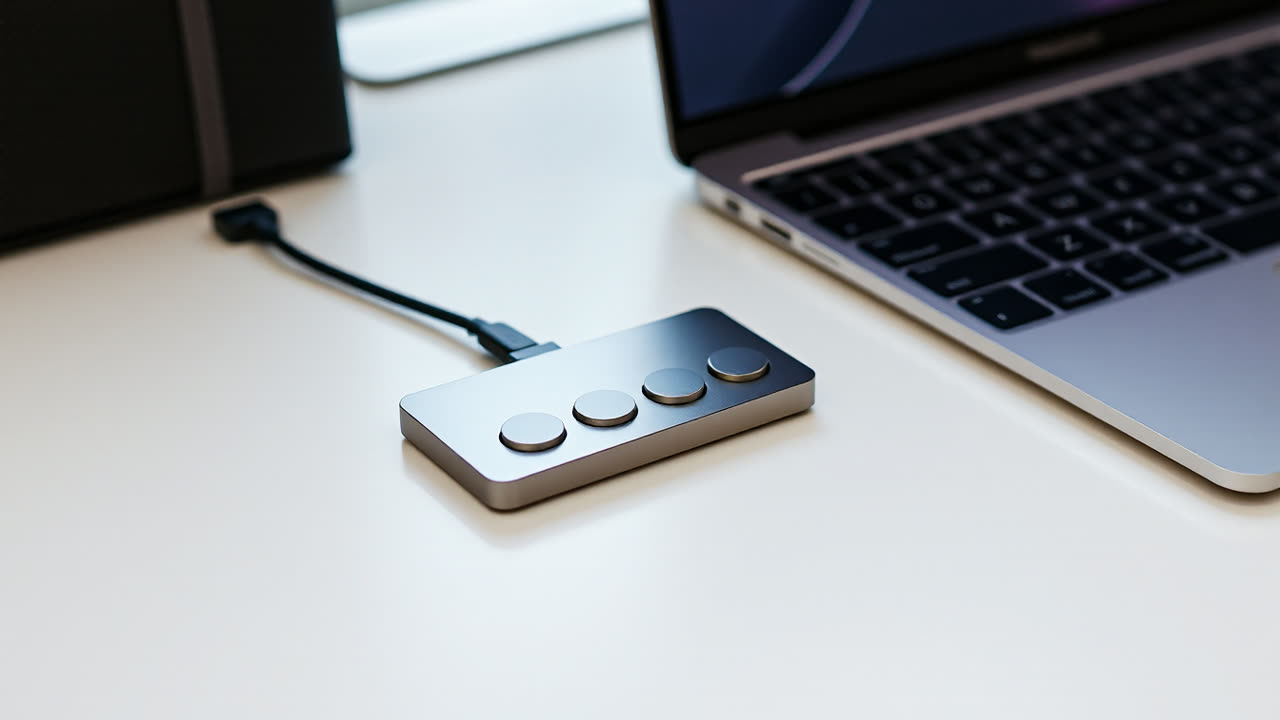
A groundbreaking peripheral has arrived for macOS users, promising to redefine workflow efficiency: Project Mirage's Dune keypad, a compact three-button device that dynamically reconfigures its functions based on the active application. This ingenious context-aware design aims to alleviate the pervasive "context switching" friction plaguing modern digital work.
Launched recently, the Dune keypad integrates seamlessly into contemporary MacBook setups via USB-C, crafted from CNC-machined aluminum and weighing a mere 50 grams. Its core intelligence lies in "agentic AI," which detects the foreground application and instantly reassigns the three mechanical keys. For instance, during a Zoom or Google Meet call, these buttons transform into dedicated controls for toggling the microphone, camera, or bringing the meeting window to the front. Developers, a key target demographic, will find the keys adapting to common commands in tools like GitHub, VS Code, and Claude.
This innovation signifies a crucial step in bridging the gap between static hardware and evolving software demands. Project Mirage CEO Apoorv Shankar highlights how traditional QWERTY keyboards, designed for text input in a pre-multitasking era, are ill-suited for today's complex, AI-driven workflows. Dune offers a "zero-effort" interface, eliminating the cognitive load of remembering countless shortcuts or manually switching profiles, thereby helping users maintain a "flow state" longer. The device also boasts a Claude-powered conversational setup, allowing users to configure custom scripts and agentic workflows using natural language.
Priced at $119, the Dune keypad is a compelling proposition for power users and remote professionals. While some early feedback notes the mechanical keys feel "lighter and looser than expected," its responsiveness and context-switching capabilities are consistently praised. The success of Dune will hinge on robust software integration and the breadth of its customizable actions, but it clearly marks a significant advancement in intuitive human-computer interaction, promising to turn fragmented workflows into a more seamless experience.