Prusa Research's High-End 3D Printers Get Mid-Cycle '+' Upgrades
Prusa Research has refreshed its XL, Core One, and Core One L 3D printers with "plus" upgrades, offering enhanced quality and efficiency, with new orders receiving the updated models at no extra cost and upgrade kits available for existing owners.
✨ This content was summarized and interpreted by AI; it may contain errors — please verify accuracy with the original sources. Learn more
Listen to this story
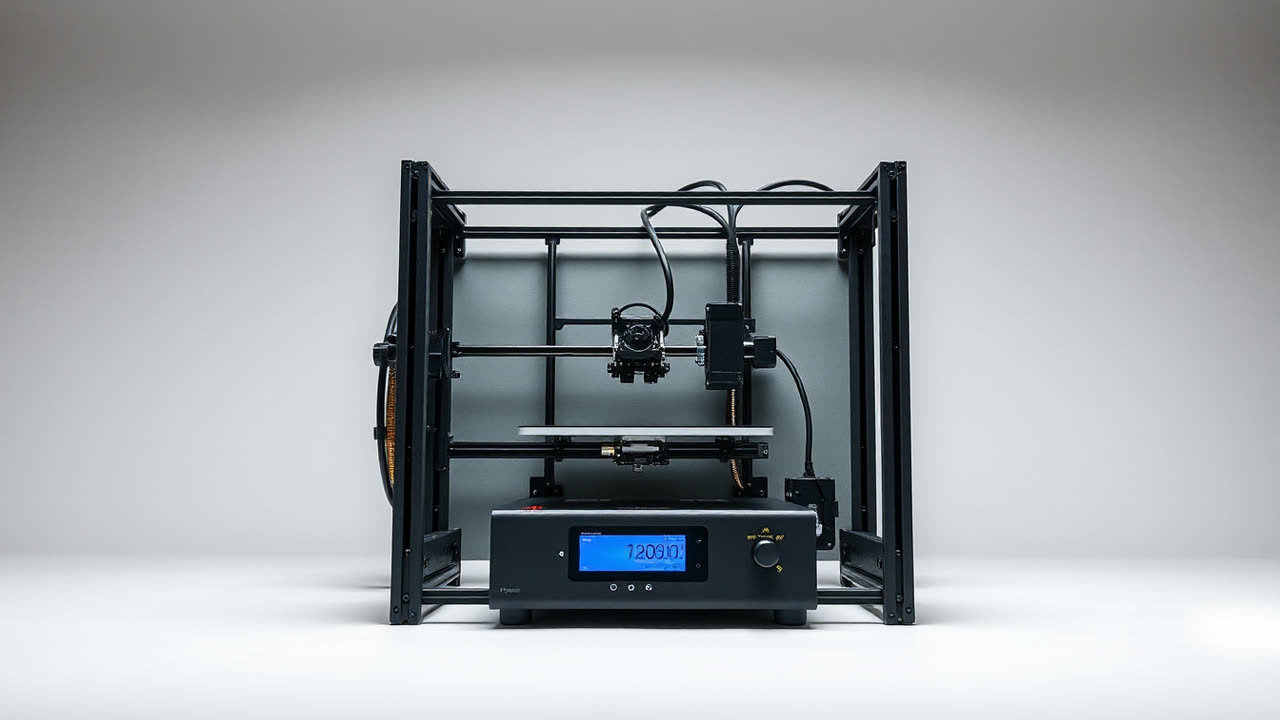
Prusa Research has initiated a significant mid-cycle refresh across its high-end 3D printer lineup, introducing second-generation upgrades to the XL, Core One, and Core One L, now bearing a "+" designation, with all new unshipped orders automatically receiving the updated models at no additional cost. This strategic move, which notably includes maintaining current pricing for the refreshed machines, aims to solidify Prusa's competitive stance in a rapidly evolving market driven by speed and automation.
The core of these "plus" upgrades centers on enhancing print quality, operational efficiency, and user convenience. Shared across all three models are new GT1.5 belts, engineered to reduce fine patterns on smooth surfaces, and an integrated nozzle wiper, a highly requested feature that cleans residual filament before printing, ensuring cleaner print starts. The XL+ receives the most substantial overhaul, featuring a new 360-degree part-cooling system, akin to those found on the MK4S and Core One family, promising improved performance on bridges, overhangs, and intricate details. Crucially, its Tool Offset Sensor now aligns toolheads approximately 20 times faster, significantly cutting down on calibration time for its multi-tool changer system. The Core One+ (Gen 2) benefits from a redesigned heatbed mounting that eliminates the "Absorbing heat" wait for materials like PLA and PETG, which require bed temperatures up to 85°C, and shortens the wait for higher-temperature filaments, accelerating print initiation. Additionally, the Core One+ (Gen 2) adopts the snap-on top panel previously seen on the Core One L, simplifying maintenance access. The larger Core One L+ primarily integrates the shared GT1.5 belts and nozzle wiper, building upon its already established features like the snap-on top panel and a 60°C heated chamber for warping-free printing. Assembled Core One+ Gen 2 and Core One L+ units began shipping immediately on August 14th, with assembled XL+ printers following later in August, and upgrade kits for existing owners are slated for release from late August to early September.
This refresh holds significant implications for both users and the broader 3D printing industry. For consumers, the "free" upgrade policy for existing orders, coupled with no price increases for the new models, represents a strong value proposition, particularly for those who had pre-ordered. Prusa's commitment to providing upgrade kits for current owners, allowing them to enhance their machines rather than being forced into a full replacement, reinforces the company's long-standing philosophy of longevity and user-centric design. Mikolau Zuza, Head of Content at Prusa Research, articulated this stance, stating, "we don't expect you to replace a working machine just because we've come up with something new. Most tech becomes obsolete over time. Our printers keep getting better." This approach fosters customer loyalty and differentiates Prusa in a market increasingly characterized by rapid product cycles and perceived planned obsolescence. The tangible benefits for users include higher print quality, faster operational readiness for the Core One+, and reduced friction in workflow through improved maintenance and calibration.
From an industry perspective, Prusa's move is a clear response to the intense competition, particularly from agile players like Bambu Lab, which ignited a "speed war" in the desktop 3D printing segment with their enclosed CoreXY systems. While Prusa's Core One series was its answer to this shift, these new "+" upgrades are crucial for maintaining relevance and competitiveness in the high-end prosumer and professional markets. The Core One+ (Gen 2) assembled is priced at $1,202.78, with a kit at $925, while the Core One L+ assembled is $2,059.00. For comparison, the Bambu Lab X1 Carbon, a direct competitor, sells for around $1,200 assembled with a smaller 256x256x256mm build volume, versus the XL+'s 360x360x360mm. The XL+'s true multi-material toolchanger, capable of handling dissimilar materials simultaneously, remains a key differentiator against rivals' multi-color systems like Bambu Lab's AMS. However, Prusa has faced criticism in the past regarding the initial print quality and high price of the Core One L, and the rapid succession of upgrades (MK4, MK4S, Core One, and third-party solutions like Bondtech INDX) has led some long-time users to question the cumulative cost of upgrades versus purchasing new machines or competitor offerings. The simultaneous announcement of INDX multi-material system compatibility for the Core One+ (Gen 2), with existing INDX kit orders also receiving the Gen 2 hardware upgrade at no additional cost, further illustrates Prusa's ecosystem-focused strategy.
Looking ahead, Prusa's strategy points towards continued refinement within its existing hardware platforms, integrated with ongoing software and firmware advancements, and expanded multi-material capabilities. The testing of INDX on the Core One L and automatic Pressure Advance calibration before each print indicate a future focused on automation and intelligent printing. The broader industry will undoubtedly continue its relentless pursuit of higher speeds, greater print volumes, and more sophisticated multi-material solutions, with enclosed CoreXY systems becoming the de facto standard for performance. Prusa's commitment to upgradeability, while potentially causing "upgrade fatigue" for a vocal minority, serves as a powerful counter-narrative to the throwaway culture prevalent in tech. By offering clear upgrade paths and maintaining competitive pricing for its refreshed models, Prusa aims to cultivate deep customer loyalty and sustain its position as a quality-first innovator, albeit one that must continually justify its value proposition against aggressive, often lower-cost, competitors. The long-term success of this strategy hinges on consistently delivering substantial, user-benefiting improvements that validate the investment in its ecosystem, rather than just incremental changes.