PS5 Emulators Achieve GTA V Playability on PC, Signaling Unprecedented Development Pace
The ability of PC-based PlayStation 5 emulators to run Grand Theft Auto V at near-playable frame rates, despite instability, marks an astronomical pace of development challenging console exclusivity.
✨ This content was summarized and interpreted by AI; it may contain errors — please verify accuracy with the original sources. Learn more
Listen to this story
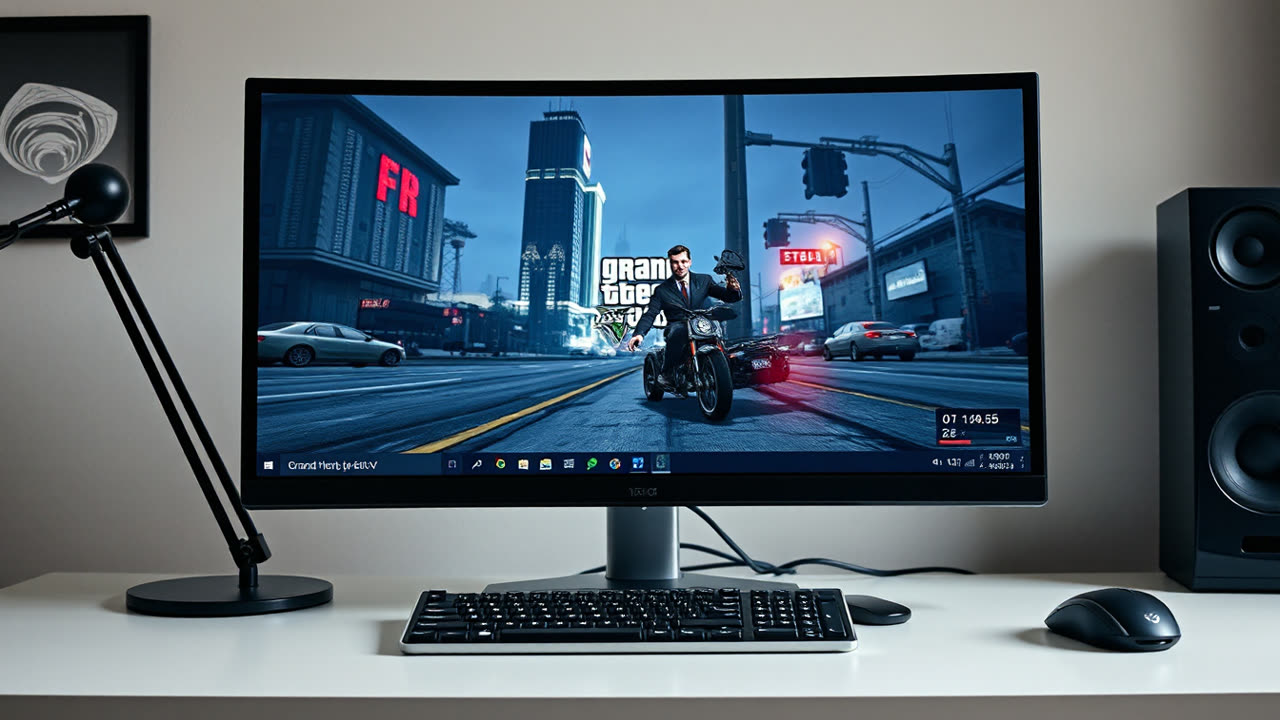
The ability of PC-based PlayStation 5 emulators to run the console version of Grand Theft Auto V at a fluctuating 40-60 frames per second, even if only for a few minutes before an inevitable crash, marks a significant, albeit nascent, milestone in console emulation, signaling an astronomical pace of development previously unseen in earlier console generations. This breakthrough, reported as a recent development within the burgeoning PS5 emulation scene, indicates a rapid acceleration in the technology's maturity, far exceeding the protracted timelines often associated with emulating complex, modern hardware.
This rapid advancement holds profound implications for both PC gamers and the console industry. For PC users, the prospect of playing PlayStation 5 exclusives on their preferred platform, potentially with enhanced visuals and frame rates beyond console limitations, represents a long-sought-after freedom. While the current state is far from stable, the fact that a demanding title like GTA V can even *boot* and *perform* at near-playable frame rates suggests that fully stable, feature-complete PS5 emulation might arrive much sooner than many anticipated. This effectively eroding the traditional exclusivity barrier, offering a glimpse into a future where hardware-locked titles become increasingly vulnerable to software liberation, broadening access for a global gaming audience. The allure of running games like *God of War Ragnarök* or *Marvel's Spider-Man 2* on a powerful PC without waiting for an official port could reshape purchasing habits and platform loyalties.
From an industry perspective, this accelerated emulation progress presents a complex challenge for Sony and other console manufacturers. Historically, console exclusivity has been a cornerstone of their business model, driving hardware sales and fostering ecosystem lock-in. The PS5, launched in November 2020, is still relatively young, and the rapid progress of its emulation contrasts sharply with the years it took for robust PlayStation 3 or even PlayStation 4 emulation to materialize. For instance, stable PS3 emulation via RPCS3 took nearly a decade to reach widespread playability for many titles, and PS4 emulation, while progressing, still faces significant hurdles for many demanding games. The swiftness of PS5 emulation could force Sony to reconsider its PC porting strategy. While Sony has increasingly embraced PC ports for its first-party titles, typically after a significant exclusivity window, the existence of a viable emulator could shorten this window or even preempt the need for official ports for a segment of the PC gaming audience. This could potentially cannibalize sales of official PC versions or even impact future console sales if the perceived value of exclusive hardware diminishes. The timing is particularly acute with the impending launch of Grand Theft Auto VI, a title expected to be a massive console seller. If PS5 emulation matures sufficiently by GTA VI's release on consoles, it could ignite an even greater push from the emulation community to bring Rockstar's next epic to PC without an official port, presenting an unprecedented challenge to the traditional console launch cycle.
The technical hurdles in PS5 emulation are substantial, given the console's custom AMD Zen 2 CPU and RDNA 2 GPU architecture, along with its ultra-fast SSD and proprietary I/O. Emulators must not only accurately mimic this hardware but also overcome the intricate copy protection and low-level system interactions. The "tweakers" and developers behind these emulators are leveraging advancements in reverse engineering, dynamic recompilation, and modern PC hardware capabilities to achieve these feats. The ability to run GTA V, a game known for its open-world complexity and resource demands, even with instability, showcases a strong foundation. Comparatively, Xbox Series X/S emulation is also progressing, but often overshadowed by the sheer volume and cultural impact of PlayStation exclusives. Nintendo Switch emulation, particularly through Yuzu and Ryujinx, is arguably the most mature of current-generation console emulators, demonstrating that dedicated community effort can indeed overcome significant technical barriers.
Looking ahead, the trajectory of PS5 emulation suggests several key developments. Stability will be the immediate focus, moving from brief playable bursts to sustained gameplay without crashes. Performance optimization will follow, aiming for consistent 60 FPS or higher, potentially leveraging PC hardware far superior to the PS5's specifications. Feature parity, including proper audio, controller support, and network functionality for online titles, will also be critical. The "spark" that ignited a few months ago shows no signs of fading; instead, it appears to be burning brighter, fueled by an enthusiastic community and the tantalizing prospect of unlocking a generation of games. The race against time, particularly with GTA VI on the horizon, will likely intensify, pushing developers to accelerate their efforts. While official console sales and PC ports will remain the primary revenue drivers for publishers, the rapid evolution of PS5 emulation serves as a powerful reminder of the persistent cat-and-mouse game between hardware exclusivity and the open-source spirit of PC gaming, potentially reshaping the landscape of game distribution and access in the coming years.