Qualcomm's Snapdragon Sound Elite: On-Device AI for Next-Gen Audio Wearables
Qualcomm introduces Snapdragon Sound Elite, a specialized AI chip bringing advanced on-device intelligence to earbuds and headphones for personalized audio, enhanced hearing, and robust health monitoring.
✨ This content was summarized and interpreted by AI; it may contain errors — please verify accuracy with the original sources. Learn more
Listen to this story
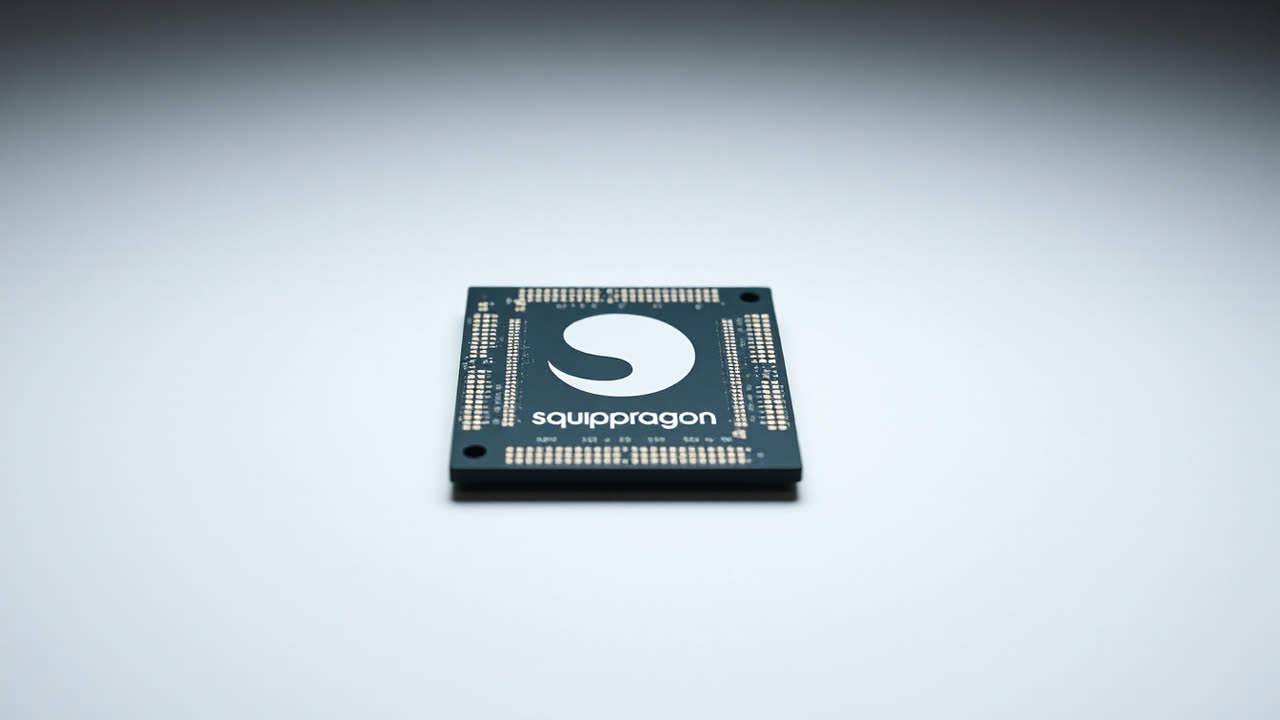
Qualcomm's new Snapdragon Sound Elite chip, designed specifically for audio wearables, heralds a significant leap in on-device artificial intelligence processing for compact listening devices, moving beyond mere audio transmission to intelligent, contextual sound experiences. This specialized AI engine, distinct from the main application processor in a smartphone, offloads computationally intensive tasks directly to earbuds and headphones, promising a new era of personalized audio, enhanced hearing assistance, and robust health monitoring capabilities. The chip's integration of AI directly into the audio path enables real-time processing that can adapt to a user's environment, preferences, and even physiological state, a capability previously constrained by the limited processing power and battery life of small form-factor devices.
This development matters profoundly because it democratizes advanced audio intelligence, pushing capabilities traditionally reliant on cloud processing or a powerful host device directly to the ear. For users, this translates into a more immersive and adaptive listening experience. Imagine earbuds that can not only cancel noise but intelligently filter specific sounds based on your location – muting office chatter while allowing critical announcements, or dynamically adjusting equalization to optimize music playback based on your ear canal's unique acoustics and the ambient noise profile. The on-device AI can also power sophisticated hearing enhancement features, moving beyond basic amplification to provide personalized sound profiles that compensate for specific hearing deficiencies, akin to a hearing aid but integrated seamlessly into a consumer earbud. Furthermore, integrating AI at the chip level facilitates more accurate and power-efficient health tracking, such as continuous heart rate monitoring, activity recognition, and even stress detection through physiological signals, all processed locally to ensure data privacy and immediate feedback.
From an industry perspective, Snapdragon Sound Elite positions Qualcomm to solidify its dominance in the wireless audio ecosystem, particularly as the market for premium TWS (True Wireless Stereo) earbuds continues its robust growth trajectory. While Qualcomm's Snapdragon Sound platform has already established a high-fidelity audio standard for wireless listening, the Elite variant injects a critical layer of intelligence. This move directly challenges competitors like Apple, which leverages its proprietary H2 chip in AirPods Pro for advanced spatial audio, adaptive transparency, and conversation awareness, and Google, with its Tensor chip-powered Pixel Buds Pro offering real-time translation and adaptive sound. Unlike these vertically integrated solutions, Qualcomm’s strength lies in its broad ecosystem reach, supplying chips to a vast array of Android-centric audio manufacturers. The Snapdragon Sound Elite provides these manufacturers with a powerful, off-the-shelf AI solution, enabling them to compete more effectively against the tightly controlled experiences offered by Apple and Google without needing to invest heavily in their own custom silicon development. This could accelerate innovation across the entire Android audio landscape, bringing premium, AI-driven features to a wider range of price points and device types.
Comparing the Snapdragon Sound Elite to its predecessors, previous Qualcomm audio platforms primarily focused on connectivity (Bluetooth versions), audio codecs (aptX Adaptive), and foundational noise cancellation. While capable, these earlier chips had limited on-board AI acceleration, often relying on the connected smartphone for complex computational tasks. The Elite's dedicated AI engine represents a architectural shift, enabling low-latency, real-time AI inference at the edge. This is crucial for applications demanding immediate response, such as active noise cancellation that adapts instantaneously to sudden loud noises, or voice processing that can isolate a user's speech even in extremely noisy environments. The new chip is expected to offer significant improvements in power efficiency for AI tasks compared to running them on a general-purpose CPU, thereby extending battery life even with more demanding intelligent features.
Looking ahead, the introduction of Snapdragon Sound Elite is a foundational step towards truly intelligent audio wearables that will blur the lines between traditional earbuds, hearing aids, and health trackers. We can anticipate future iterations of this technology to incorporate even more sophisticated sensor fusion, combining audio data with motion, temperature, and even bio-impedance sensors to build a comprehensive picture of a user's health and environment. The push for ultra-low power AI will enable always-on capabilities, making these devices indispensable companions for health monitoring, personalized wellness coaching, and seamless communication. Furthermore, the ability to process AI on-device opens doors for enhanced privacy and security, as sensitive user data can be analyzed locally without being transmitted to the cloud. The next few years will likely see a proliferation of audio wearables leveraging this class of AI chip, leading to a highly personalized and context-aware auditory experience that dynamically adapts to the intricacies of our daily lives, making our devices less like tools and more like intuitive extensions of ourselves.