Qualcomm Unveils Snapdragon 8 Gen 4 with Groundbreaking On-Device AI
Qualcomm's new flagship Snapdragon 8 Gen 4 can run a 30-billion parameter mixture-of-expert model entirely on-device, marking a significant shift in smartphone AI capabilities.
✨ This content was summarized and interpreted by AI; it may contain errors — please verify accuracy with the original sources. Learn more
Listen to this story
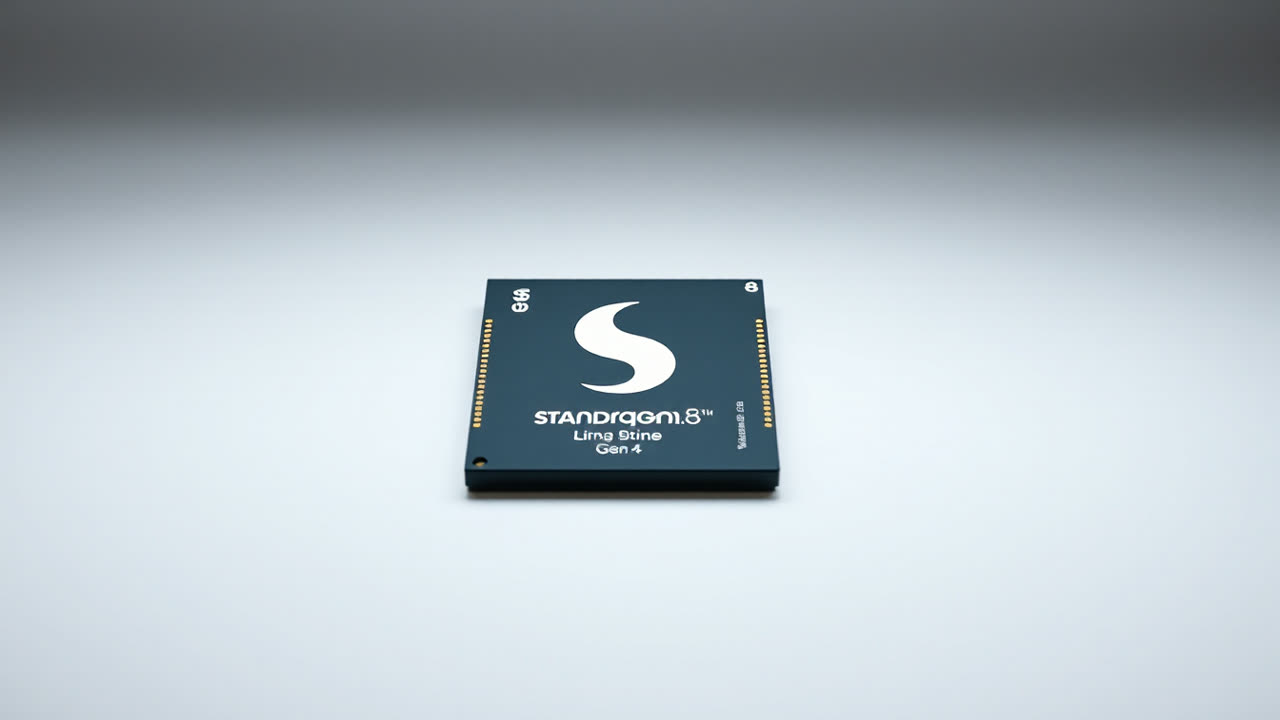
Qualcomm has unveiled its new flagship Snapdragon 8 Gen 4 and the mid-range Snapdragon 7+ Gen 3 mobile platforms, with the top-tier 8 Gen 4 capable of running a 30-billion parameter mixture-of-expert (MoE) model entirely on-device. This significant leap in on-device AI processing power, a core focus of both new chips, fundamentally shifts the paradigm for smartphone capabilities, moving complex generative AI tasks from the cloud to the user's hand. The 8 Gen 4, built on a 3nm process, reportedly achieves a 40% improvement in overall CPU performance and a 30% boost in GPU performance compared to its predecessor, the Snapdragon 8 Gen 3, while simultaneously delivering up to 25% better power efficiency for AI workloads. The 7+ Gen 3, also optimized for AI, brings advanced on-device generative AI features, including support for large language models (LLMs) and stable diffusion, to a broader segment of the smartphone market, making sophisticated AI experiences accessible in more affordable devices.
This emphasis on localized AI processing marks a critical inflection point for the smartphone industry, moving beyond mere AI accelerators to full-fledged inference engines. The ability to run a 30B MoE model locally means highly personalized, real-time AI applications can operate without reliance on constant cloud connectivity, addressing critical concerns around data privacy, latency, and operational cost. For users, this translates into instantaneous responses from AI assistants, hyper-realistic on-device image and video generation, advanced context-aware search, and more seamless integration of AI into everyday tasks without data leaving the device. Imagine a personal AI assistant that learns your habits and preferences with unparalleled depth, or a photo editor that generates complex alterations in milliseconds, all without uploading your sensitive data to remote servers. This also opens new avenues for developers to create innovative AI-first applications that leverage the unique, secure, and always-available processing power of the device itself.
Historically, the majority of complex AI computations have been offloaded to powerful cloud servers due to the demanding computational and memory requirements. Qualcomm's latest chips challenge this paradigm by integrating a significantly enhanced Neural Processing Unit (NPU) architecture, termed the "Hexagon NPU," which is specifically designed for efficient execution of large AI models. While Apple's A18 Pro chip, found in the iPhone 16 Pro, also boasts impressive on-device AI capabilities with a focus on generative AI for features like advanced Siri and photo editing, Qualcomm's explicit mention of a 30B MoE model capability sets a new benchmark for model size and complexity on a mobile platform. MediaTek's Dimensity 9400, another formidable competitor, also integrates a powerful NPU and focuses on accelerating AI tasks, but the specific performance metrics for such large language models on-device are yet to be directly comparable to Qualcomm's latest claims. Compared to the prior generation Snapdragon 8 Gen 3, which focused on improving NPU performance by approximately 98% over the 8 Gen 2, the 8 Gen 4 represents an architectural overhaul specifically targeting the challenges of large generative AI models, not just incremental performance gains. The 8 Gen 4's new custom Oryon CPU cores also contribute to this overall performance jump, providing a more balanced system for AI-intensive workloads.
Looking ahead, Qualcomm's strategic push into pervasive on-device AI is poised to accelerate a broader industry trend towards "ambient intelligence," where devices anticipate user needs and interact more intuitively. This move is not merely about faster processing; it's about enabling a new generation of smart devices that are more autonomous, private, and responsive. We can expect to see a rapid proliferation of AI-powered features across the entire Android ecosystem, from advanced accessibility tools to hyper-personalized gaming experiences. This intense competition in the mobile AI silicon space will also likely drive further innovation in power efficiency, as running such large models locally demands significant energy optimization. The next wave of smartphone innovation will undoubtedly be defined by the quality and ubiquity of on-device AI, and Qualcomm's new chips have laid down a formidable gauntlet for rivals in this burgeoning era of intelligent mobile computing.